Types of Radha and Krishna Paintings
Here are a few Radha Krishna art forms from folk, traditional and contemporary styles:
1. Traditional Styles
- Pichwai (Rajasthan): Intricate temple art with florals that were once used as backdrops in shrines, focusing on Krishna's immortal tales.
- Pattachitra (Odisha, West Bengal): Features elaborate scrolls, symbolic motifs, and vibrant depictions of Krishna’s leelas with Radha.
- Kangra & Pahari Miniature (Himachal Pradesh): Paintings of Radha and Krishna known for their dreamy & emotive tenderness, soft palettes, and pastoral nature scenes.
- Tanjore Paintings (South India): This South Indian art form combines gilded surfaces, jewel-like colors, and detailed iconography.
- Phad Paintings (Rajasthan): Narrative scrolls that tell epic stories including Radha–Krishna lore.
- Kalighat Paintings (Bengal): Bold lines and expressive depictions in lively, everyday scenes.
- Madhubani Paintings (Bihar): Folk art with vivid colors and geometric storytelling.
- Rajasthani Miniature: Ornate, nature-rich storytelling of Radha and Krishna.
Complemented by styles like Mughal miniatures, Company School canvases and Bengal School reinterpretations, these art forms carry forward the emotional and devotional essence of Radha-Krishna across centuries and mediums.
2. Contemporary Styles
Modern Abstract Interpretations: Minimal lines, powerful color symbolism, and imaginative depictions for those who prefer a contemporary treatment to the stories of Radha-Krishna.
Fusion Art Styles: Experimental works merging digital, pop, and traditional motifs.
Radha Krishna paintings have inspired master artists beyond purely religious reasons & folk art culture, becoming explorations for stories of love, longing, and emotional connection. Raja Ravi Varma famously humanized Radha Krishna’s romance with dramatic realism, while M.F. Husain reimagined their relationship in bold, modern gestures and abstraction. S.H. Raza infused spiritual unity and cosmic meaning into the theme through his “Bindu” series; Nandalal Bose and Manjit Bawa brought minimalist styles and philosophical nuance, making the motifs resonate for diverse collectors. These artists show how Radha Krishna’s timeless charm transcends its mythic origins.
Explore our full Spiritual and Mythological collection on ArtFlute. See works by Amol Pawar and Yograj Verma exploring similar spiritual narratives.
Common Themes Used in Radha And Krishna Paintings
1. Raas Leela
Inspired by Bhagavata Purana and temple tradition, the Raas Leela depicts the ecstatic, celestial dance of Krishna with Radha and the gopis in Vrindavan - the ultimate celebration of divine union and cosmic joy that transcends earthly boundaries. Collectors drawn to spiritual energy gravitate to these works as they evoke pure bliss and devotion.
2. Radha-Krishna in Vrindavan
These nature-laden scenes immerse viewers in the lush, idyllic landscape of Vrindavan, regarded in Hindu lore as the playground of the gods, where Radha and Krishna’s romance blooms amid rivers, groves, and mist. Such paintings appeal to collectors who cherish harmony, beauty, and cultural nostalgia.
3. Krishna Playing the Flute
The flute’s melody is symbolic of Krishna’s “call to devotion,” summoning Radha and souls everywhere. Artworks featuring this motif often attract those who seek meaning in symbolism - the flute representing the inner music of love and longing.
4. Symbolic Motifs
Peacocks (beauty and immortality), lotuses (purity and spiritual awakening), cows (abundance and gentleness), and vivid colors recur as visual cues from temple rituals and sacred poetry. These elements offer collectors layers of meaning, connecting every collection to India’s spiritual ethos.
5. Love and Devotion
Far more than romantic love, Radha’s unwavering surrender and Krishna’s playful nature unlock themes of spiritual longing and unity with the divine, resonating with patrons seeking reflective, philosophical narrative in art.
6. Radha Krishna Swing (Jhula) Theme
This references the "Jhulan Yatra" festival and is iconic in the temple tradition: symbolic of renewal, blessings, and intimate divine connection.
7. Radha Krishna Marriage Theme
When Krishna departed to fulfill his destiny, their separation became a powerful symbol of love’s longing and the soul’s yearning for the divine. Legends say Radha’s devotion endured across decades of waiting, until their final reunion, cosmic & eternal, marked the soul’s union with its source. The Radha Krishna marriage theme in art embodies this profound, timeless journey from longing to spiritual oneness and not the literal wedding joy.
Famous Artists of Radha And Krishna Paintings
1. Subrata Ghosh
Subrata Ghosh layers the romantic and spiritual aura of Radha-Krishna in tranquil, classical compositions. His works are inspired by Ajanta and Gupta sculptures and his use of creamy palettes and soft light creates a timeless presence that echoes ancient art.
2. Anupam Pal
Anupam Pal captures intricate emotional landscapes, breathing poetic life into Radha Krishna’s legendary love.
3. Siddharth Shingade
Siddharth Shingade lends Radha-Krishna stories with his signature rustic Marathwada landscapes and palettes. His mythological characters are woven into memories of rural life, embodying both spiritual and everyday resilience in mesmerizing colors and dusky tones.
4. Ramesh Gujar
Ramesh Gujar interprets the divine romance through fluid lines and expressive compositions filled with emotion. His Bal-Krishna and cow pieces capture both divine charm and pastoral tranquility.
5. Sukanta Das
Sukanta Das infuses Mughal miniature-inspired detailing with contemporary sensibility, translating emotions into nuanced gestures and modern textures. His Radha Krishna works often showcase relationships infused with nostalgia and the eternal dance of love and longing.
6. Mohammed Osman
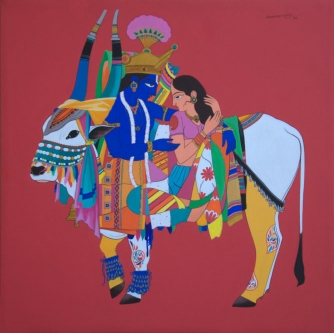
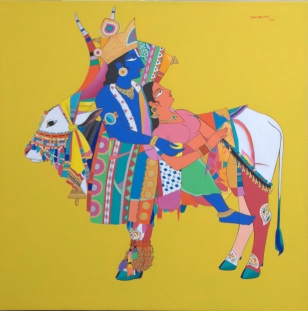
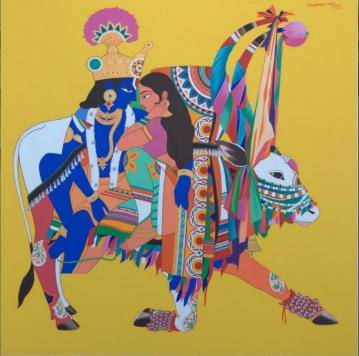
Mohammed Osman’s works, such as “Radha and Krishna with Gangireddu,” place the divine couple amid South Indian rural festivals, decked animals, and celebratory colors—rooting mythology in local traditions.
7. Subrata Das
Subrata Das paints ethereal, modern lovers with elongated limbs, mystical forests, blue lotuses, flutes, and vermillion—creating a visual celebration where tradition and contemporary aesthetics merge seamlessly.
8. Kuldeepak Soni
Kuldeepak Soni upholds Nathdwara’s lineage with vibrant, hand-painted Pichwai artworks that breathe new life into Radha Krishna’s timeless romance.
9. Ramesh Gorjala
Ramesh Gorjala fuses Kalamkari-inspired miniature detailing with symbolic patterning, portraying Radha-Krishna as layered silhouettes filled with epic tales and temple motifs, inviting viewers into meditative, modern mythmaking.
10. Seema Kohli
Seema Kohli reimagines Radha-Krishna with a feminine, tantric perspective. Her works use gold, lotuses, and cosmic forms to explore mystical, universal bonds of love through vibrant, layered mixed media.
For abstract Radha Krishna works, also explore Rajesh RV, Jatin Das, and Madan Meena for modern reinterpretations using miniature art and printmaking techniques.
How to Choose the Right Krishna and Radha Painting?
1. For Living Rooms
For shared spaces, collectors often gravitate towards compositions that balance narrative with visual harmony such as Raas Leela scenes, pastoral Vrindavan settings, or contemporary interpretations with softer palettes. Larger formats or expressive modern styles work well here, allowing the artwork to act as a cultural anchor without overwhelming the space.
2. For Office Workspaces
In professional environments, more understated or abstract Radha–Krishna interpretations tend to resonate. Minimalist renderings, symbolic motifs like the flute or lotus, or works that emphasise rhythm and balance can introduce a sense of calm and continuity without reading as overtly religious.
3. For Puja/Meditation Rooms
In quieter, reflective corners of a home, collectors often choose more traditional or contemplative depictions such as intimate Radha–Krishna portraits or serene flute-playing themes. These artworks can enhance the meditative quality of the space through mood, colour, and symbolism rather than ritual function.
Why Buy Radha & Krishna Art from Artflute?
- 1. 100% hand-painted original artworksEvery original artwork listed here is a one-of-a-kind painting.
- 2. Certificates of authenticity and artist attribution Provenance and recognition for collectors and future generations.
- 3. Secure, insured international shipping ArtFlute’s expertise ensures safe arrival, wherever you are.


.jpeg)
.jpeg)






.jpeg&w=3840&q=75)