Popular Styles in Traditional Art Collection
1. MADHUBANI PAINTINGS
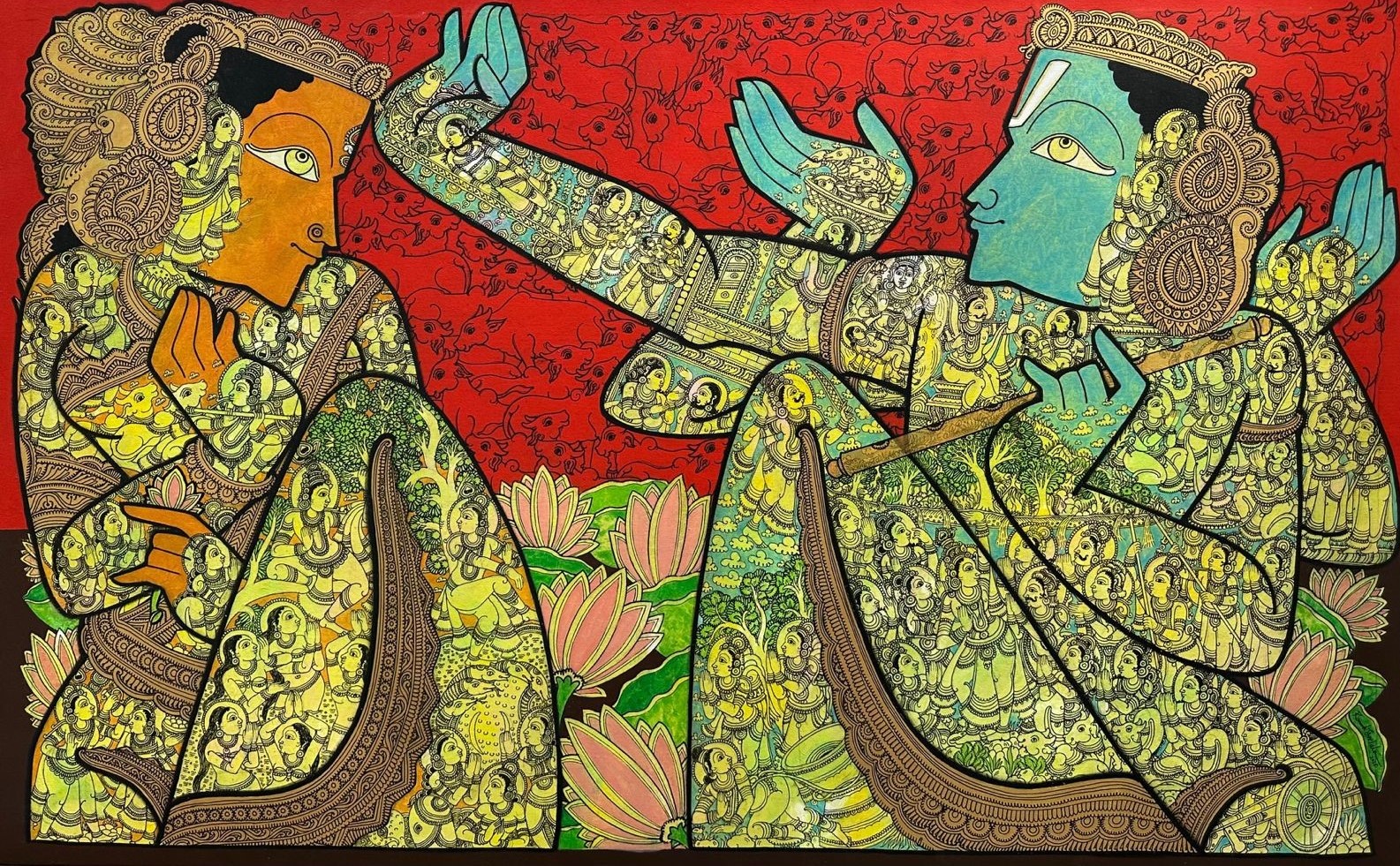
In a Madhubani painting you can almost sense the village courtyards where women once painted directly onto freshly plastered mud walls using twigs and fingers. Born in the Mithila region of Bihar and Nepal, Madhubani (or Mithila) painting uses flat areas of intense colour, dense patterning, and black outlines to depict deities, nature, and ritual scenes.
2. TANJORE PAINTINGS
Tanjore paintings feel almost sculptural with their raised gesso work, 22-karat gold leaf, and semi-precious stones that create a shrine-like presence. Emerging from Thanjavur under Nayaka and Maratha patronage, these traditional paintings are instantly recognisable for their centralised, icon-like images of Hindu deities against luminous, often flat backgrounds.
3. PATTACHITRA ART
Pattachitra scrolls from Odisha and West Bengal keep alive narrative traditions that once accompanied traveling singers and storytellers. Cloth or palm-leaf supports, bold outlines, and compact compositions packed with mythological episodes link them visually to temple murals at Puri and other sacred sites.
4. KALAMKARI ART
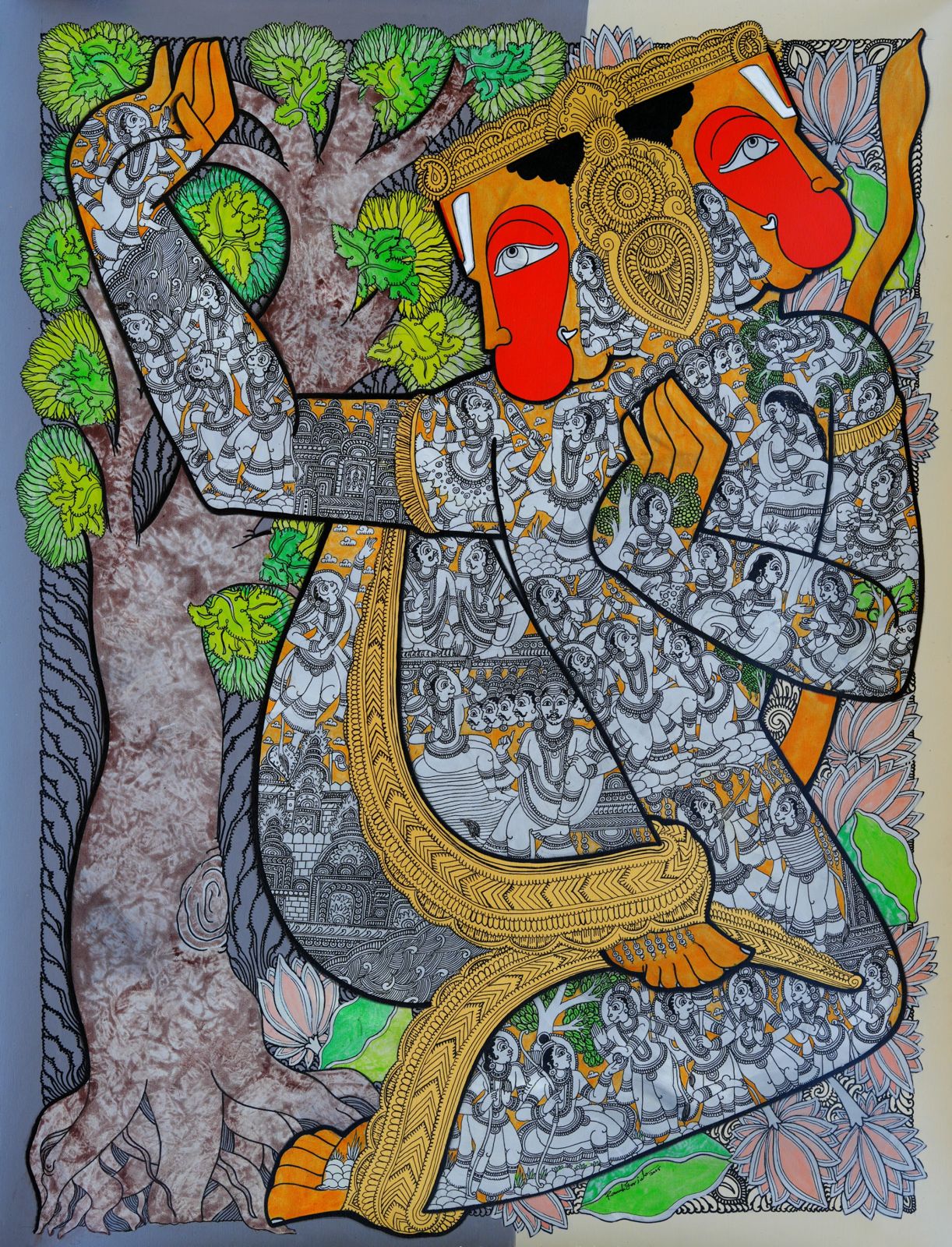
Kalamkari paintings from Andhra Pradesh and Telangana, are drawn textiles, through hand-painted kalam (pen) work or block printing with vegetable dyes often featuring tree-of-life motifs, divinities, and intricate borders.
5. MYSORE PAINTINGS
Mysore paintings, refined under Vijayanagara and Wodeyar patronage, share some of Tanjore’s devotional intensity but with a gentler palette and meticulous brushwork over a gesso-and-gold base.
6. MINIATURE PAINTINGS
North Indian miniature traditions from Mughal albums to Kishangarh works like the famed Bani Thani image bring in Persianate influences, delicate lines, and sophisticated colours. They form an important bridge between Indian and wider Eurasian courtly art.
Together, these styles show how traditional painting art in India documents village ritual, royal courts, and temple precincts yet blending with contemporary interiors.
Techniques and Mediums Used in Traditional Artworks
1. NATURAL COLORS
A hallmark of traditional art is its time-honored technique and natural materials. The palette is derived from the earth, as mineral and plant-based pigments. A Pattachitra painter grinds conch shells for white, lamp soot for black, red stone for yellow, indigo from plants, and mixes them by hand. A Madhubani painter uses natural dyes and pigments with emphasis on raw primary hues. These organic colors give a traditional artwork its warm, matte vibrancy and aging that appeals to collectors tired of one-dimensional prints.
2. SURFACE MATERIALS
The surfaces used also reflect craft heritage. Ancient scroll artists painted on stitched cloth or palm leaf, coated with rice paste to form a smooth canvas. Temple murals might use dried cotton or plastered wood panels. In Kalamkari, the cotton fabric is pre-treated (with mordant and tamarind paste) to fix dyes before freehand painting. Even the “gesso” in Tanjore paintings is a traditional concoction (talc mixed with glue) laid on wood to create low-relief backgrounds.
3. INTRICATE LINEWORK AND PATTERNS
Fine linework is one of the clearest signs of hand skill in traditional works.. Traditional paintings employ fine linework from handmade brushes to render delicate patterns. Pattachitra is famous for its crisp, sharp lines outlining every motif. In Kalamkari, the artist may outline in black then flood areas with one color at a time, layering depth and texture. This intricacy adds to the authenticity and the skill of generations.
4. MOTIF-BASED TECHNIQUES
Traditional artists usually work within inherited motifs and symbol systems. For example, in a royal chronicle painting, Rajput miniatures reserve a certain perspective for kings, while folk tales follow community patterns. A collector versed in iconography can see a Kalamkari panel and immediately identify its regional details. The guru-shishya (master-student) lineage ensures each painting continues these conventions.
Artists Known For Traditional Art Painting
Collectors often seek works by renowned masters and contemporary torchbearers of traditional genres. Historical figures gave certain styles worldwide fame, and living artists keep them alive. A few notable names include:
1. Sita Devi (1926–2005)
A Mithila (Madhubani) legend, Sita Devi popularized the Bharni style (filled color) and brought Madhubani to international attention. She won a National Award (1975) and India’s Padma Shri (1981) for her art. She’s recognised for iconic elongated Krishna-and-Radha paintings, and her other works entered major museums from V&A London to LACMA. Indira Gandhi herself admired Sita Devi’s work in the 1960s.
2. Bhuri Bai
Bhuri Bai (from the Bhil tribe) was one of the first to transfer Bhil’s Pithora wall art onto paper, and received a Padma Shri in 2021 for her vibrant canvas scenes of tribal life.
3. Jangarh Singh Shyam & Bhajju Shyam:
The Gond masters Jangarh Singh Shyam and Bhajju Shyam (Pardhan Gond) have exhibited globally (Tate, MoMA) for their hypnotic dot-and-line myth paintings. These artists were one of kind, who bridged heritage and contemporary expression, symbolizing tribal art’s living relevance.
4. Court and Folk Masters:
Raja Ravi Varma was known for adapting Western realism to Indian mythology which were long told through folk & traditional art forms. Among folk revivalists, Jamini Roy borrowed Kalighat motifs to create a distinct language for modern art. In Islamic-influenced miniatures, Mir Sayyid Ali (16th c.) and others defined the Mughal school. These artists often appear in auctions & museums. Christie's points out that Mughal imperial works (Akbar, Jahangir’s ateliers) remain benchmarks of technique.
5. Living Traditionalists:
Today’s leading painters sell on global platforms. The famed Pattachitra sisters Laxmi Meher (Odisha, Padma Shri laureate) and Radha Mohapatra maintain village guilds. In Kalamkari, artisans in Mangalgiri and Kalamkari centers showcase at fairs.
Each artist’s work is an invisible historical thread. When viewing a Madhubani by Sita Devi, the collector is directly linked to Mithila’s 2000-year tradition.
Shop Beautiful Traditional Art Online at Artflute
1. Certificate of authenticity
For collectors used to buying traditional art in temple towns or craft fairs, discovering traditional art for sale online can feel both convenient yet daunting. ArtFlute bridges this gap by curating works with clear provenance and a distinct authorial voice, rather than mass-produced pieces.
2. Premium Quality
Premium-quality materials and finish with archival papers, well-seasoned panels, stable pigments, and professional stretching or mounting help ensure that traditional art paintings sit comfortably alongside contemporary canvases like acrylic paintings or oil paintings in your spaces.
3. Safe packaging & worldwide delivery
Thoughtful, secure packaging and worldwide delivery allow global collectors to buy traditional art online without compromising on condition. For those working on specific projects or looking for commissions, ArtFlute also facilitates conversations with artists and studios around format, iconographic requirements, and colour harmonies for commissioned works.
FAQs About Traditional Paintings