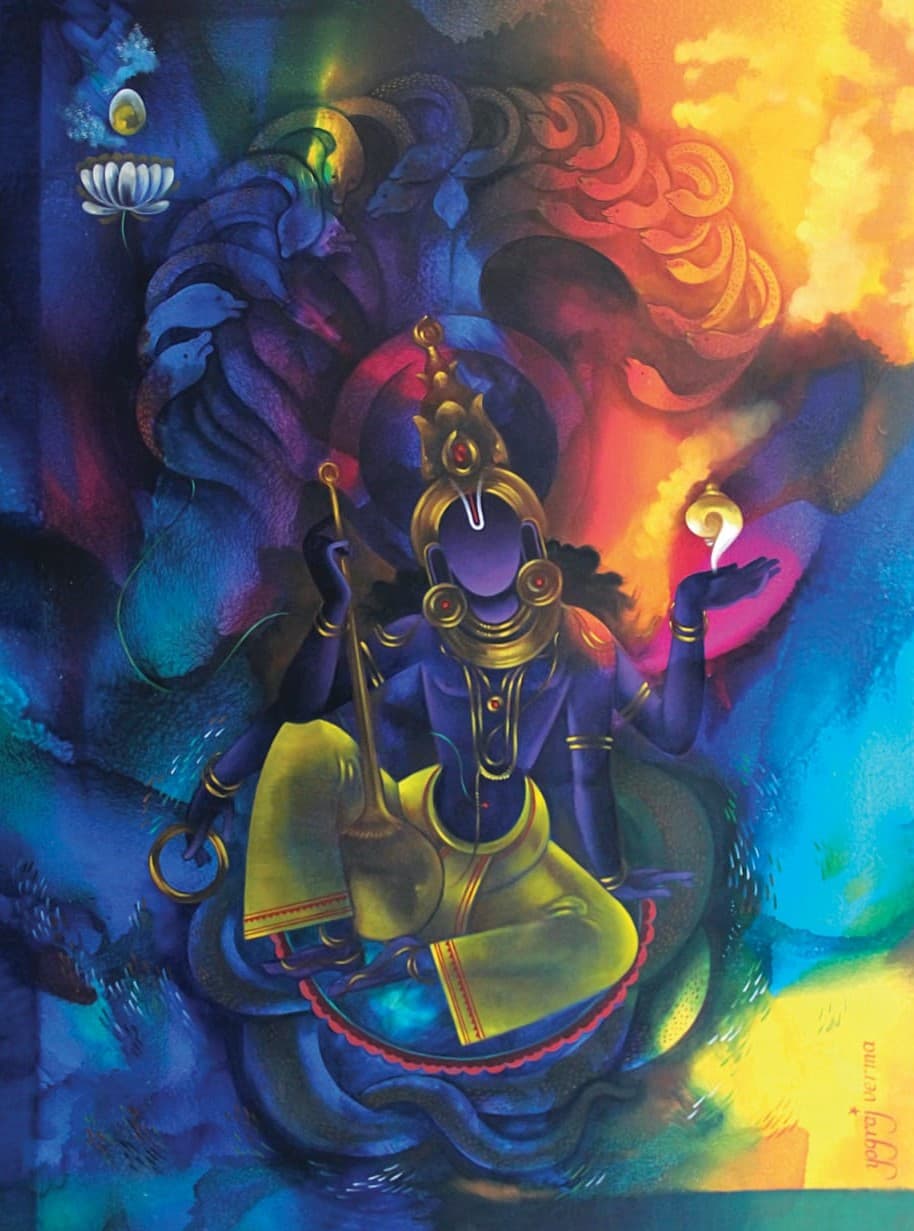

Curatorial Note
The Practice — Yograj Verma
Every artist carries a private rhythm: a discipline that begins long before the gallery wall and continues long after the studio door closes. The Practice is ArtFlute’s attempt to step inside that rhythm and spend time with the rituals, ideas and ways of seeing that shape an artist’s work.
The series draws from the Indian classical tradition of riyaaz — the daily return to one’s craft, where repetition deepens into instinct and discipline becomes a way of life. We turn our attention to the hours, gestures and quiet rituals that give a work its form.
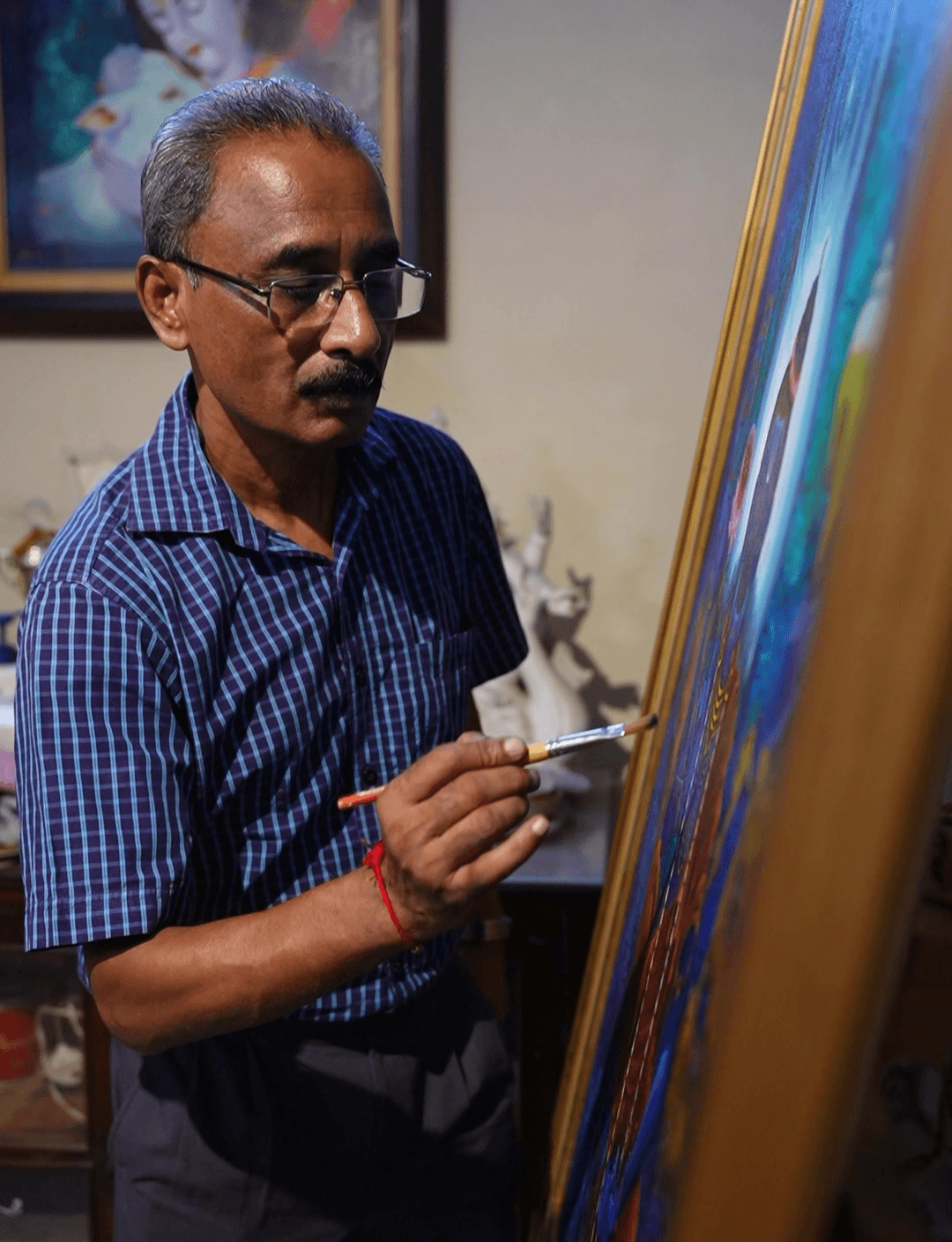
We begin with Yograj Verma, an artist for whom painting is a form of seva, an offering to the divine. His studio in Delhi follows a ritual clock. His subjects emerge from darshan, meditation and a lifelong conversation with the divine. To understand his work is to spend time with the practice that gives it meaning.
This is a glimpse into that practice.
1. Make an Offer: If you truly connect with a work, you can place a price offer - keeping in mind the value of the artist’s practice. On this page you’ll find a “Make an Offer” button for eligible works.
2. Request a Viewing: For serious collectors - especially those used to buying art offline - we’re offer private viewings of select works (paintings) in metro cities. Message us on WhatsApp at 8088 313131
3. Request More Images & Details: Want a closer look before you decide? For select works, you can request additional images or videos, a conversation or video call with the artist to help you feel confident in your choice.
ArtFlute is a space where art becomes a living journey of connection and meaning.
Founded in 2008, when online art was still new in India, ArtFlute set out to rethink how people discover and live with art - moving beyond gallery walls and jargon toward experiences rooted in meaning and memory.
Over time, it has evolved into a space for original artworks, thoughtful collaborations, and meaningful encounters, guided by a deep respect for the artist’s voice. ArtFlute’s vision is simple: to transform art from something merely admired into something lived with, an experience of connection, presence, and belonging.
Selected Works
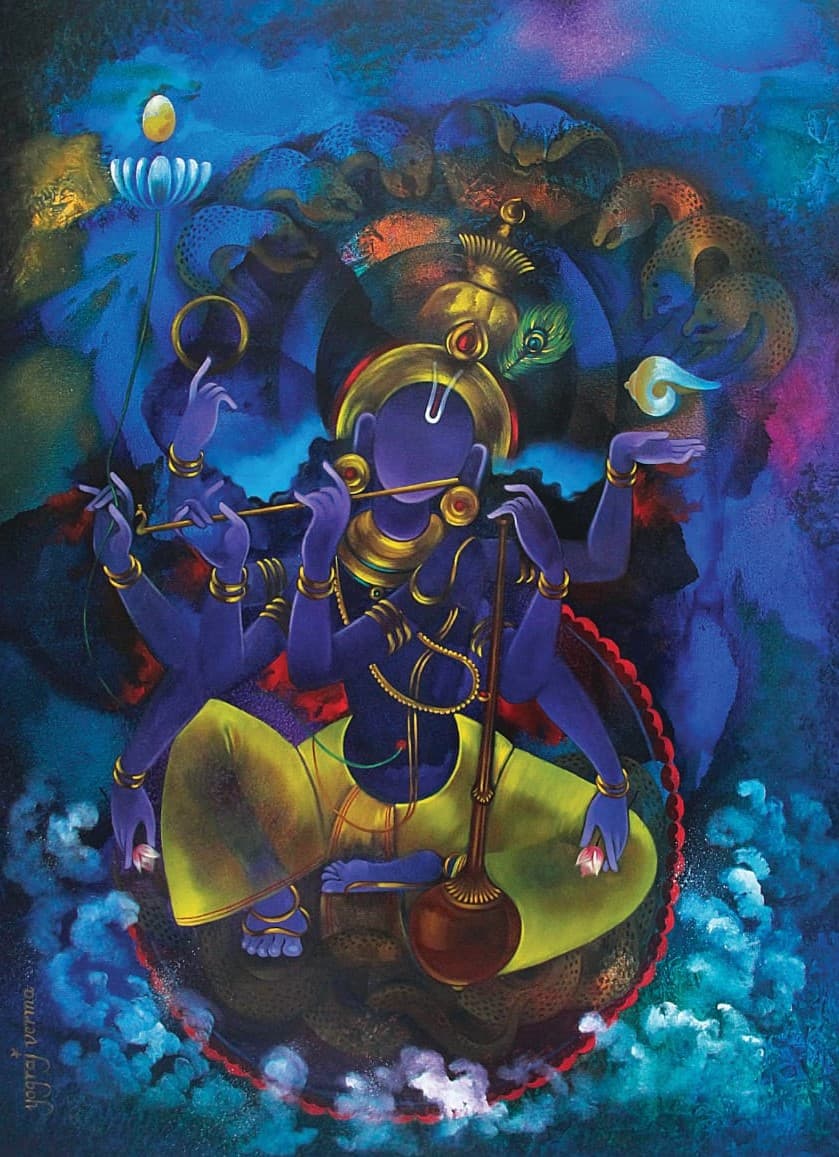
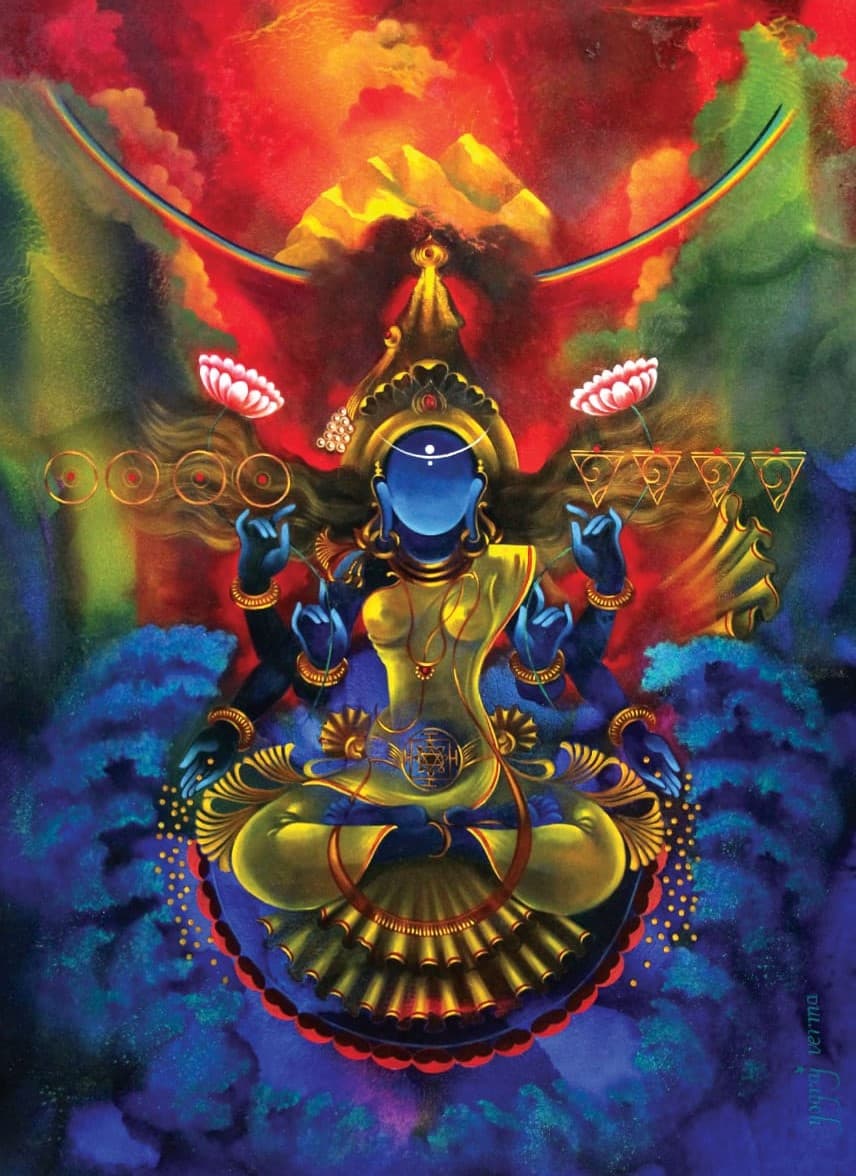
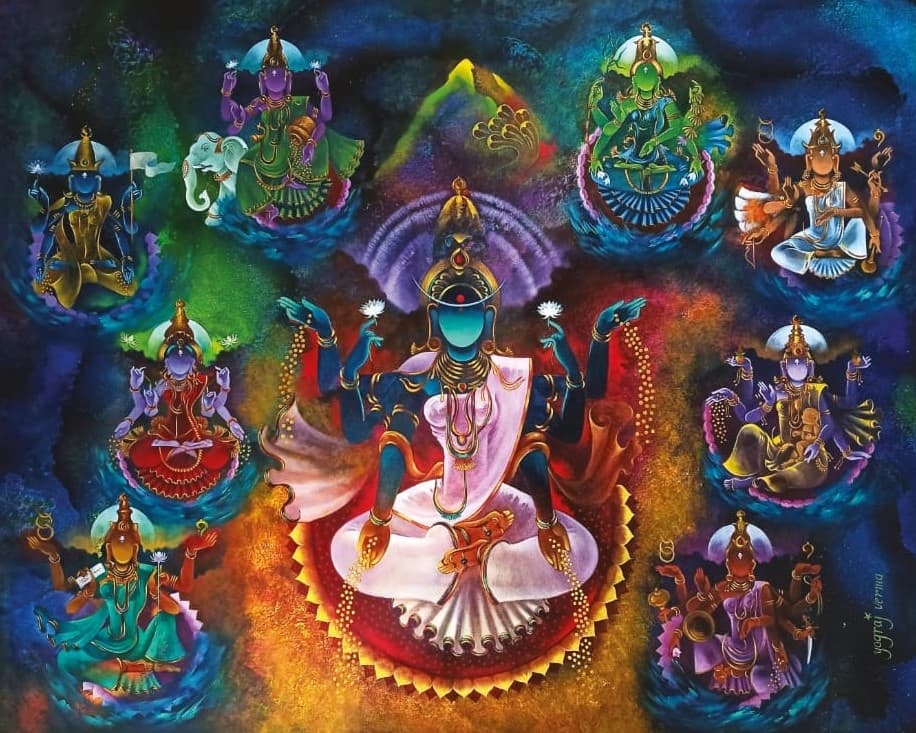
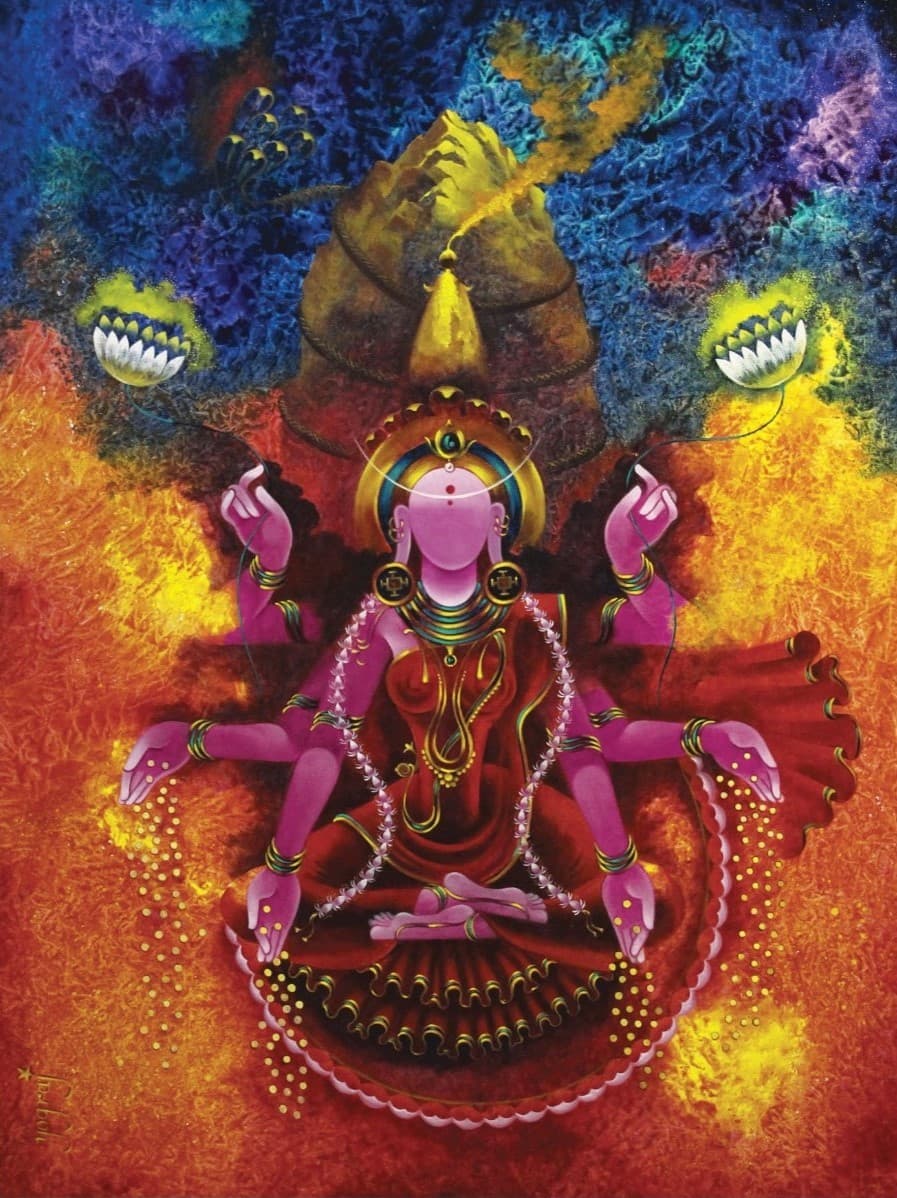
Goddess Lakshmi and Her Eight Manifestations
Oil on Canvas
60(w) × 48(h) in
₹ 29,75,000
Featured Artist
Yograj Verma — Dhun (The Calling)
What brings him back to the canvas, every single day.
“Ye kaam isliye karta hoon ek toh mujhe andar se mahsoos hota hai. Ek energy develop hoti hai. Us energy ko sirf main apne paas nahi rakhna chahta. Jo bhi mere paas aaye, main chahta hoon ki woh energy un tak bhi pahunche.”
“I do this work because, firstly, I feel something from within. An energy develops. I don’t want to keep that energy only to myself. Whoever comes my way, I want that energy to reach them too.”
Even before technique, before galleries and collectors, there is the practice itself: the quiet return to the studio, day after day.
For Yograj Verma, something within that practice keeps him returning. He calls it energy.
Chapter Two
The Arc
Four decades of devotional practice
The Soil
Childhood
He grew up with stories of gods that were not scripture but supper-table conversations. His father told him the stories; Yograj now tells them to his daughter. “Taki jo history hain, woh parampara chalta rahe” — so the tradition continues.
The Foundation
16–17 years — Karnataka Samaj
He began by sculpting and painting Ganesha idols for the community. His focus was on creating *jaagrit* (spiritually awake) idols, forms created to invite the presence of the divine.
The Invention
The Automatic Bhagavad Gita
He engineered a unique Bhagavad Gita that opens automatically and has travelled across the world. A mechanical expression of devotion, the book opens on its own, as if moved by something other than hands.
The Turn
Mythological painting — The faceless deities
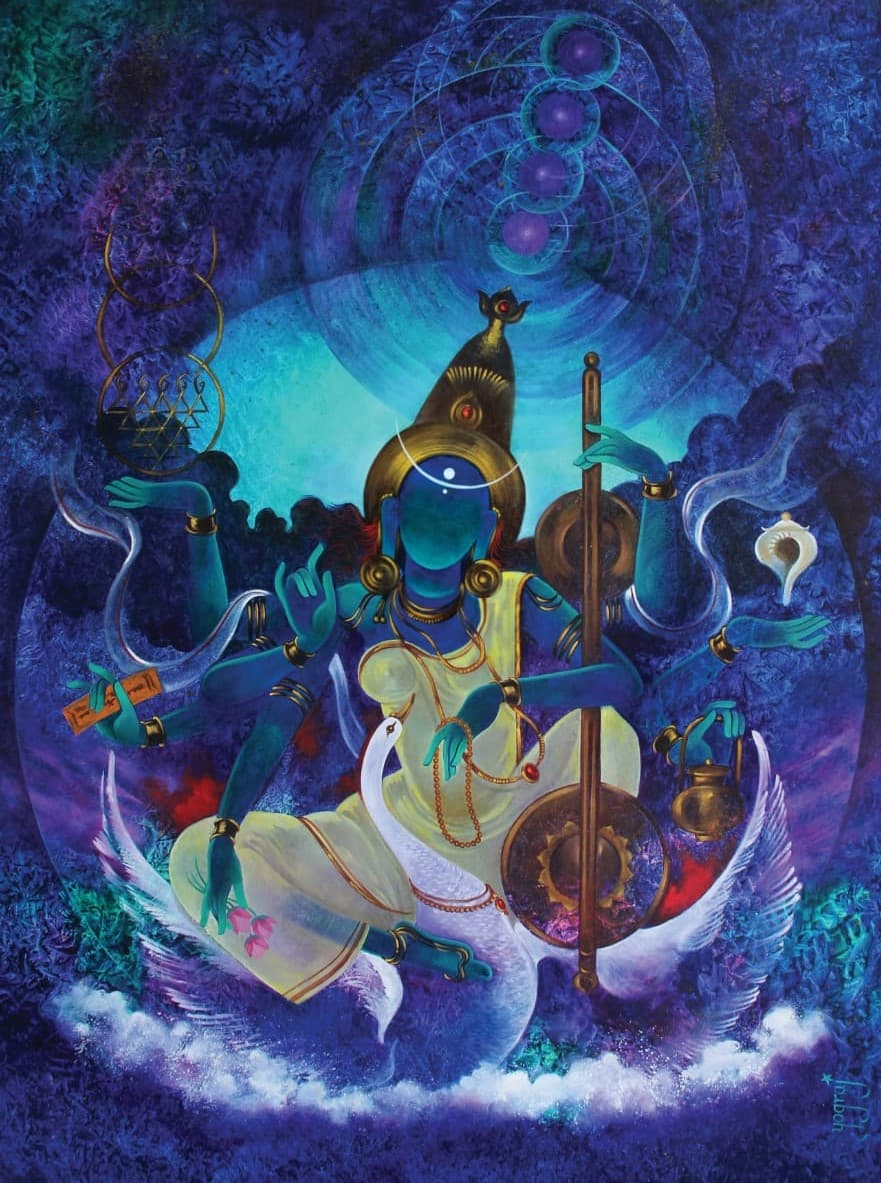
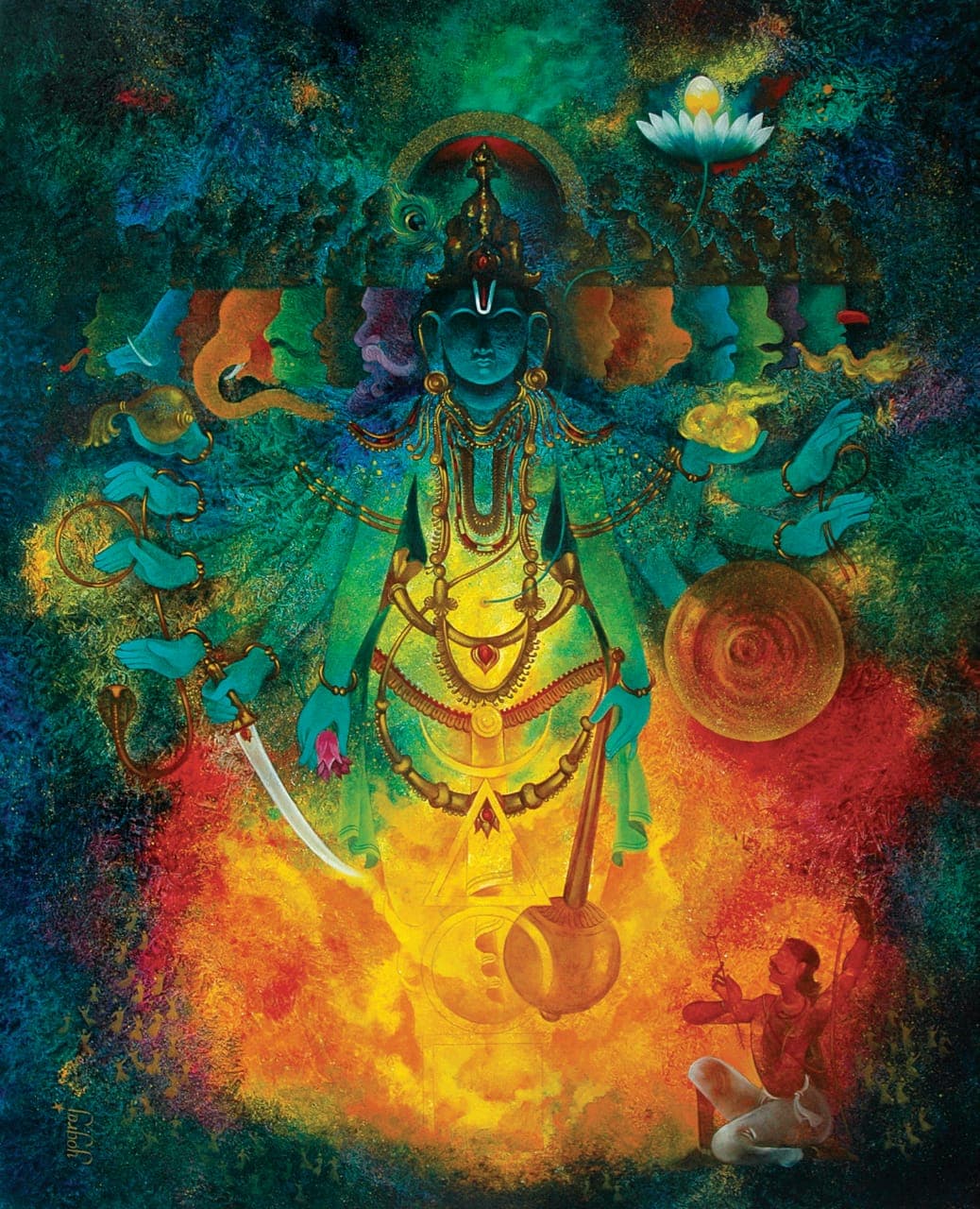
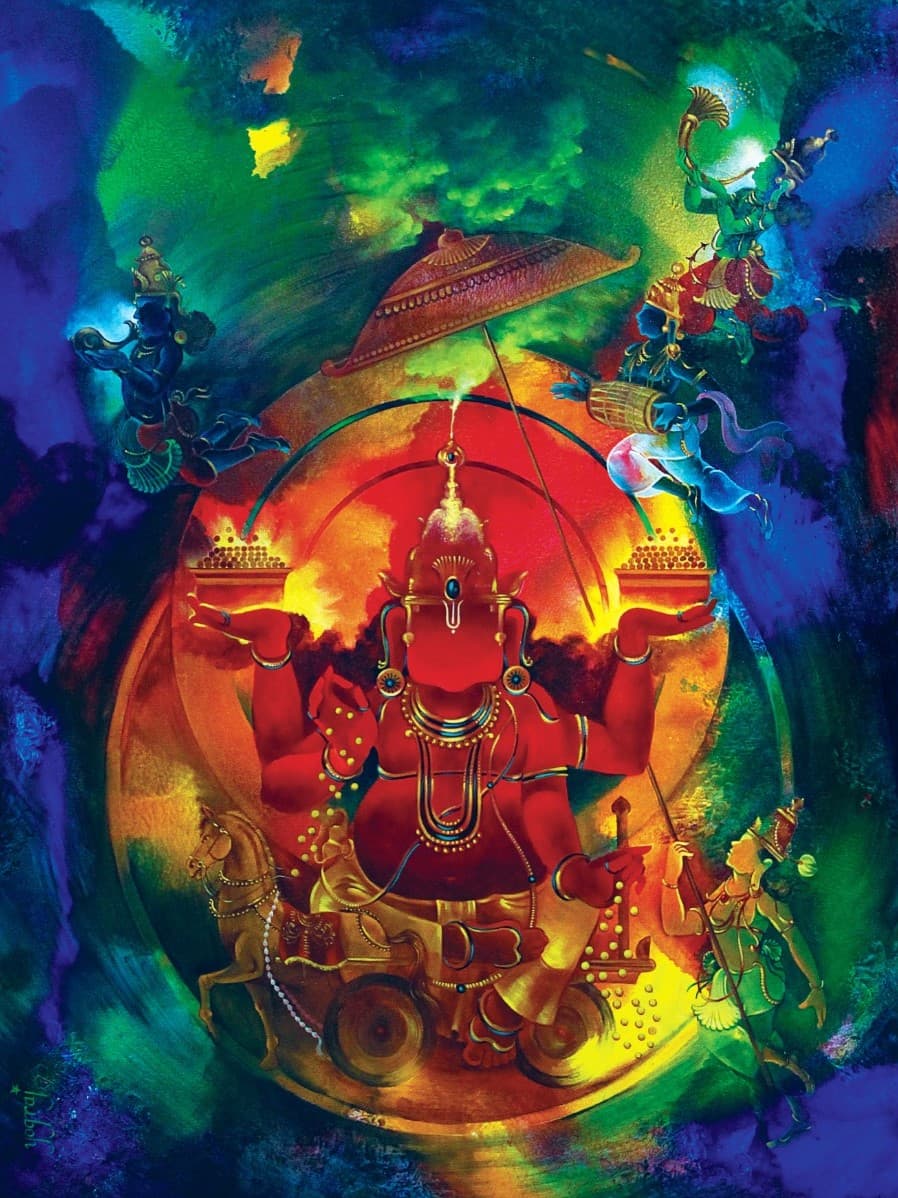
A shift from three-dimensional forms to canvas brought with it a defining element of his practice: faces left to the imagination. Not out of omission, but because no single face could hold what people believe. “The face is beyond what can be shown. Belief is what completes it.”
Now
A Practice Lived in Seasons
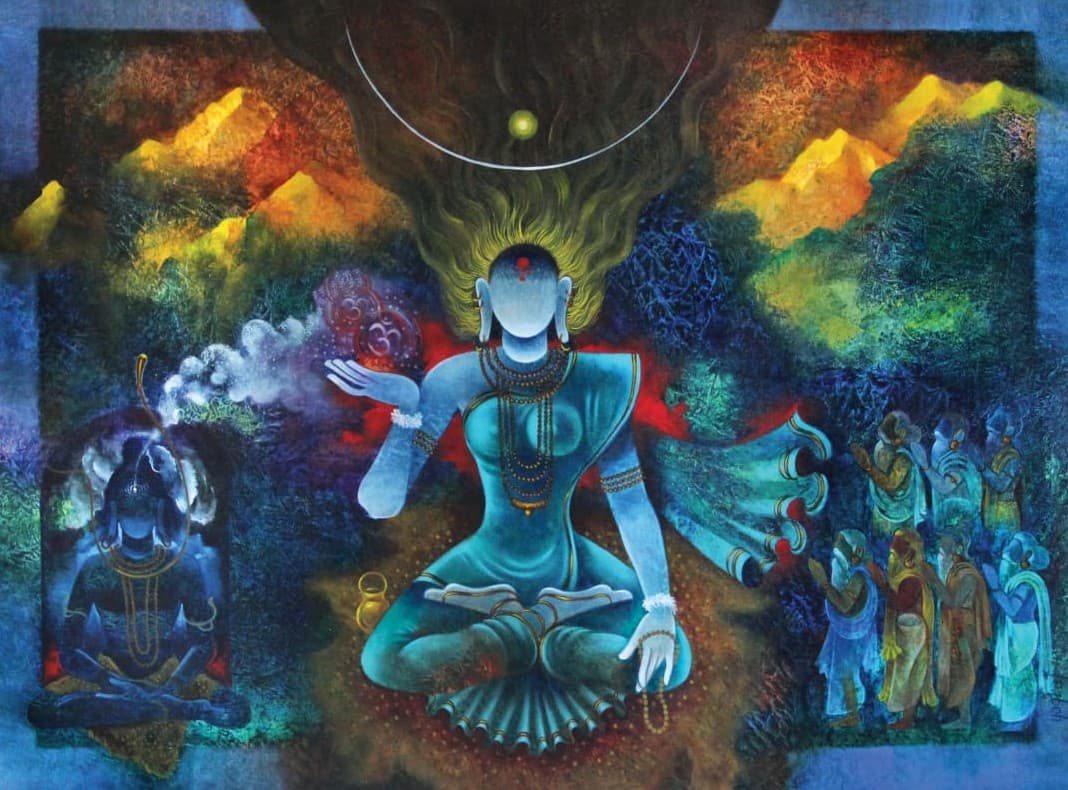
Yograj doesn't paint to keep up with demand. Each series comes from something he has lived through. His current one began at the Mahakal Yatra in Ujjain, where the procession changed its route and Shiva's palanquin passed right beside him. He then studied how generations of artists have painted Shiva, and asked how his own Kaalon ka Kaal, the Lord of Time, should take form. The Mahakal series is where that question has led him. Alongside it, his most ambitious work brings Rama and Vishnu together in a single meditative form.
Chapter Three
Zubaan — The Language
How Yograj speaks through line, form, and feeling.
Every artist has a way of speaking. Yograj’s language lives in the details: faces left to the imagination, intricate lines, layered forms, and elements that reveal themselves slowly. Over time, these details have come together to form a language of his own.
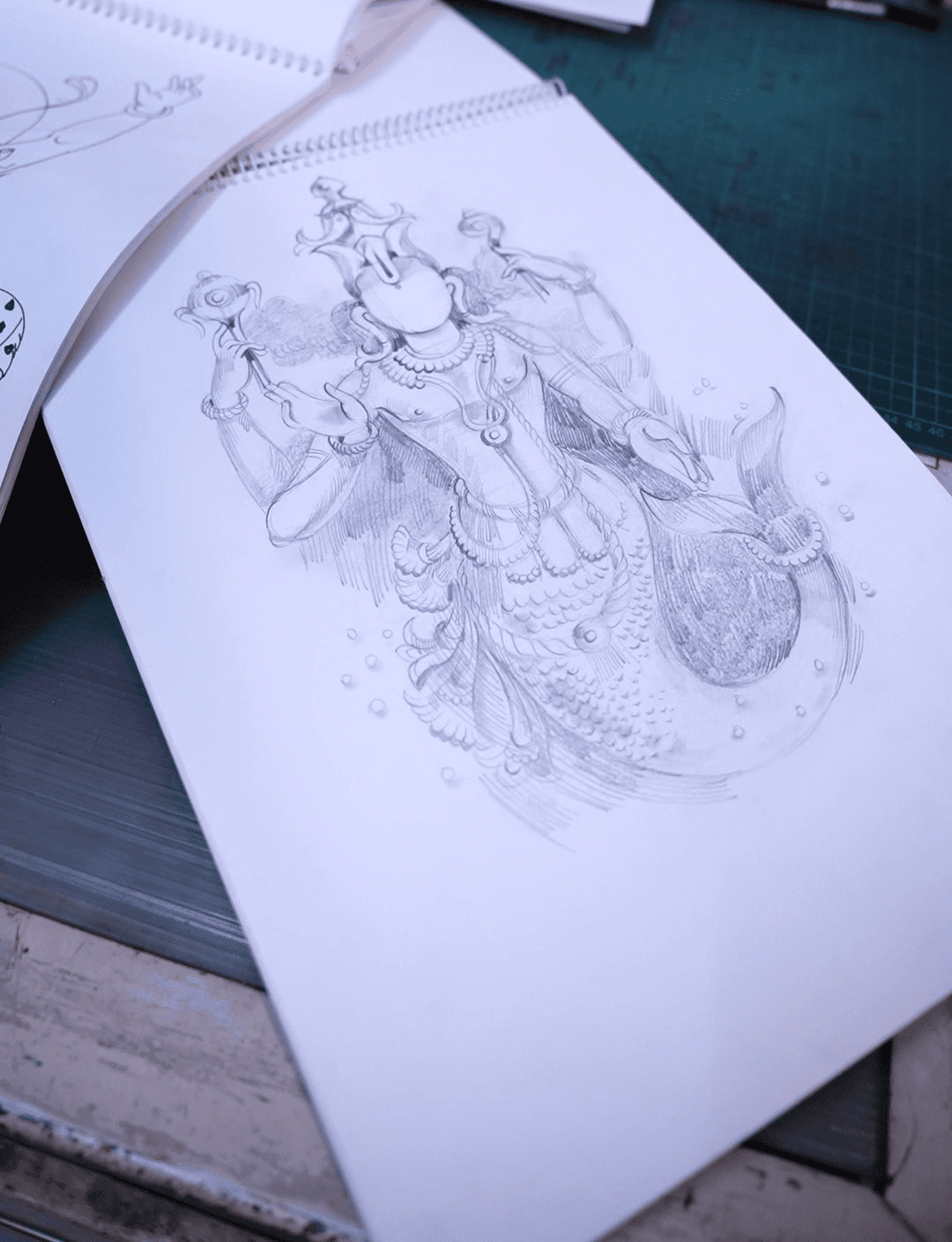
“Ek moment aisa aata hai ki main paper-pencil nikaal kar sketch karna shuru karta hoon. Aur jo sketch karta hoon, toh karte hi chale jaata hoon.”
“A moment comes when I take out paper and pencil and begin to sketch. And once I begin, I just keep going.”
His process begins with contemplation. He spends a long time with an idea before touching paper. Sketches emerge, are set aside, revisited, and refined. He returns to them every day: “Ek din nahi, do din nahi — main usko roz niharta hoon,” — until an inner voice tells him it’s ready.
Only then does the sketch move to ink. Research follows. He cross-references his work with critics and advisors, absorbs their perspectives, wrestles with them, and gradually arrives at a form that feels distinctly his.
Chapter Four
Sadhana — The Devotion
What happens before a painting becomes a painting.
For Yograj, painting is a form of sadhana - a sustained commitment to his craft. He approaches it as a lifelong practice, guided by an inner sense of purpose and responsibility. Each work is part of that continuing journey.
“Jaise-jaise main kaam karta rehta hoon, mujhe andar se ek awaaz mehsoos hoti hai: yeh mere liye bilkul sahi hai.”
“As I keep working, I feel it - a voice from within saying: this is perfect for me.”
He paints when his mind and hand feel completely aligned. His vibrant colour palettes emerge from visions during meditation. Before choosing his colours, he meditates until it feels like the choice isn't his to make anymore.
“God ko dhoondne nahi ja sakte. Aapko sab kuch arpan karna hai. Tab wo jaake kahan kis waqt aapko kaam mein aayega, tab aur aap usko kis roop mein pehchaan paoge wo God hota hai.”
“You cannot go looking for God. You have to surrender everything you do to the process. Then, at some point, in some form, you recognise that presence through your work. That, for me, is God.”
When the interviewer asks, “Toh energy hai?” Yograj confirms simply: “Energy hai.”
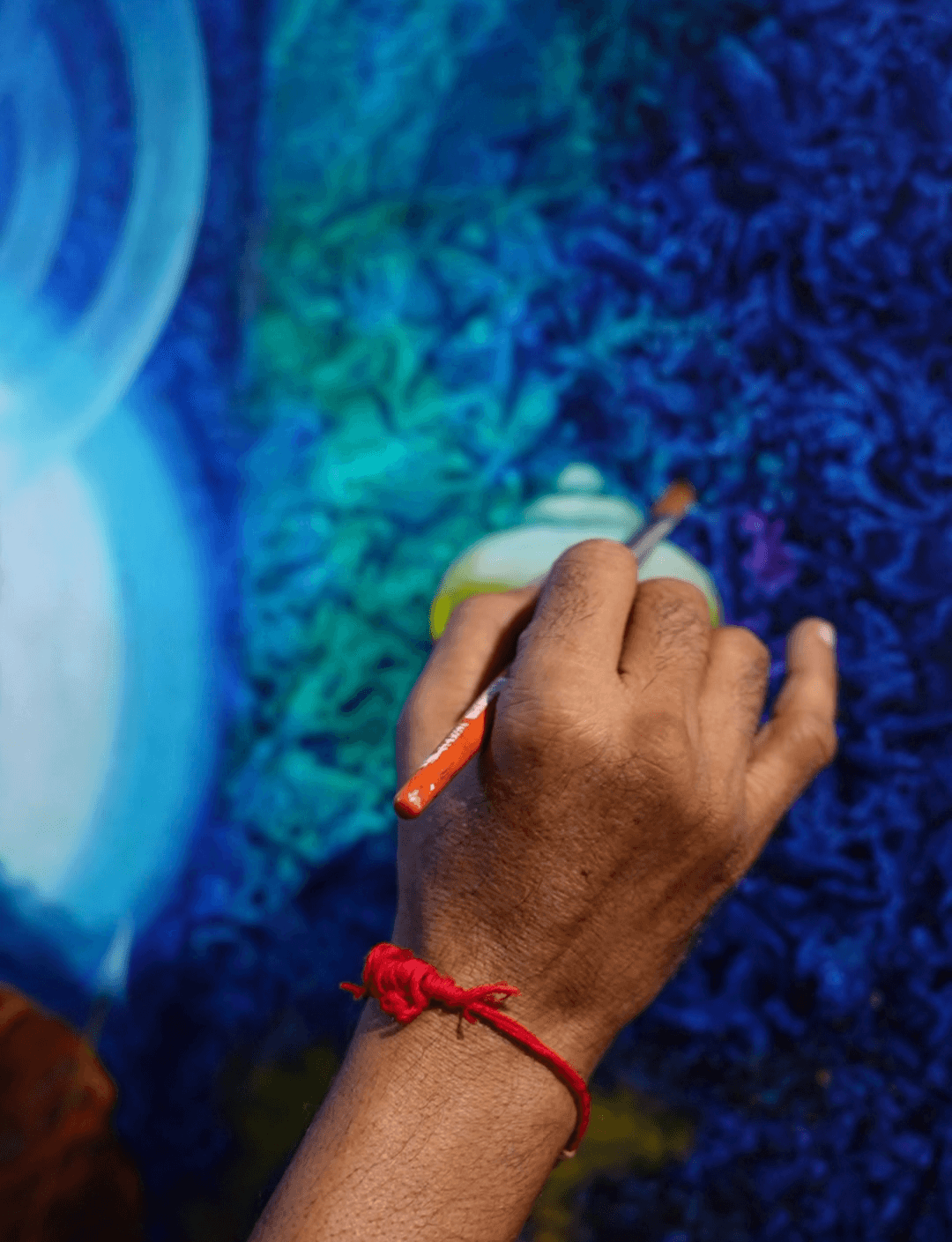
For him, that energy becomes part of the act of making. It moves through the brush and the colour when the mind is quiet enough to let it.
The practice asks for two things above all: involvement and dhairya, patience.
“Jaldbaazi nahi honi chahiye.” The work takes its own time. If you work with a disturbed mind, the painting reflects it. If you work with an aligned mind, that too finds its way into the painting.
“Agar aap achhe mann se karoge toh uska reflection aapke kaam ke saamne dikhai dega.”
His integrity runs deep. He places spiritual honesty and peace of mind at the heart of his practice. Money can bring material comforts, he says, while health, true knowledge, and peace of mind come from elsewhere.
Chapter Five
Khoj — The Search
The stories that feed the work — encounters that arrived without being sought.
“Mujhe bachpan se hi mera environment aisa hi raha. Mere father mere ko kahaniyaan sunate the toh mujhe achhi lagti thi. Aur even main bhi apne daughter ko bachpan mein isi tarah ki main kahaniyaan sunata tha aur unko bata tha.”
“I grew up in an environment like this since childhood. My father used to tell me these stories, and I really liked them. Later, when my daughter was young, I would tell her these same kinds of stories.”
Knowledge, he says, is where thought begins. “Knowledge se hi aapko soch aati hai. Aur soch agar acchi hain toh tabhi aapka dimaag aur haath accha chalta hain.”
Reading before drawing. Knowing before making. For Yograj, the hand follows the mind, and the mind follows what it has been fed.
The Unscheduled Darshan — Nathdwara
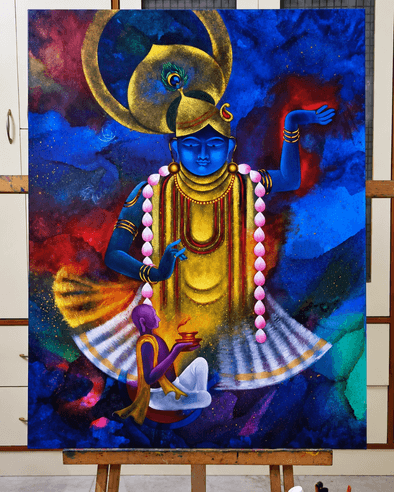
After waiting 12 to 15 years for the “right time,” Yograj travelled to Nathdwara with his wife. They arrived after the temple doors had closed to the public. A head priest spotted him from inside, called him over, and escorted them in for a private, face-to-face viewing, samaksh darshan, before the deity.
There, Yograj closely observed Shrinathji’s chin diamond and its history: the story of Aurangzeb offering the jewel in surrender after his attempts to destroy the temple had failed.
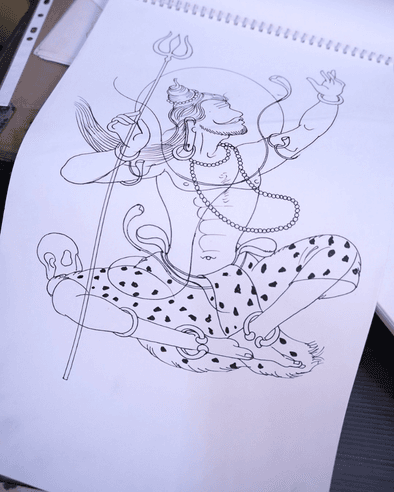
The Mahakal Palanquin — Ujjain
While attending the Mahakal Yatra among millions, Yograj stood in a distant corner, with little expectation of darshan. Then the palanquin of Shiva changed its route and passed directly beside him, bringing him unexpectedly close. The moment stayed with him and became the central inspiration for his current Mahakal series.
Chapter Six
Nishaan — The Trace
A motif spotlight: reading Yograj's symbolic language.
The recurring forms and symbols that give Yograj’s work its language.
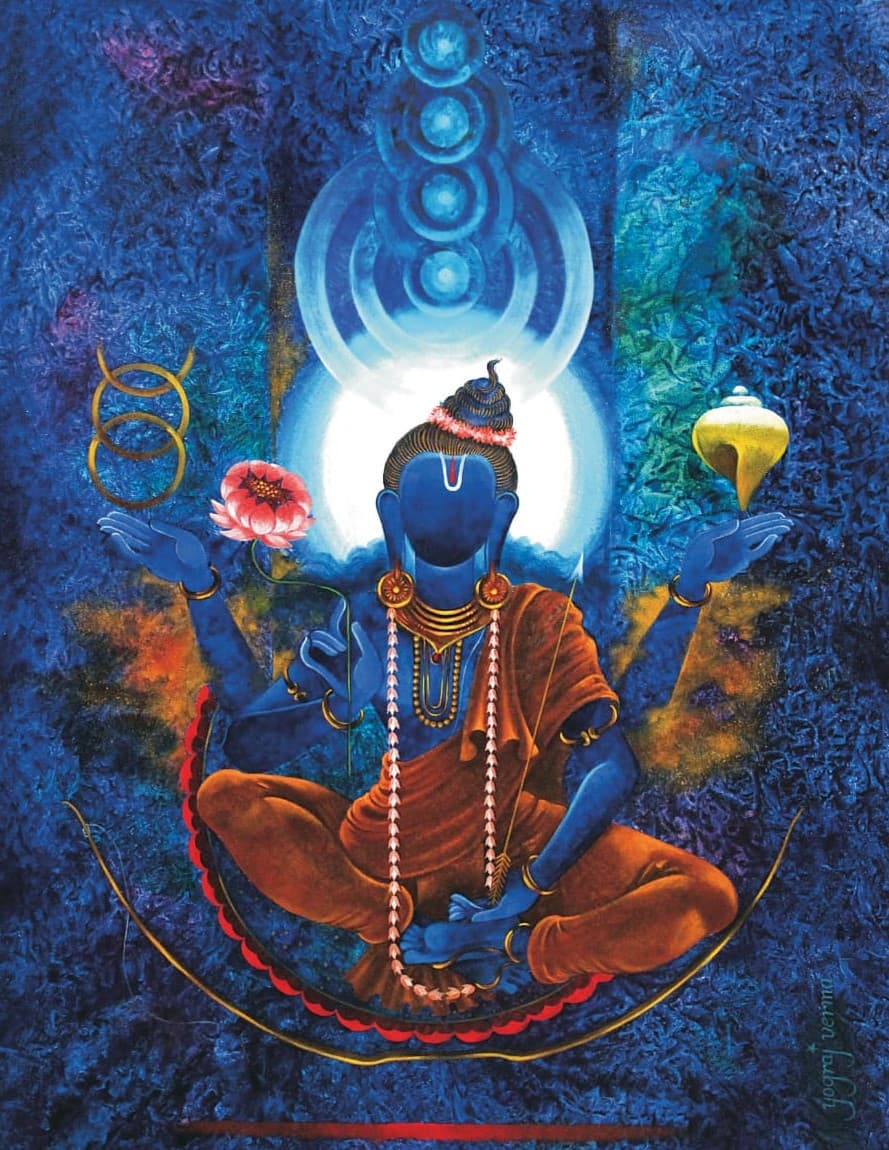
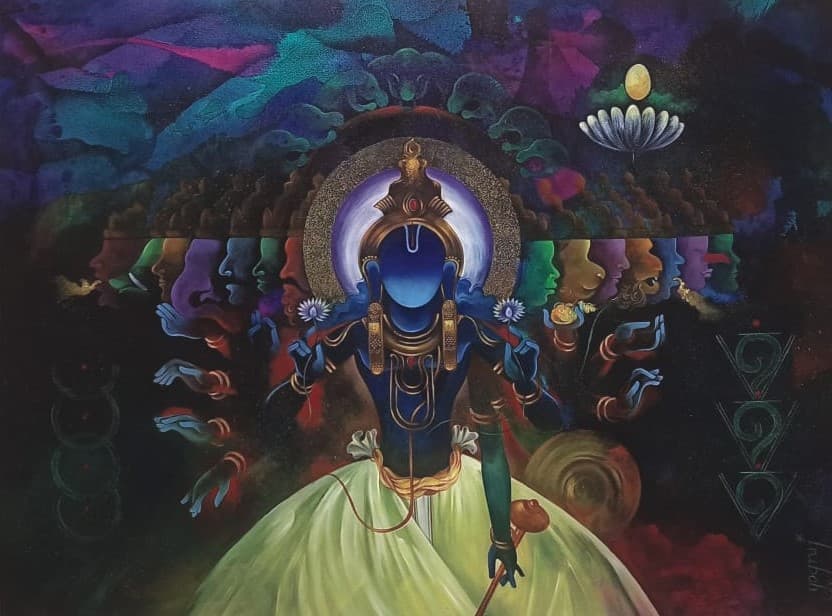
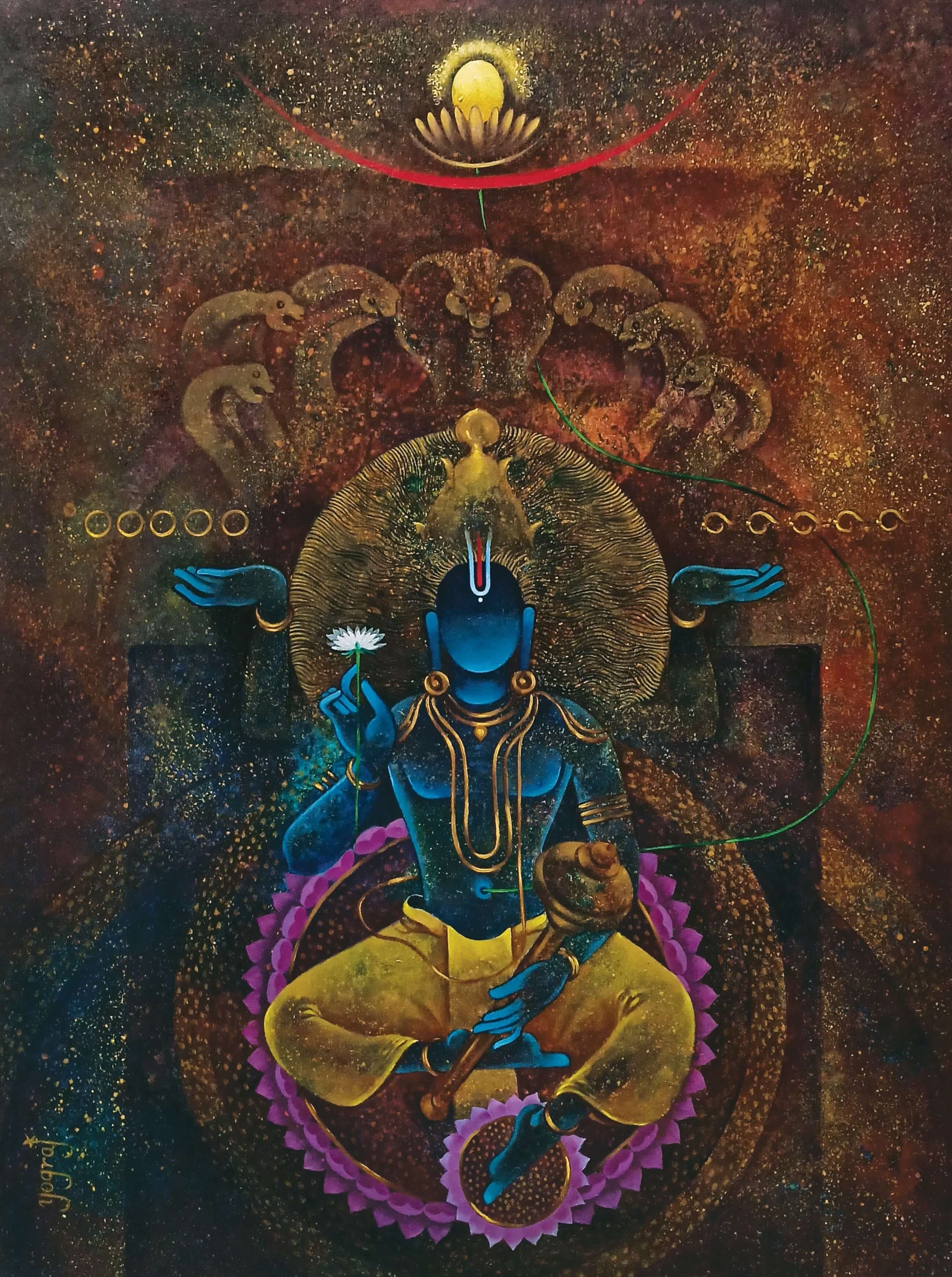
We often meet Ram as warrior, king, ideal. Yograj invites us to meet him in another moment: seated in deep meditation, as a tapasvi, his presence held in quiet spiritual stability. To understand the painting is to read each element as a sentence in a longer argument about stillness.
“Ram ko ek tapasvi roop mein darshaya gaya hai, jahan vah gahan dhyan-magn avastha mein virajmaan hain.”
“Ram is shown in his ascetic form, seated in a state of deep meditation.”
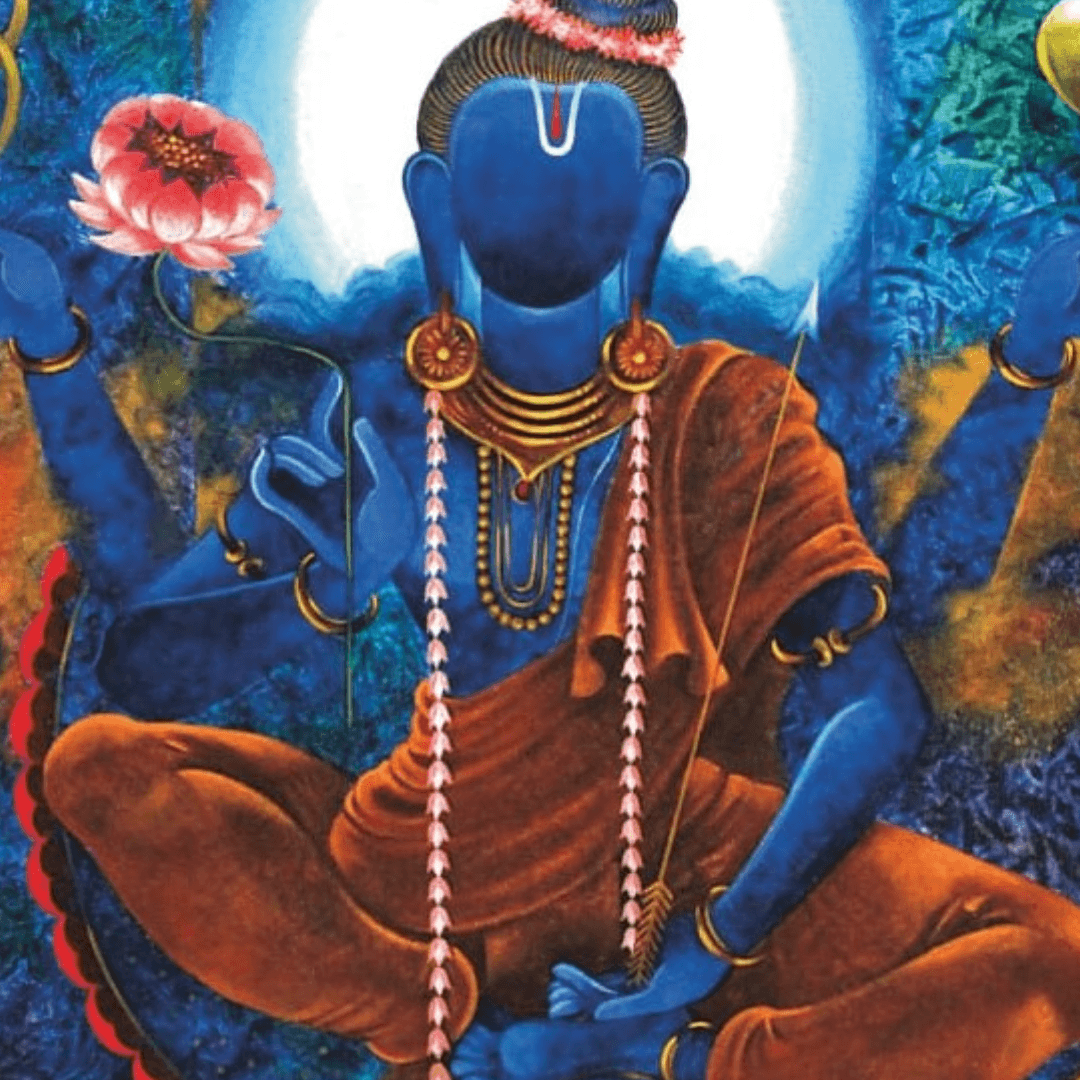
The Arrow
Ram holds a single arrow - a symbol of dharma, focus and resolve. At rest in his hand, it carries a sense of quiet readiness.
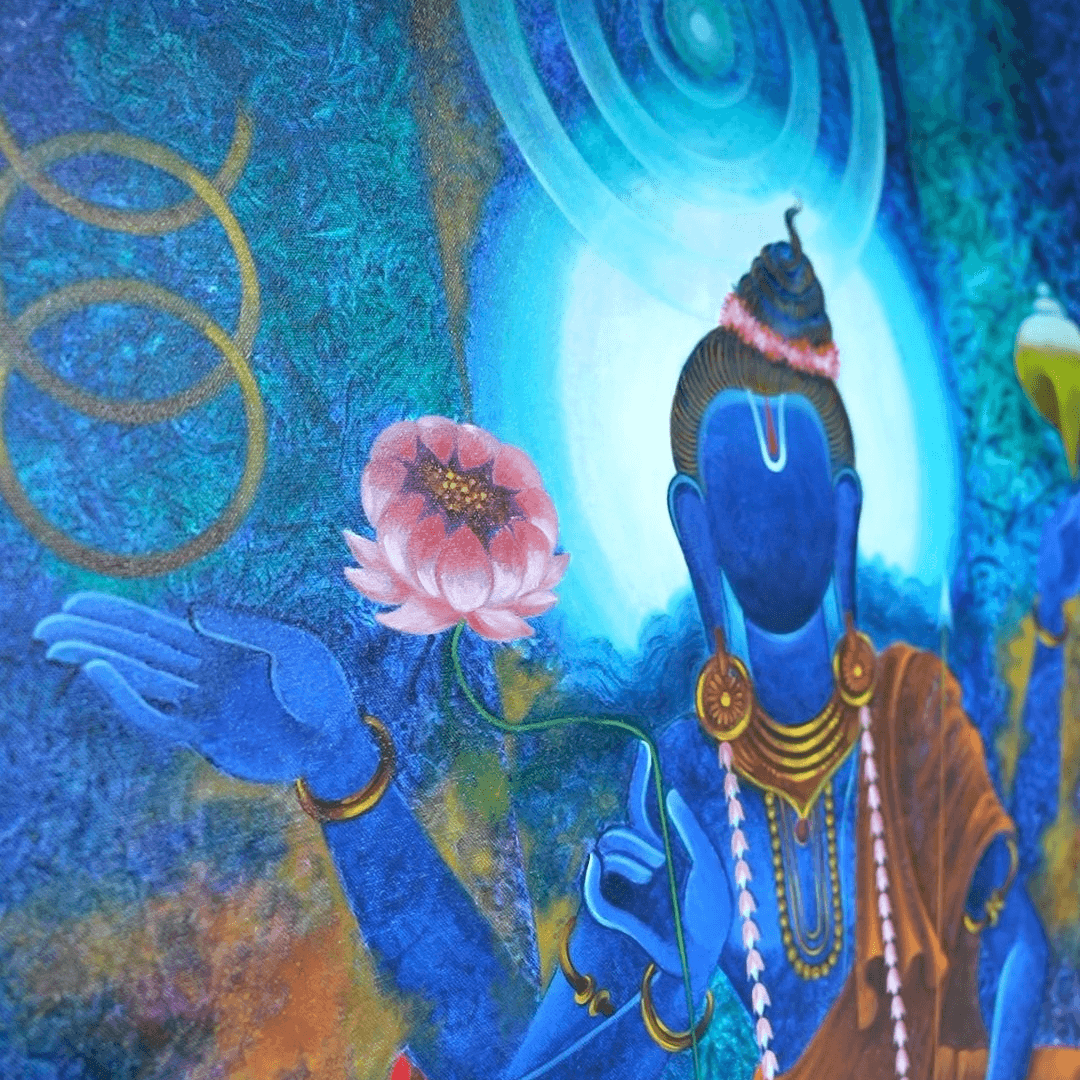
The Lotus
The lotus speaks of knowledge and purity. It emerges from mud but remains untouched , reflecting Yograj’s understanding of the relationship between the divine mind and the material world.
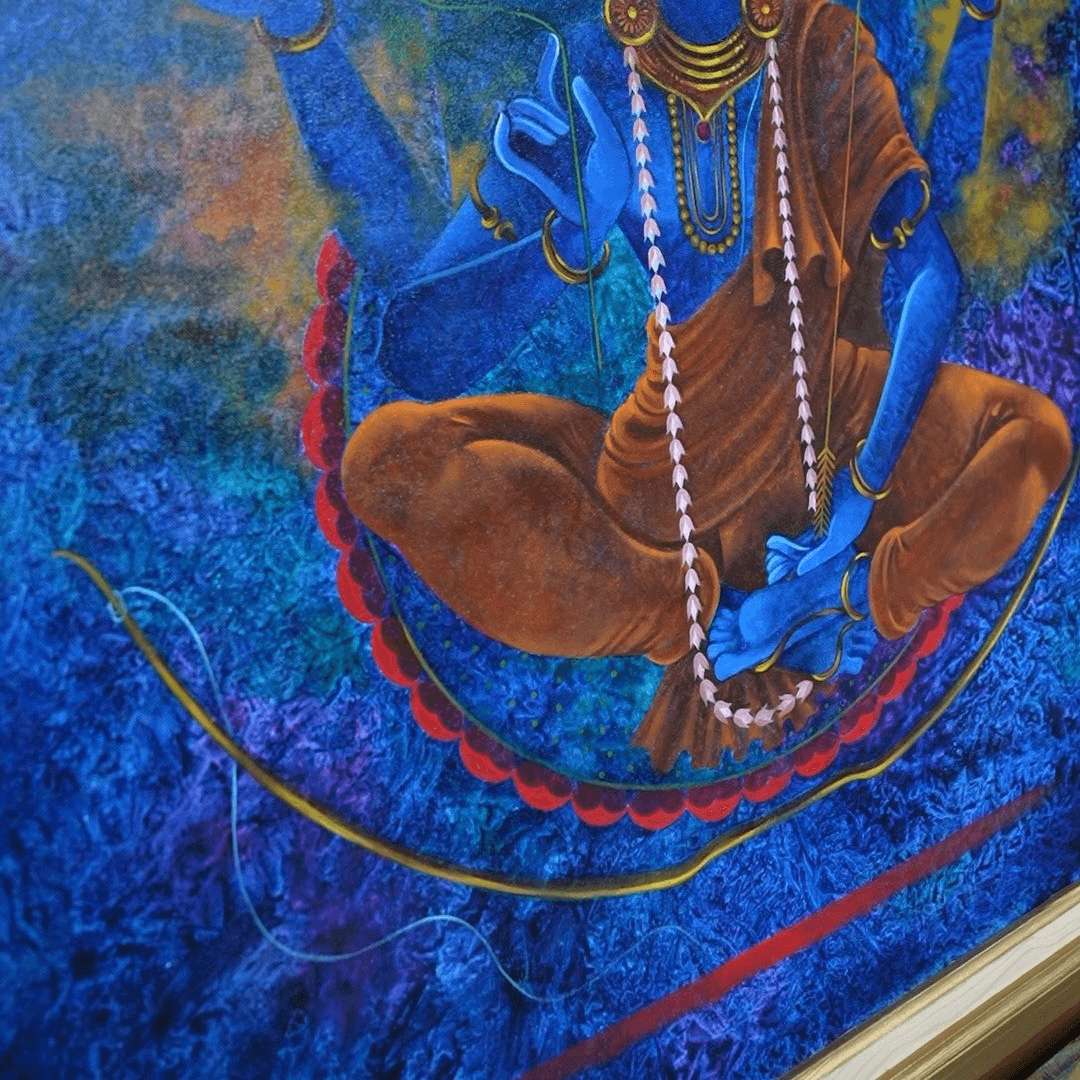
The Kodanda Bow — Unstrung
The bow rests with its string open (pratyancha), holding a sense of alertness, self-restraint and peace. Its presence carries the memory of action alongside the stillness of the figure.
The Conch & Chakra
Vishnu’s attributes enter the composition through the conch and chakra. The conch evokes the primal sound of creation; the discus, the order of time. Together, they bring Ram and Vishnu into a single meditation.
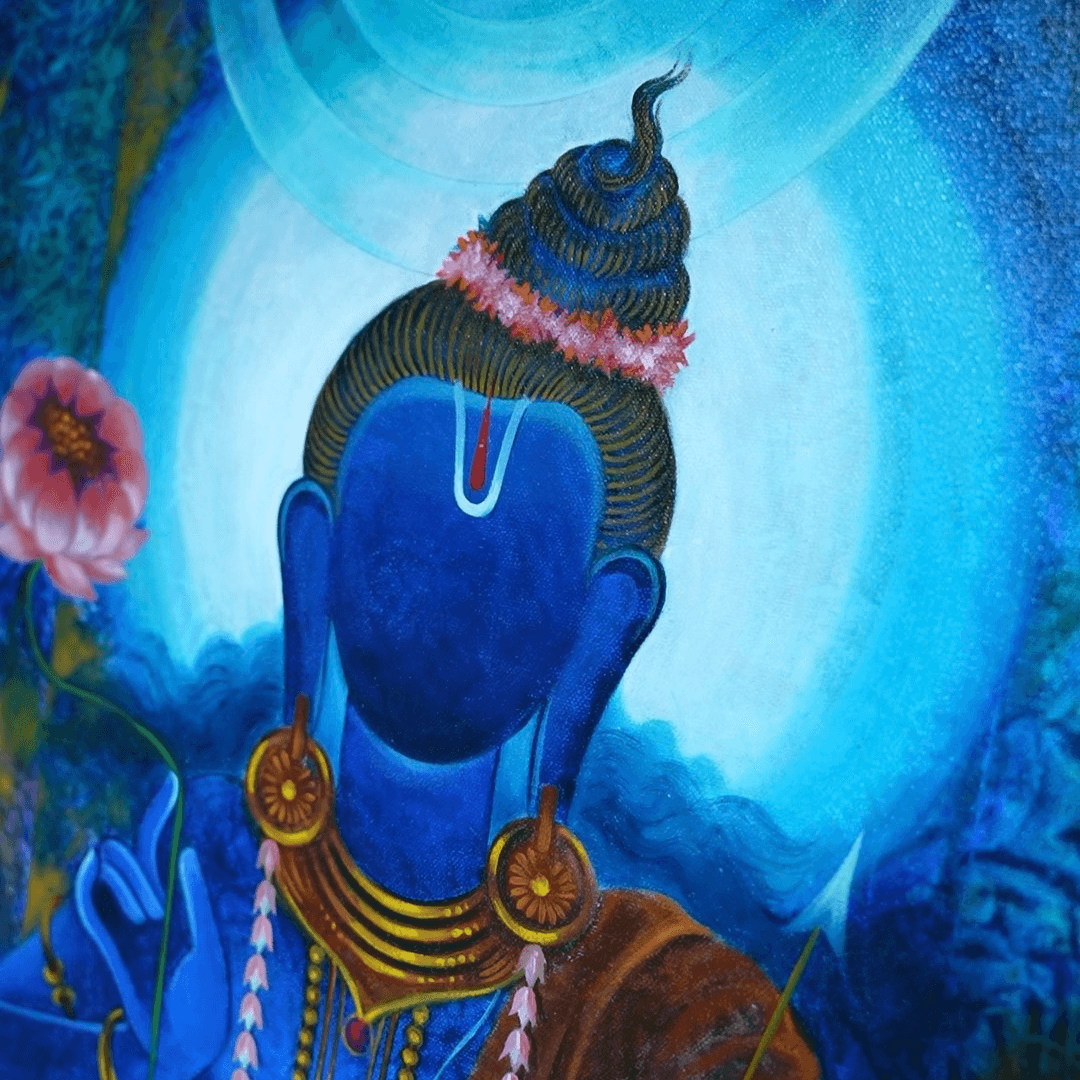
The Facelessness
Yograj leaves the face to the imagination, allowing belief to complete the figure. For him, a single face cannot contain the many ways people hold Ram within their minds.
Chapter Seven
Aakaar — The Form
From the first line to the final form. The form is arrived at, layer by layer.
Through days of sketching, revisiting, and waiting. Through meditation and inner dialogue. Through a process that Yograj does not fully control and does not try to.
“Jab humein attraction kisi ki taraf hota hai — kyun hota hai? Agar jiski soch milti hai usi se attraction hota hai. Kyunki uski energy ek doosre mein transfer hoti hai aur tab wo ek gharshan jaisa hota hai. Tab wo ek doosre ko pehchaanta hai.”
“When we feel drawn towards someone, why does that happen? It happens when our thoughts resonate with theirs. Their energy begins to move between us, creating a kind of friction, a moment of recognition. That is when we begin to recognise each other.”
The paintings that emerge carry thought alongside colour and form. Yograj believes that when someone is drawn to his work, they respond to something within it: its thought, its energy, its way of seeing. The work becomes a “communication bridge,” where the viewer’s inner world meets the energy the artist brings to the work through meditation.
When a work enters someone’s home, Yograj believes it carries a spiritual energy that works quietly over time, gradually healing the environment around it. He compares this to the collective vibration felt during Durga Puja in Bengal or Ganesh Chaturthi: a shared energy that stays with you, here held within a painting and working quietly over time.
The Practice
Next Episodes
More artists. More practices. The series continues.
- Anand PanchalComing soon
- Amol PawarComing soon
