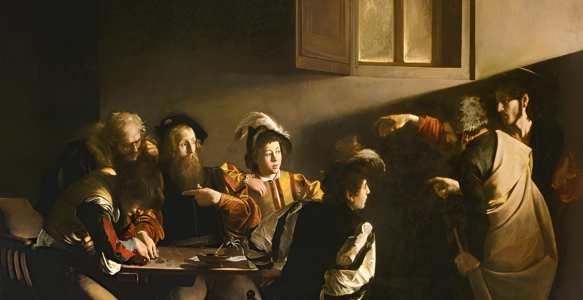
When you stand in front of a truly monumental Baroque canvas, the room feels a little louder. Light slices across flesh, armour, velvet; shadows pool in the corners like secrets. You can almost hear the rustle of brocade, the crack of drums, the murmur of prayer. This is not polite looking - it’s closer to theatre, or even cinema, centuries before either existed.
For many enthusiasts seeing baroque art for the first time, the experience feels strangely familiar: a spotlight on the protagonist, a freeze-frame at the most charged second of a story, an almost cinematic zoom into a gesture or a tear. Understanding the baroque art period is about sensing what it did to a Europe shaken by religious conflict, scientific discovery, and imperial ambition. In that sense, baroque art’s meaning lives as much in our bodies - as a felt intensity - as in any textbook.
As curators, we sometimes see viewers move instinctively closer to a Baroque work, as if stepping into the darkness might help them decode the drama. You see the same impulse in India when someone leans in to a powerful Tyeb Mehta or an intense Gaganendranath Tagore drawing - the desire to stand where the painter must have stood, inside the tension of the scene.
What is Baroque Art?
So what is baroque art, beyond the shorthand of drama and gold leaf? It refers to a style that emerged around 1600 and flourished through the 17th century and into the early 18th, characterised by movement, theatricality, and emotional intensity. Where Renaissance art often freezes the calm before the action, Baroque artists choose the split-second during or just after - David not preparing to fight Goliath, but twisting mid-swing.
The term “Baroque” itself comes from a word for an irregular pearl - slightly strange, slightly excessive, and initially used almost as an insult for art that felt too ornate and dramatic. Over time, that irregularity became the point: an embrace of asymmetry, of diagonals instead of strict balance, of bodies that strain and twist rather than stand serenely. For many historians, this is the hinge between classical order and the more subjective, interior worlds that Romanticism and modernism would later explore.
Viewed from the subcontinent, Baroque sits interestingly alongside the flourish of Mughal miniatures and Deccan painting - very different in scale and format, yet equally invested in detail, surface, and narrative. The question “what is baroque art” becomes less a definition and more an invitation to place this European style next to other 17th-century visual cultures, from Bijapur courts to the temples of Thanjavur.
Origin & Birth of Baroque Art
Baroque art origin stories always return to Rome. Around 1600, in the wake of the Catholic Church’s Counter-Reformation, the city became a laboratory for a new, persuasive visual language. Art from baroque period Rome had to compete with Protestant criticism, scientific rationalism, and shifting political powers; it needed to convince and move, not merely decorate.
1. Why Did Baroque Art Emerge?
The Council of Trent (1545–1563) explicitly called for images that were clear, emotionally direct, and accessible, rejecting the intellectual complexities of late Mannerism. Out of that directive grew a baroque movement in art that put viewers at the centre - almost literally, as compositions seemed to spill into the space of the spectator.
At the same time, monarchies in France and Spain realised that this rhetoric of splendour could serve royal power just as effectively, while in the Dutch Republic a rising mercantile class used related tools - light, texture, everyday drama - to celebrate domestic life rather than saints and kings. The baroque era art that survives is therefore not a single style, but a cluster of overlapping responses to crisis and opportunity.
2. Where Did Baroque Art Originate?
Most historians anchor the history of baroque art in Rome, with artists such as Caravaggio and Annibale Carracci working there in the late 16th and early 17th centuries. From Italy, the style travelled north: to Flanders with Rubens, to Spain with Velázquez, to the Dutch Republic with Rembrandt and Vermeer, and to France with Poussin and later painters associated with Louis XIV’s court.
As it moved, it adapted. In Catholic Flanders and Spain, Baroque retained its religious fervour; in the more secular, Protestant Dutch Republic, its language of light and surface shifted into still lifes, genre scenes, and portraits. The same visual grammar - spotlit figures, deep shadow, saturated colour - produced very different sentences.
3. The Influence of the Catholic Counter-Reformation
Without the Counter-Reformation, there is no Baroque as we recognise it. The Church sought images that could teach doctrine and spark devotion in a largely illiterate population, giving rise to altarpieces that read like staged visions: saints swooning, clouds parting, angels tumbling in from the frame’s edge. Baroque art history is, in this sense, also a history of persuasion.
Many of these works blur boundaries between painting, sculpture, and architecture: Bernini’s Cornaro Chapel in Rome, for instance, frames his sculpted Ecstasy of Saint Teresa with carved spectators, hidden windows, and painted elements to create a single immersive event. The church interior becomes a kind of proto-installation space.
Characteristics of Baroque Art
If you had to walk into a gallery and spot Baroque at a glance, certain signs would jump out. Scholars speak of baroque art characteristics as a cluster: diagonal compositions, intense light and shadow, rich colour, and a preference for the climactic moment of a story. Underneath those formal traits, though, lies a deeper desire to collapse distance between image and viewer.
In curatorial notes, we often think less in terms of style labels and more in features of baroque art that linger in contemporary practice: the close-up, the spotlight, the body caught mid-gesture. You see echoes of this baroque painting style in contemporary practice in everything from film stills to fashion photography.
1. Chiaroscuro
Chiaroscuro - the modelling of form through strong contrasts of light and dark - existed before the Baroque, but it became one of its signature tools. Rather than evenly lit scenes, painters like Rembrandt use light like a sculptor might use a chisel, carving faces and hands out of surrounding gloom.
The effect is intimate and psychological: a single candle catching the side of a face, a window illuminating only the central figure. This approach to light shapes what we now think of as baroque style art, where illumination feels both literal and symbolic.
2. Tenebrism
Push chiaroscuro to its extreme and you get tenebrism: compositions in which vast areas are plunged into darkness, with figures emerging as if under a theatrical spotlight. Caravaggio’s paintings are classic examples - no gentle half-tones, just abrupt transitions from black to blinding light.
Tenebrism heightens drama and directs our gaze with almost ruthless efficiency, a hallmark of baroque era painting across Catholic Europe. It also anticipates the visual language of cinema noir and staged photography, where negative space is as important as what we see.
3. Emotional Intensity
While the Renaissance valued harmony and ideal proportion, Baroque revels in emotion: saints in ecstasy, martyrs in pain, mothers in grief, generals in fury. Figures often twist or lean out of the frame, their gestures exaggerated enough to read from the far end of a nave.
For viewers used to quieter modernist abstraction - from Ram Kumar’s subdued cityscapes to S.H. Raza’s meditative bindus - this can feel almost operatic. Yet the impulse is familiar: to visualise interior states, something Indian artists such as F.N. Souza or Amrita Sher-Gil also pursued in very different visual vocabularies.
4. Grandeur & Scale
Finally, scale matters. Baroque thrives on ceilings, altarpieces, palace halls - spaces where images could overflow their frames. Even when painters worked small, they often suggested monumental space through plunging perspectives and crowds of figures.
This sense of grandeur is not merely decorative; it stages power. Whether in Spanish royal portraits or French court fêtes, baroque style artwork turns the act of looking into a performance of hierarchy.
Major Regional Styles of Baroque Art
Across Europe, the Baroque splintered into distinct regional accents. To move from Rome to Amsterdam to Antwerp is to hear the same language spoken with different stresses and vocabularies. For a curator, this diversity is fertile ground: it allows us to connect baroque style artwork to equally varied visual traditions in India and beyond.
1. Italian Baroque
Italian Baroque, particularly in Rome and Naples, is the style many people picture first: Caravaggio’s gritty saints, Bernini’s swirling sculptures, ceilings dissolving into painted heavens. Deeply tied to the Counter-Reformation, italian baroque art seeks to shock and move the faithful through visceral encounters with the sacred.
2. Dutch Baroque
In the Protestant Dutch Republic, religious commissions dwindled, and artists turned their attention to everyday life - domestic interiors, landscapes, still lifes, portraits of merchants and scholars. Dutch Baroque is often intimate and small-scale, using refined light and texture to dignify the ordinary rather than the miraculous.
3. Spanish Baroque
Spanish Baroque is known for its austerity and intense spirituality: painters like Velázquez, Zurbarán, and Murillo pair tenebrism with a stark, almost sculptural realism. Here, suffering and devotion are rendered with a rawness that can feel uncomfortably close, a visual theology of flesh and fabric.
4. French Baroque
French Baroque - or the Grand Siècle of Louis XIV - leans towards order and classicism even within its splendour. Painters such as Poussin and later court artists emphasise clarity of narrative, controlled exuberance, and a carefully choreographed elegance befitting an absolutist monarchy.
5. Flemish Baroque
Flemish Baroque, centred in Catholic Antwerp, merges Italian influence with northern attention to texture and surface. Led by Rubens, van Dyck, and Jordaens, it favours dynamic compositions, vibrant colour, and sensuous renderings of flesh, drapery, and still-life elements - religious fervour intertwined with worldly abundance.
Famous Master Artists of Baroque Art
To meet the Baroque through its makers is to encounter a set of sharply distinct personalities - some violent, some devout, some shrewdly worldly. Any list of famous baroque artists is necessarily partial, but a handful of names have become shorthand for the movement’s range.
1. Caravaggio
Michelangelo Merisi da Caravaggio is the dark star of the Baroque: a volatile figure whose radical naturalism and tenebrism changed European painting. His famous baroque artwork - saints modelled on street people, harsh light revealing dirty feet - dragged the sacred into Rome’s taverns and alleys.
2. Rembrandt van Rijn
Rembrandt, working in Amsterdam, turned the Baroque gaze inward. His portraits and self-portraits use light not just to describe skin but to suggest interior life, while his biblical scenes read like psychological dramas rather than mere illustrations. Many of the famous paintings of baroque period Northern Europe are his quiet, searching canvases.
3. Gian Lorenzo Bernini
Bernini, primarily a sculptor and architect, translated Baroque energy into marble and space. Works like the Ecstasy of Saint Teresa combine theatrical composition, hidden light sources, and architectural framing to create famous baroque art paintings’ three-dimensional counterpart - an entire environment of feeling in stone and gold.
4. Peter Paul Rubens
Rubens, at the centre of Flemish Baroque, orchestrated vast altarpieces and mythologies filled with muscular bodies, swirling drapery, and saturated colour. His studio functioned almost like a proto-atelier, producing baroque famous paintings that circulated widely across courts and churches.
5. Artemisia Gentileschi
Artemisia Gentileschi, long marginalised in canonical accounts, has rightly emerged as one of the period’s most compelling painters. Building on Caravaggio’s style, she infused scenes such as Judith and Holofernes with a psychological and gendered charge that reshapes how we read famous baroque art paintings of violence and power.
For a contemporary curator working from India, it’s impossible not to think of how these figures sit alongside later artists like Raja Ravi Varma, Amrita Sher-Gil, or Souza, each negotiating their own collisions of realism, drama, and subjectivity.
Why Baroque Art Still Resonates Today
Despite its historical distance, baroque era art continues to shape visual culture - from film lighting to fashion editorials and music videos. Tenebrism lives on in dramatic studio photography; diagonal compositions in superhero posters; the freeze-frame climax in everything from advertising to arthouse cinema.
For artists and viewers in India, Baroque can feel both alien and oddly close. The theatricality of a Bernini sculpture is not so far from certain folk performances; the crowded celestial ceilings echo in temple murals and Pahari miniatures. The history of baroque art becomes, then, part of a broader global story about how societies picture power, ecstasy, and doubt.
FAQs About Baroque Art
1. How do you describe Baroque art?
Baroque style art is dramatic, emotionally charged, and visually theatrical, using strong contrasts of light and dark, diagonal compositions, and rich colour to pull the viewer into the heart of the action.
2. When did baroque art start and end?
Most historians date the baroque art period from around 1600, with roots in late 16th-century Rome, through the 17th century and into the mid-18th century, when Rococo and later Neoclassicism begin to dominate.
3. Why was baroque art created?
It arose partly to serve the Catholic Counter-Reformation’s call for clear, emotionally direct images that could teach and inspire, and partly to visualise the grandeur of emerging monarchies and new urban elites.
4. What defines the Baroque?
Key features of baroque art include dynamic movement, intense light–dark contrasts, heightened emotion, and a preference for the most dramatic moment in a narrative, whether sacred or secular.
5. Who is the father of Baroque art?
There is no single “father,” but Caravaggio is often credited with giving the movement its stark realism and tenebrist lighting, while Bernini shaped its sculptural and architectural expression.
6. What are the themes of Baroque art?
Common themes include religious visions, martyrdoms, royal power, mythological dramas, and scenes of everyday life elevated to high art - subjects that allowed artists to explore human passion in all its contradictions.
