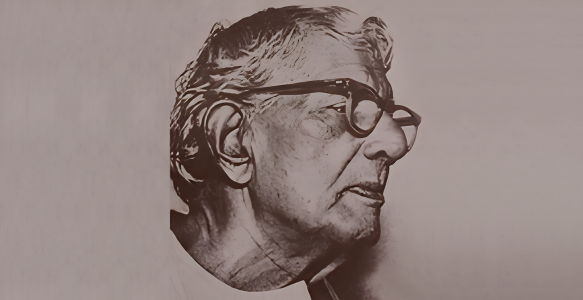
On some evenings in mid‑century Calcutta, visitors climbing the stairs to Roy’s Ballygunge home describe a peculiar hush: canvases leaned against walls, mats painted in dense tempera, rows of eyes - Santhal drummers, quiet Madonnas, blue‑skinned Krishnas - staring back with the calm intensity of icons rather than modern paintings. It is in this threshold between village shrine and urban salon that the story of Jamini Roy the artist really lives - a painter who turned away from European realism at the height of his career to listen instead to the rhythms of Bengal’s villages. For anyone curious about Jamini roy’s history, this moment of turning back - to mud walls, pata scrolls, temple terracotta - is as important as any date in his life.
Who Was Jamini Roy?
If you begin with the simple question who is jamini roy, the answers arrive layered: a Padma Bhushan awardee, a national treasure whose works can no longer legally leave India, a student of Abanindranath Tagore, and yet also a painter who insisted on the dignity of obscure village scroll‑painters. Born in 1887 in Beliatore in Bankura district and passing away in Calcutta in 1972, he is now counted among the key modernists who reshaped twentieth‑century Indian art.
Jamini Roy’s story is closer to a double movement: apprenticeship in Western academic realism followed by a deliberate un‑learning. After graduating from the Government School of Art in Calcutta, he painted commissioned portraits in oils, working in a post‑Impressionist style. By the 1920s, under the pressure of nationalist thought and his own dissatisfaction, he began seeking a more “Indian” grammar based on folk idioms.
In that search he shares a certain temperament with European modernists like Gauguin or Matisse - who also looked to “naïve” or non‑academic art - yet his project is rooted firmly in the politics and poetics of Bengal. Closer home, his shift away from salon naturalism runs parallel to the journeys of artist Abanindranath Tagore and Nandalal Bose, though Roy’s language remains more severe, almost hieratic, in its frontality.
Seen from today’s ecosystem of indian art paintings, Roy’s practice feels almost proto‑institutional: he built an entire visual school out of village sources without ever branding it as such, leaving later generations to negotiate with a vocabulary he made suddenly canonical.
For us, Jamini Roy’s information is most alive in that image of his house as an informal museum: ground floor as studio and gallery, doors open on Poila Baisakh to dancers, intellectuals, and unknown visitors alike.
Early Life & Background of Artist Jamini Roy
1. Education at Government College of Art, Kolkata
Entering the Government College of Art in colonial Calcutta in 1903, the young painter was trained rigorously in drawing from cast and life, oil technique, and the values of European realism. In those years his work aligned with post‑Impressionist landscapes and portraits, absorbing lessons from European masters through reproductions and from his teacher Abanindranath Tagore’s evolving “Indian” style.
This training mattered because it set up the rupture that followed. When Roy later abandoned this style it was not from ignorance but from refusal. That conscious choice - shared, in different registers, by artists like Amrita Sher‑Gil or later F.N. Souza - marks him as a modernist rather than a “folk” painter in any simple sense.
2. Inspiration from Rural and Village Life
The other half of his formation lies far from the Calcutta studio, in Beliatore’s mud houses, Santhal songs, and pata scrolls carried from village to village. As he began visiting rural Bengal more attentively, Roy studied Kalighat pats, patachitra scrolls, temple terracotta panels at Bishnupur, and the rituals of Santhal communities. He treated them as visual philosophies, not mere motifs. By the 1920s, Santhal dancers, Baul musicians, and village mothers began to populate his canvases, moving his work away from the urban portrait‑client and into a different social world.
This slow turning towards rural life - echoing Gandhi’s call to recover the village as a moral centre - anchors the jamini roy art style in lived experience. Collectors at the time often recalled the shock of seeing the hierarchy between folk artisan and “high” artist had been quietly overturned.
3. Influence on Modern Indian Art
Roy’s eventual shift to indigenous materials - handmade paper, woven mats, cloth, wood coated with lime, pigments derived from earth and vegetable dyes - became a model for artists seeking an alternative modernity. His emphasis on economy of line and iconic frontality shaped painters, graphic artists and designers who mined his language for posters, book covers, and theatre sets.
In the broader field, his stance sits intriguingly beside the abstraction of S.H. Raza or the expressionist figuration of Tyeb Mehta: where they pushed form towards inner landscapes or existential drama, Roy steered it towards collective memory and ritual rhythm. Any Jamini Roy biography read alongside theirs shows how multiple, even contradictory, the story of “modern Indian art” truly is.
When we look at any village life painting today, Roy’s legacy is both enabling and demanding; he proved that village subjects could sustain radical formal invention, which means contemporary painters cannot rely on nostalgia alone.
The most poignant detail in Jamini Roy, the artist’s lore, is his decision to keep prices low so that middle‑class and even modest buyers could live with his work. It reframes the Jamini Roy painting style as an ethics of access as much as an aesthetic programme.
Different Styles in Jamini Roy Paintings
1. Bengal Folk Art Style
The core of his style lies in his reworking of Bengali folk idioms into a disciplined, repeatable system. Figures are flattened, outlined in thick black, filled with limited but saturated palettes - indigo, ochre, vermilion, bottle green - often derived from mineral or vegetable pigments. Faces tilt, eyes elongate into almond shapes, hands become glyphs; yet nothing feels casual, each curve calibrated like calligraphy.
Here he borrows the frontal icon‑like presence of village images - turning dancers, drummers, and mothers into archetypes that still carry the intimacy of ordinary life. It’s this fusion that continues to influence contemporary paintings of nature and rural life, where artists toggle between documentary detail and symbolic condensation.
2. Kalighat Style Paintings
Roy’s dialogue with Kalighat painting is more complex: he admired their sweeping brushwork and satirical verve yet criticised the way urban bazaar culture had diluted their “rural ideal”. In works like Cat and Lobster, he simplifies the already stylised Kalighat cat even further, stripping away narrative humour to arrive at a distilled, almost emblematic animal form. The resulting canvas aligns him with global modernists who looked to calligraphy and folk art - think of Paul Klee’s playful hieroglyphs or Matisse’s cut‑outs.
3. Folk-Art Modernism
This tension between borrowing and critique is what some scholars now call Roy’s “folk‑art modernism”. Rather than merely imitate rural artisans, he systematised their devices - flat colour, bold contour, patterned borders - into a modular language that could carry Christian iconography, the Ramayana, Santhal festivals, or intimate mother‑and‑child scenes with equal conviction. The project sits in conversation with global movements like Mexican muralism or Russian neo‑primitivism, yet remains grounded in Bengal’s specific visual archives.
For a contemporary viewer browsing spiritual and mythological paintings, it is easy to forget how experimental Roy’s serial images of Christ or Krishna once were. They function almost like prototypes for a decolonised sacred image - neither European devotional kitsch nor purely “folk”, but something insistently in between.
Famous Paintings by Jamini Roy
1. Santhal Paintings
Roy’s Santhal series - drummers, archers, dancers - are among Jamini Roy’s most famous paintings, not least because they recast a tribal community as central protagonists of modern Indian art. Their bronzed bodies, rhythmic poses, and patterned garments create a visual music that many collectors still recall as their first encounter with his work.
2. Mother and Child
The Mother and Child canvases, often haloed by decorative borders, continue to be cited as Jamini Roy’s best painting candidates in popular memory. Their tenderness lies not in facial expression but in the curve of arms and the enveloping line, echoing both Byzantine icons and rural Bengal shrines.
3. Three Pujarins
In Three Pujarins, three women stand side by side, bodies reduced to planes of colour, eyes elongated, hands folded in identical mudras. The work has become popular in exhibition catalogues - devotional yet distinctly modern in its serial, almost architectural rhythm.
4. Black Horse
Black Horse (and related equine studies) distill the animal into a single sweeping contour, echoing both pata scrolls and calligraphic brushwork. For many viewers, this image exemplifies his works at their most economical: a creature made of near‑abstract curves that still feels bodily and alive.
5. Krishna with Gopis
In Krishna with Gopis, the blue deity stands centrally, flanked by attendants whose saris and jewellery become intricate pattern fields. The composition compresses the sensuality of Vaishnava poetry into a single emblematic tableau, now a staple in any list of his popular rworks.
6. Gopis and Apsaras
The Gopis and Apsaras works extend this interest in female devotional figures, treating them as carriers of mood rather than narrative sequence. Their syncopated poses recall both temple friezes and the choreographies of Uday Shankar, who himself visited Roy’s home.
7. Pattachitra Paintings
While not a single canvas, Roy’s engagement with pata traditions - often loosely referred to as his “pattachitra” works - marks a key moment in his career. Here the scroll logic of continuous narrative is condensed into panel formats, bridging folk storytelling and gallery display.
8. Horse and Rider
Horse and Rider condenses motion into a tight, almost emblematic pairing of figure and mount. Its bold diagonals mark it out as a standout work, frequently reproduced in design histories and auction catalogues.
9. Bride and Two Companions
Bride and Two Companions (1952) is often singled out by critics for its “magnificent indigo of Bengal” and the red sandal paste on the bride’s palms. The work balances decorative surface with psychological stillness.
10. Cats and Lobster
Cat and Lobster is perhaps his most playful image: a highly stylised cat gripping a red lobster in its jaws, derived from a favourite Kalighat motif. Its bold graphic quality has turned it into a widely recognised work far beyond specialist circles.
11. Ramayana Series
The seventeen‑canvas Ramayana cycle of 1946 is often described as Roy’s masterpiece, and arguably the single most important work if we treat the series as one extended work. Compressing the epic into flat, serial panels, he offers a folk‑modern counterpart to the grand murals of Diego Rivera or the narrative cycles of medieval Europe.
Themes in Jamini Roy Paintings
1. Religious and Mythological Subjects
Roy’s religious works range from Durga and Krishna to Christ and the Ramayana, folding multiple faiths into the same folk‑modern idiom. The austerity of line gives these images a shared contemplative register, closer to mantra than to spectacle, and continues to resonate with viewers drawn to mythological art.
2. Rural Life and Folk Culture
Village life - Santhal dancers, Bauls, mothers at leisure - forms the emotional ground of his work. These paintings are not ethnographic documents but distilled impressions, where gesture and rhythm matter more than anecdote, paralleling the way some strands of south indian art also translate local ritual into stylised form.
3. Animals and Nature
Cats, horses, cows, birds: animals arrive in his canvases as both companions and symbols, often occupying centre stage. Their exaggerated eyes and patterned bodies align them with the living environment of rural Bengal, bridging the gap between animal paintings and broader village life painting traditions.
Seen alongside contemporary paintings of nature, Roy’s animals and deities feel almost stubbornly un‑lush: no atmospheric skies, no deep space, only the fact of the figure pressed against the picture plane.
FAQs About Jamini Roy
1. What is Jamini Roy famous for?
Jamini Roy is famous for adapting Bengali folk art traditions into a modern painting style. His bold, simplified works helped redefine modern Indian art.
2. Why is Jamini Roy considered as father of folk art?
He is often called the father of modern Indian folk art for bringing traditional folk styles into mainstream Indian painting.
3. Who was Jamini Roy influenced by?
Jamini Roy was influenced by Kalighat paintings, Bengal patachitra traditions, Santhal culture, and the Bengal School of Art.
4. What is the Jamini Roy style of painting?
His style is known for bold outlines, flat colours, simplified forms, and subjects inspired by folk traditions and rural life.
5. What medium did Jamini Roy use?
Jamini Roy used natural pigments on paper, cloth, wood, and woven mats instead of traditional oil on canvas.
