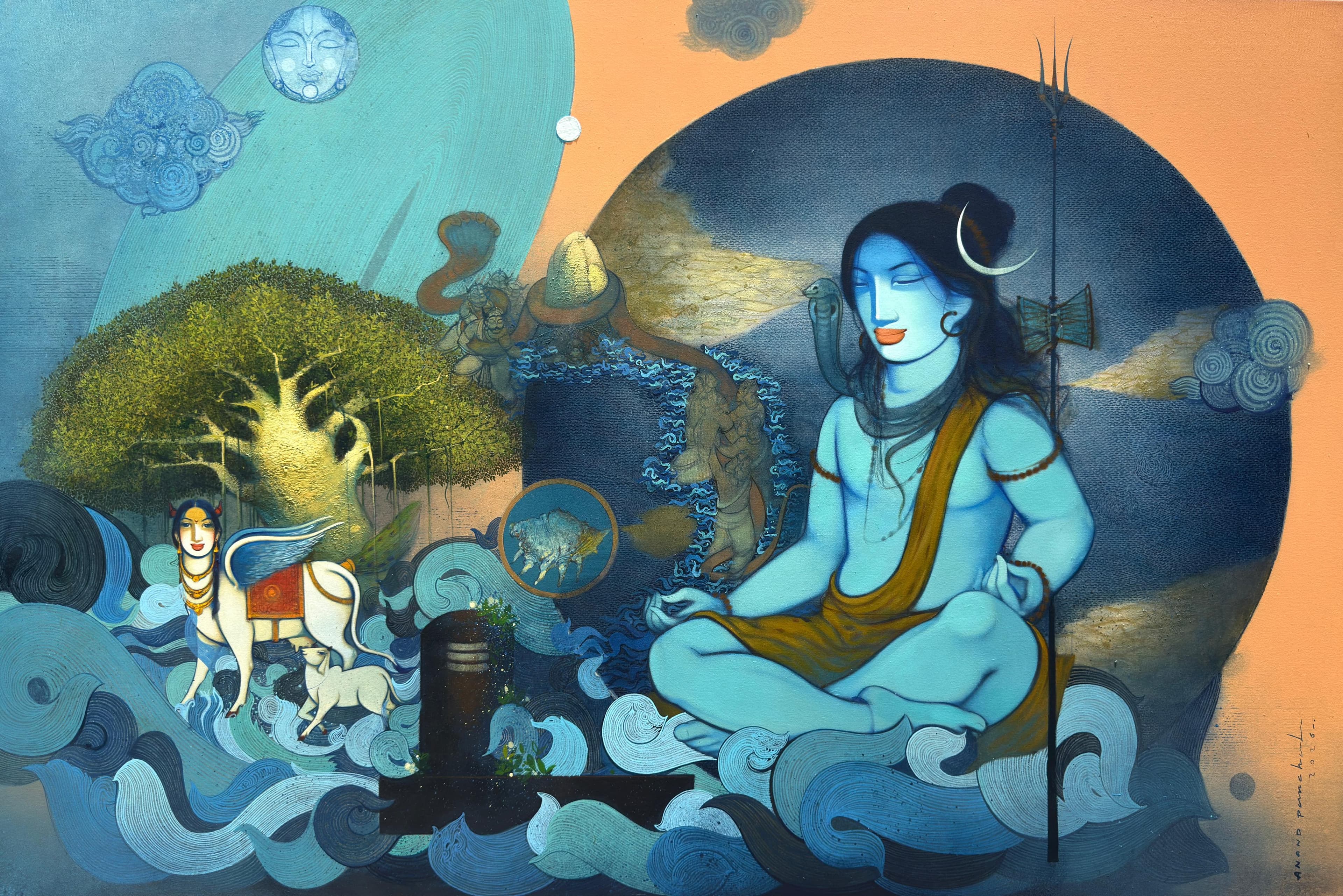
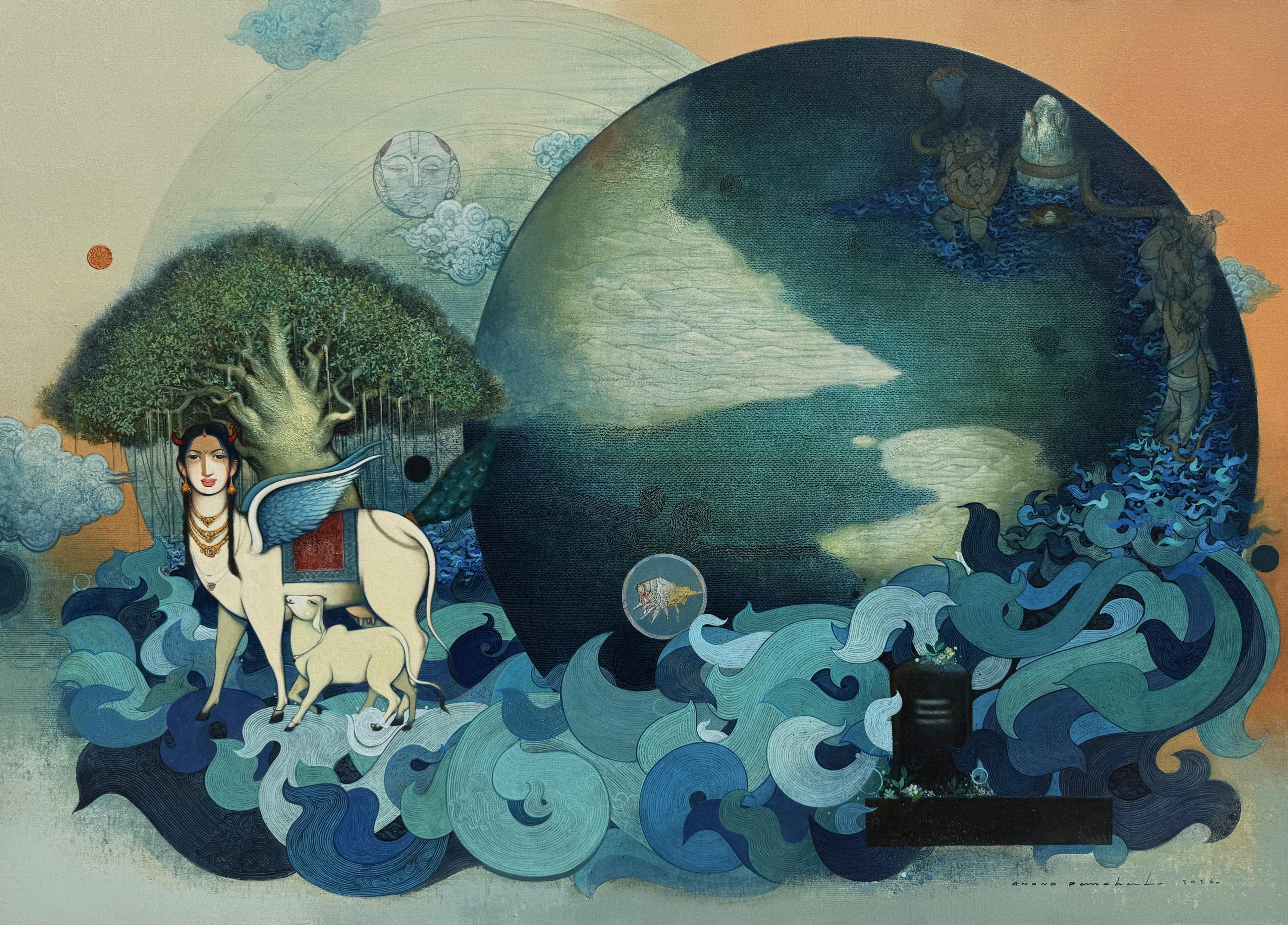
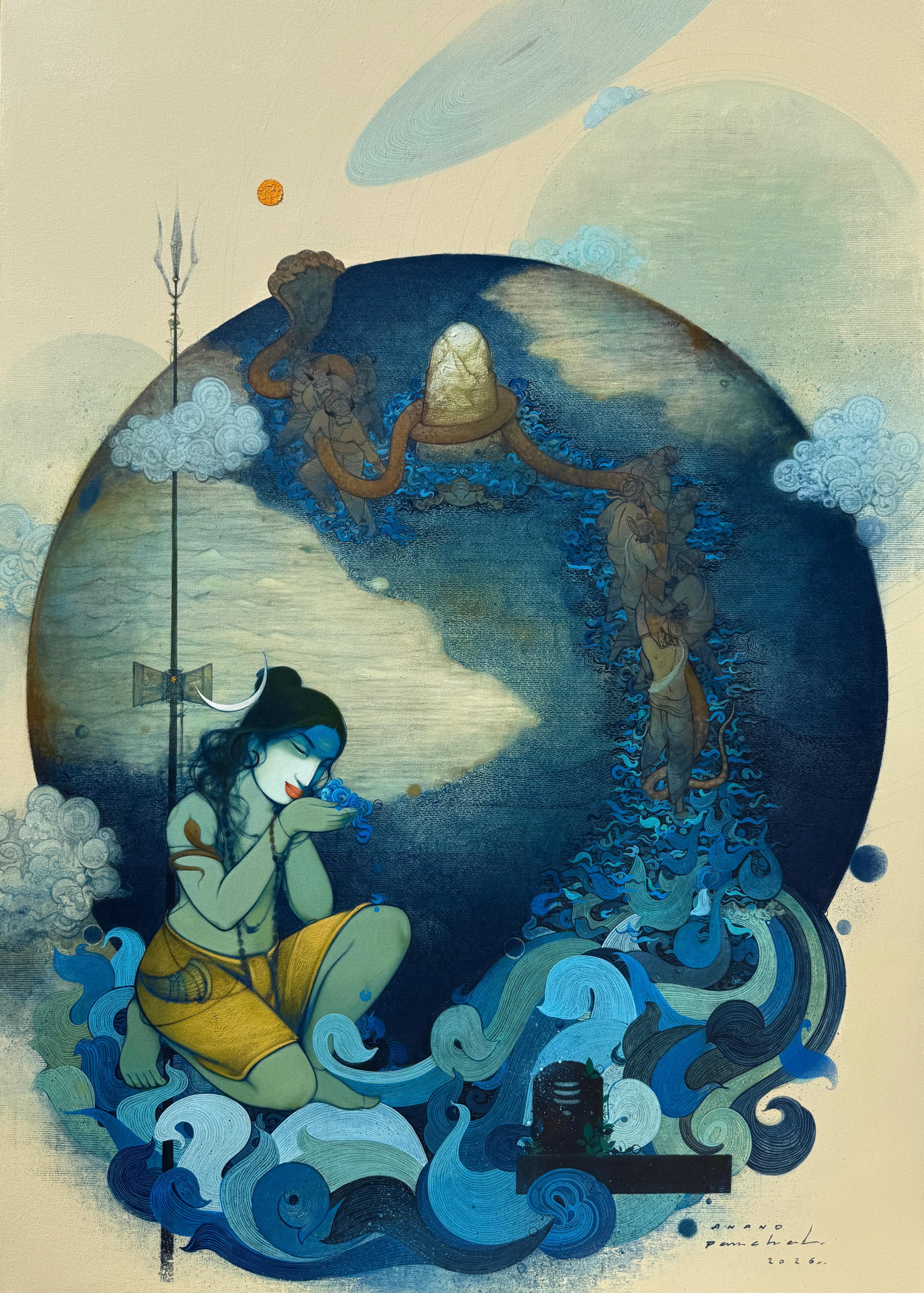
Samudra Manthan - Shiva Amidst the Churning
Acrylic on canvas
72(w) × 48(h) in
₹ 10,08,000
Hello! We’re refreshing our website as you browse. If something feels off, just reach us at +91-8088313131 or experience@artflute.com.
Reach out to us on +91-8088-313131 or experience@artflute.com if you face any issues.

Curatorial Note
In Indian classical music, riyaaz is the hour no one applauds: the same phrase, repeated until it loosens. The Practice follows artists into that hour.
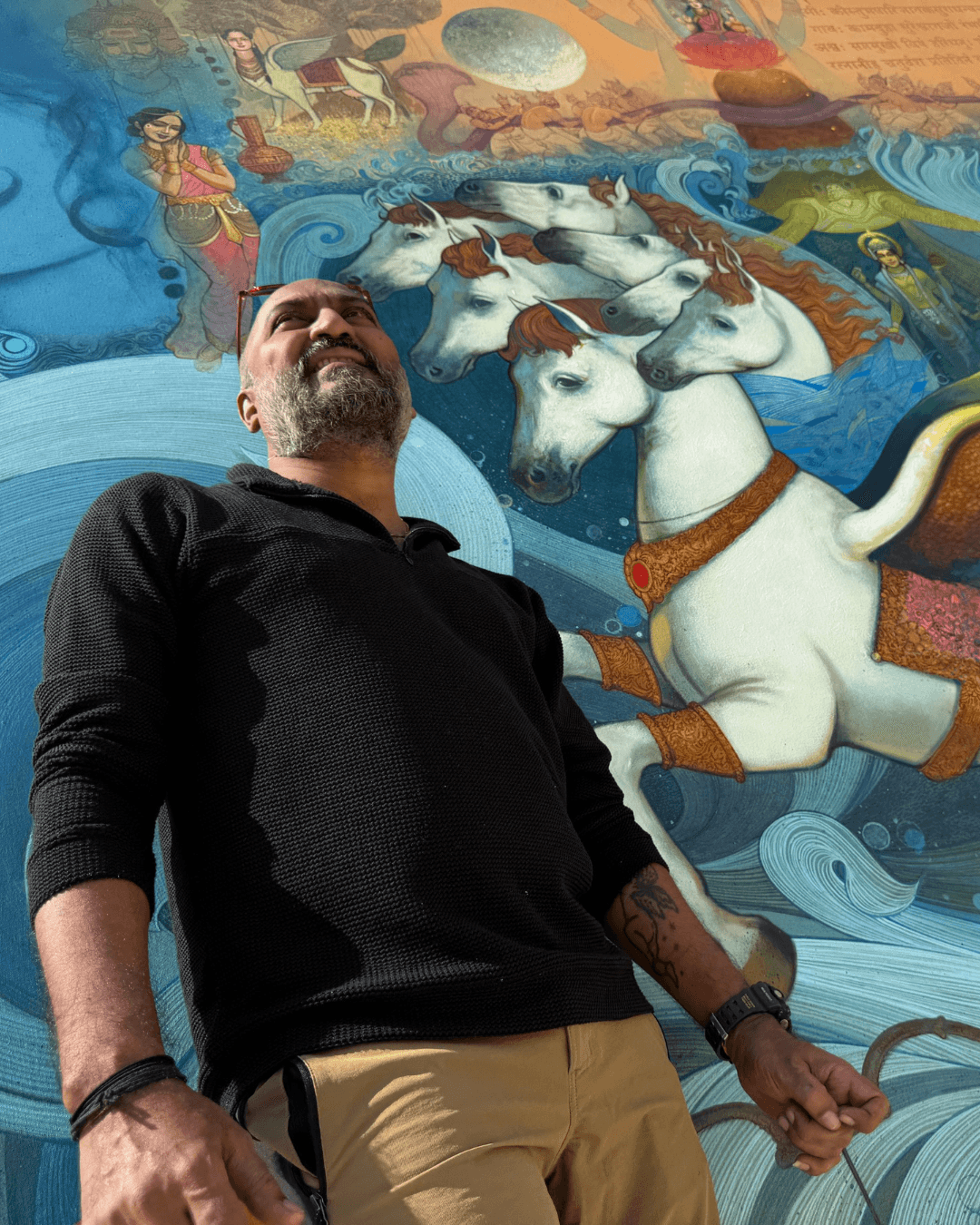
Anand Panchal grew up in a village on the Latur side of Maharashtra, where the epics reached him through kirtan, bharud and the village chavadi. He paints from a sea-facing studio in Mumbai and has been at it for more than thirty years.
A year ago a collector's question, passed on through a friend, sent him into exploring the Samudra Manthan, the churning of the ocean. A year later, he continues to engage with its many layers, one blue at a time, as he develops his own understanding of the spiritual concept.
He asks that a chitra be seen as a chitra (a work of art in its own right), while leaving room for readings beyond the religious. What follows is a look at the work around the work: where the stories came from, how he approaches each painting, and what goes into creating his blues.
Come, be seated. A series is slowly taking shape in this room, and you’re invited to spend some time with it as it grows, one creation at a time.
Meet the artist at their studio in Mumbai, or visit over a video call from anywhere.
Or talk to our curator
1. Make an Offer: If you truly connect with a work, you can place a price offer - keeping in mind the value of the artist’s practice. On this page you’ll find a “Make an Offer” button for eligible works.
2. Request a Viewing: For serious collectors - especially those used to buying art offline - we’re offer private viewings of select works (paintings) in metro cities. Message us on WhatsApp at 8088 313131
3. Request More Images & Details: Want a closer look before you decide? For select works, you can request additional images or videos, a conversation or video call with the artist to help you feel confident in your choice.
ArtFlute is a space where art becomes a living journey of connection and meaning.
Founded in 2008, when online art was still new in India, ArtFlute set out to rethink how people discover and live with art - moving beyond gallery walls and jargon toward experiences rooted in meaning and memory.
Over time, it has evolved into a space for original artworks, thoughtful collaborations, and meaningful encounters, guided by a deep respect for the artist’s voice. ArtFlute’s vision is simple: to transform art from something merely admired into something lived with, an experience of connection, presence, and belonging.
Acrylic on canvas
72(w) × 48(h) in
₹ 10,08,000
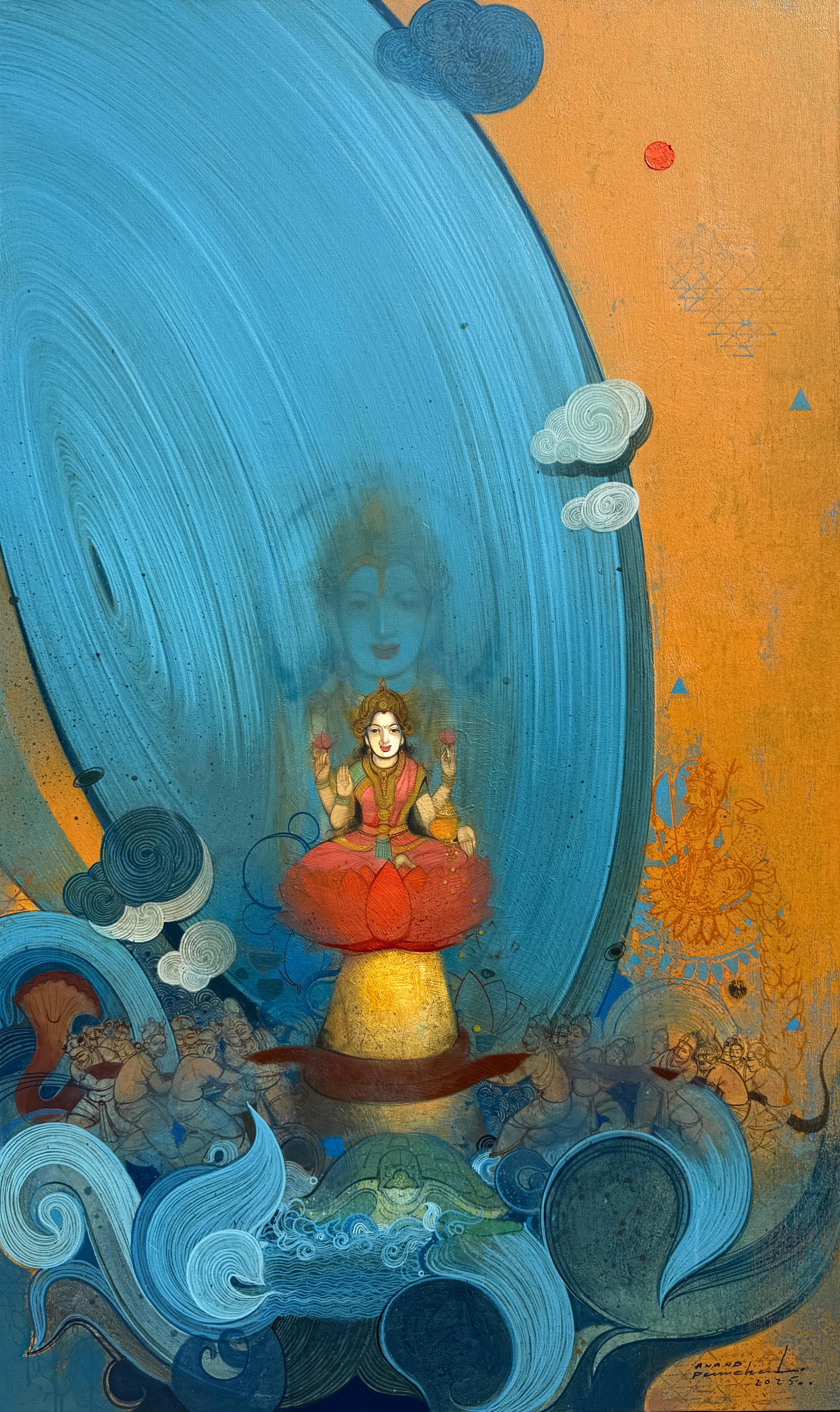
Acrylic on canvas
36(w) × 60(h) in
₹ 6,30,000
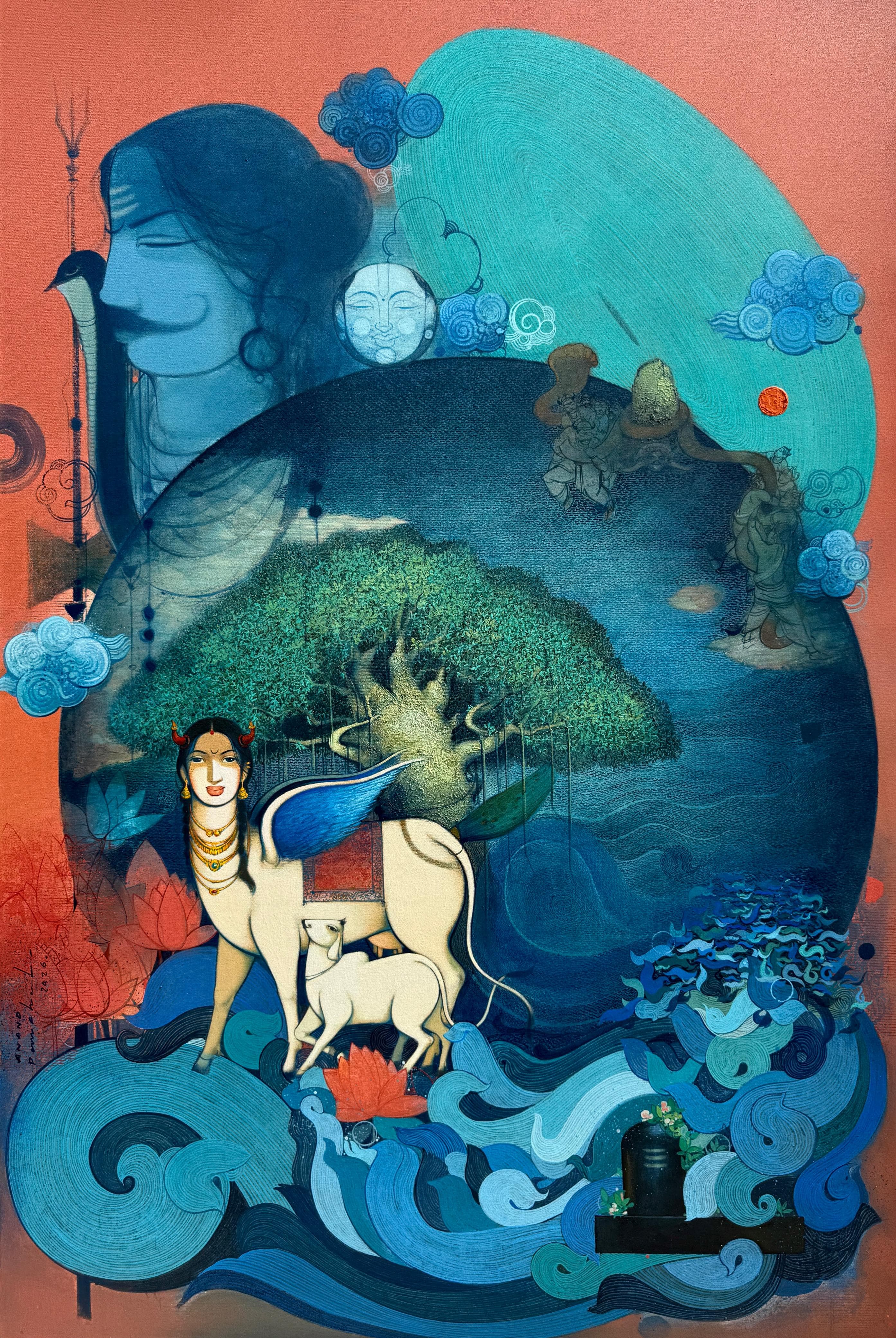
Acrylic on canvas
48(w) × 72(h) in
₹ 10,08,000
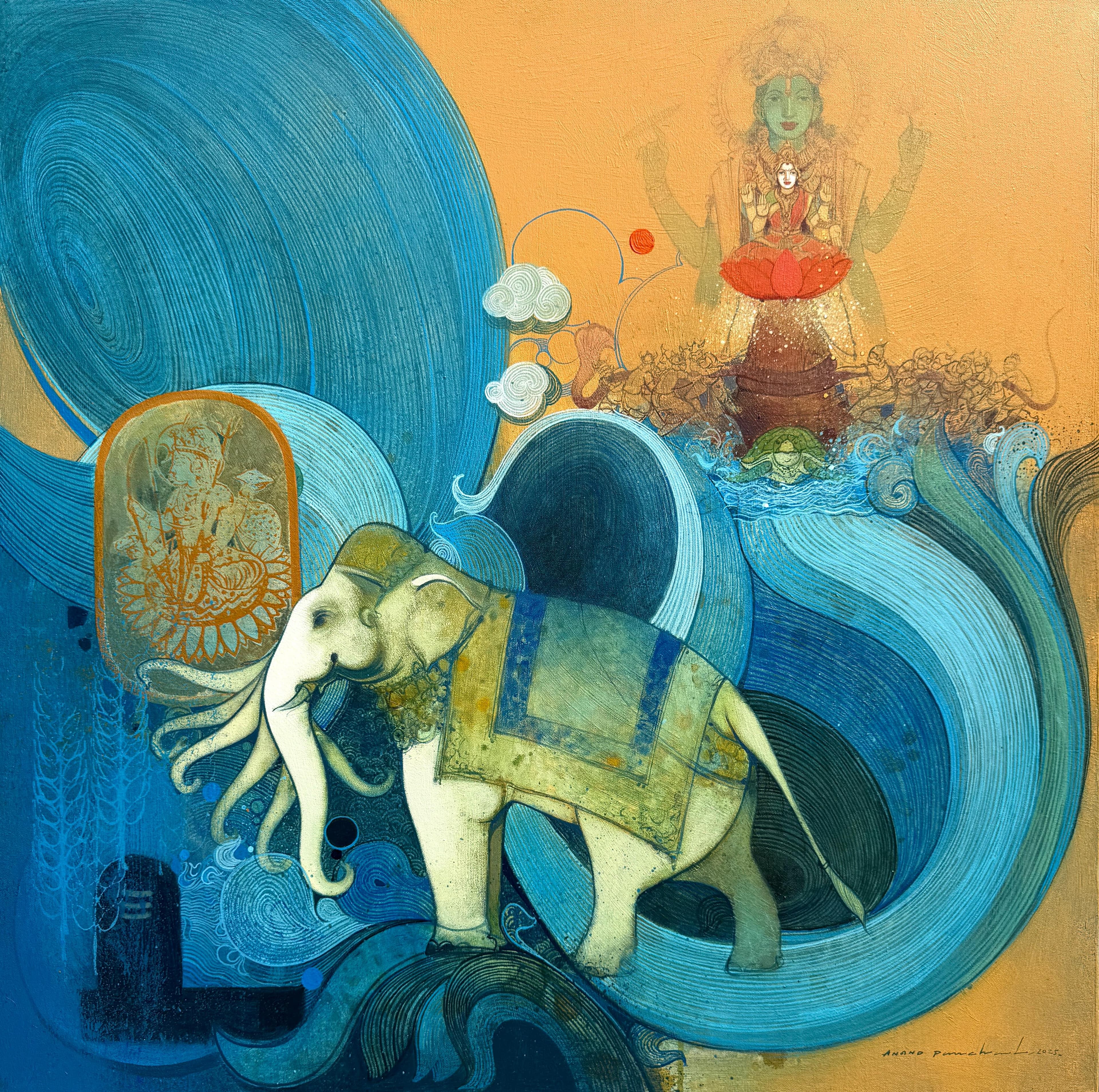
Acrylic on canvas
36(w) × 36(h) in
₹ 3,78,000
Acrylic on canvas
84(w) × 60(h) in
₹ 14,70,000
Acrylic on canvas
60(w) × 84(h) in
₹ 14,70,000
Chapter One
A first glimpse, before the story begins
A year ago a question reached artist Anand Panchal through a friend. A collector who already owned his work wanted to know whether he could paint the Samudra Manthan. He said yes, and asked for time to research. Years later, that research continues.
“Samundar mein mujhe bhi dubki lagaana hai, to main kaise mere nazariye se tair sakta hoon.”
“I wanted to immerse myself in this ocean too, to explore it and find my own way through it.”
As Anand Panchal began studying the Samudra Manthan, he discovered that each element (of the 14 ratnas) held its own significance. Some were familiar, while others surprised him. The exploration also took him back to his childhood in a village, where he had first encountered this myth through storytelling.
Chapter Two
Where the stories came from, and why he carries them back.
“Gaon mein ek chavadi hoti thi, jahan bade log baithte the, pravachan dete the. Ramayan ki katha, kaafi kathayein wahin sunai deti thi. Katha sunane ka unka jo tareeka tha, wo alag tha. Abhi main ye kaam kar raha hoon to main khud ko connect kar raha hoon wahan pe.”
“In the village, there used to be a chavadi, a gathering place where the elders would sit and share their wisdom. Stories from the Ramayana and other traditional tales were narrated there, each storyteller bringing their own distinctive way of telling them. Now, as I do this work, I find myself connecting back to that place”
Anand grew up in a village on the Latur side. The chavadi was the village sitting place, where elders gave pravachan and the evening often ended in a bhajan sandhya. His father and grandfather took him along, and he sat and listened. Nobody had a phone in their hand.
Bharud performers carried social awakening and spiritual guidance through story, and the epics also came as dance and stage shows. The Ramayan, the Mahabharat and the Vishnu Puran reached him this way. He had heard the story of the Samudra Manthan in passing, too, and it stayed somewhere in the back of his mind.
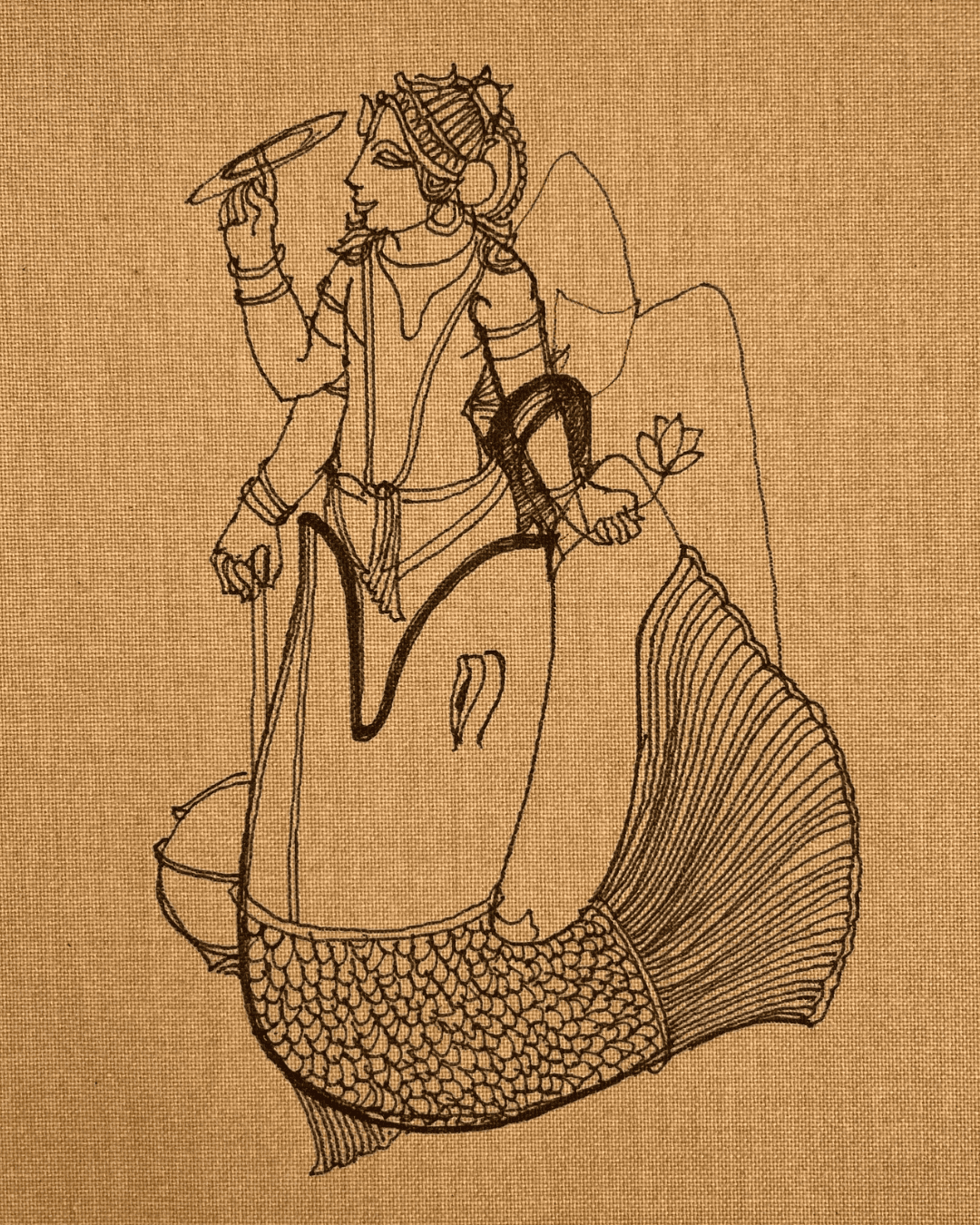
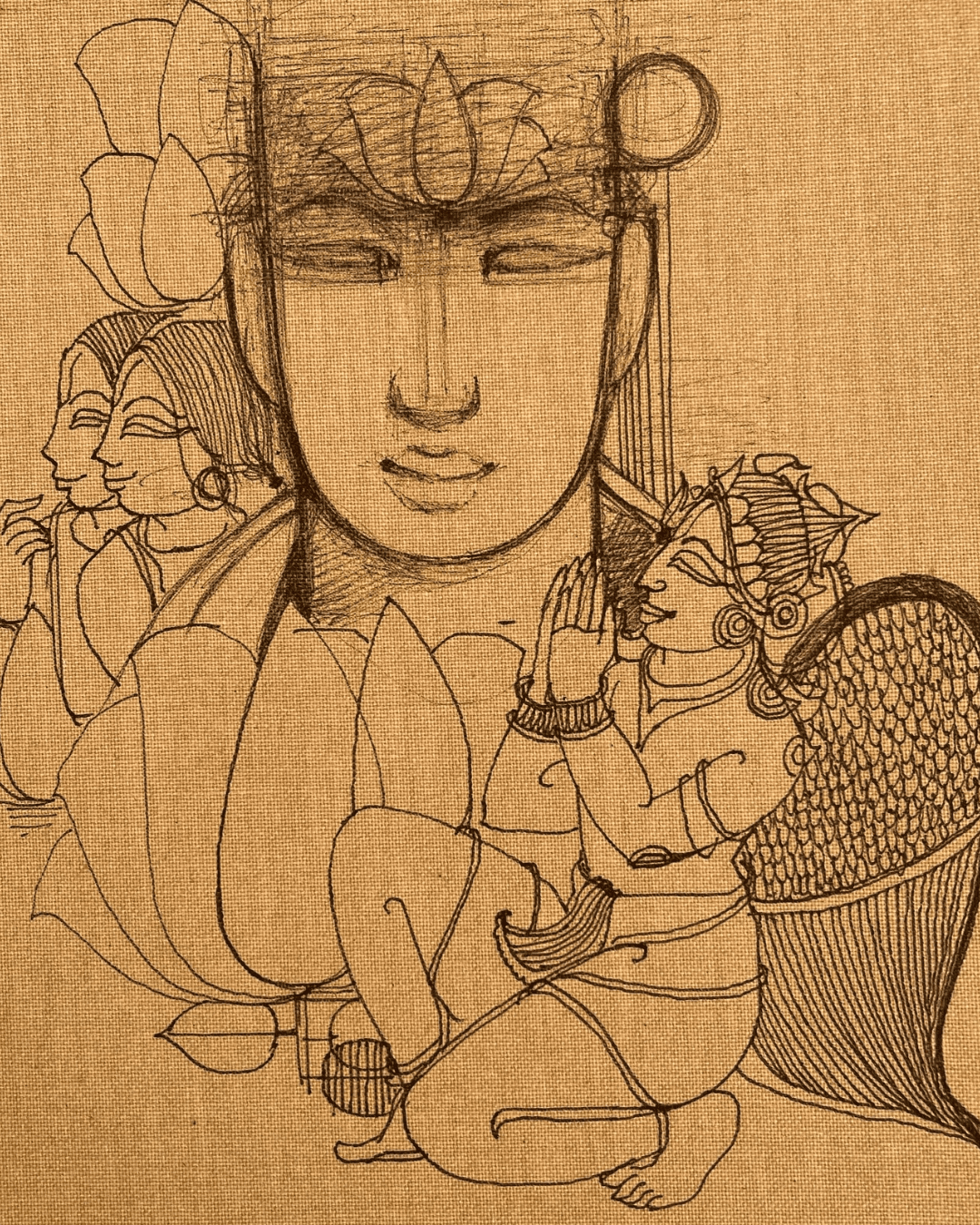
Years later, the stories he had heard as a child in the village found their way into his paintings. Vishnu and the Dashavatara, the Ramayan - including the episode of Lava and Kush capturing the Ashwamedha horse - and the Mahabharat became subjects he returned to. After the Ramayan series, he took a long pause from these stories, turning his attention to other subjects. This eventually led him to the Rann series, shaped by the earthy colours of the landscape.
“Mujhe lagta hai ki mera bhi kuch kartavya hai ki jo cheezein lupt ho rahi hain, unko logon ke saamne leke aau.”
“I feel it’s my responsibility, too, to bring these fading traditions back into people’s awareness.”
When the collector’s question came, it connected with something already familiar. Anand had heard the story as a child and spent years painting Shiva, including his form as Neelkanth. The joy, he says, was immediate. But bringing the Samudra Manthan onto a single surface presented a different challenge: how could he bring the Samudra Manthan and the canvas together?
Chapter Three
The patient, private work behind every canvas.
Before he begins to paint, Anand sits with the work ahead of him. First comes the connection.
“Mere andar jo manthan chal raha tha, woh khalbali, woh ashaantata, use maine yahan, apne kaam mein, Samudra Manthan ke zariye shaant kiya hai.”
“The turmoil I was experiencing within, that restlessness and inner conflict, found a sense of calm through my work on Samudra Manthan.”
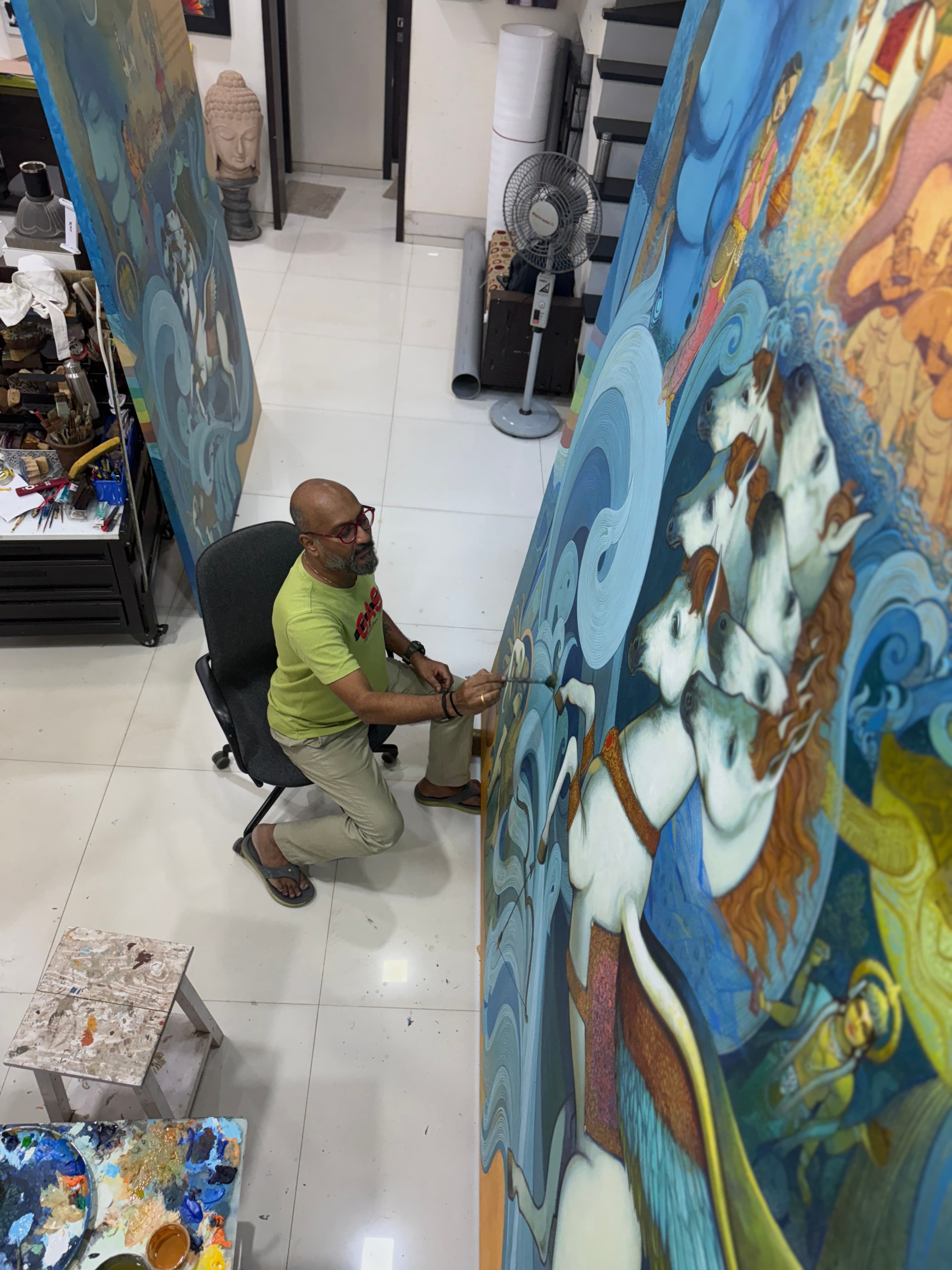
The ocean was a hard subject to place on one canvas. It held many characters and it took considerable practice before he found a way to approach it. The churning itself stirred a restlessness in him, a desire to see how far he could take the subject. In his studio, light music plays as he works. Once absorbed, he becomes less aware of what is happening around him. He no longer stops to consult the palette for a colour; the choices come more instinctively. He reads without taking notes, allowing what he takes in to find its way into the painting.
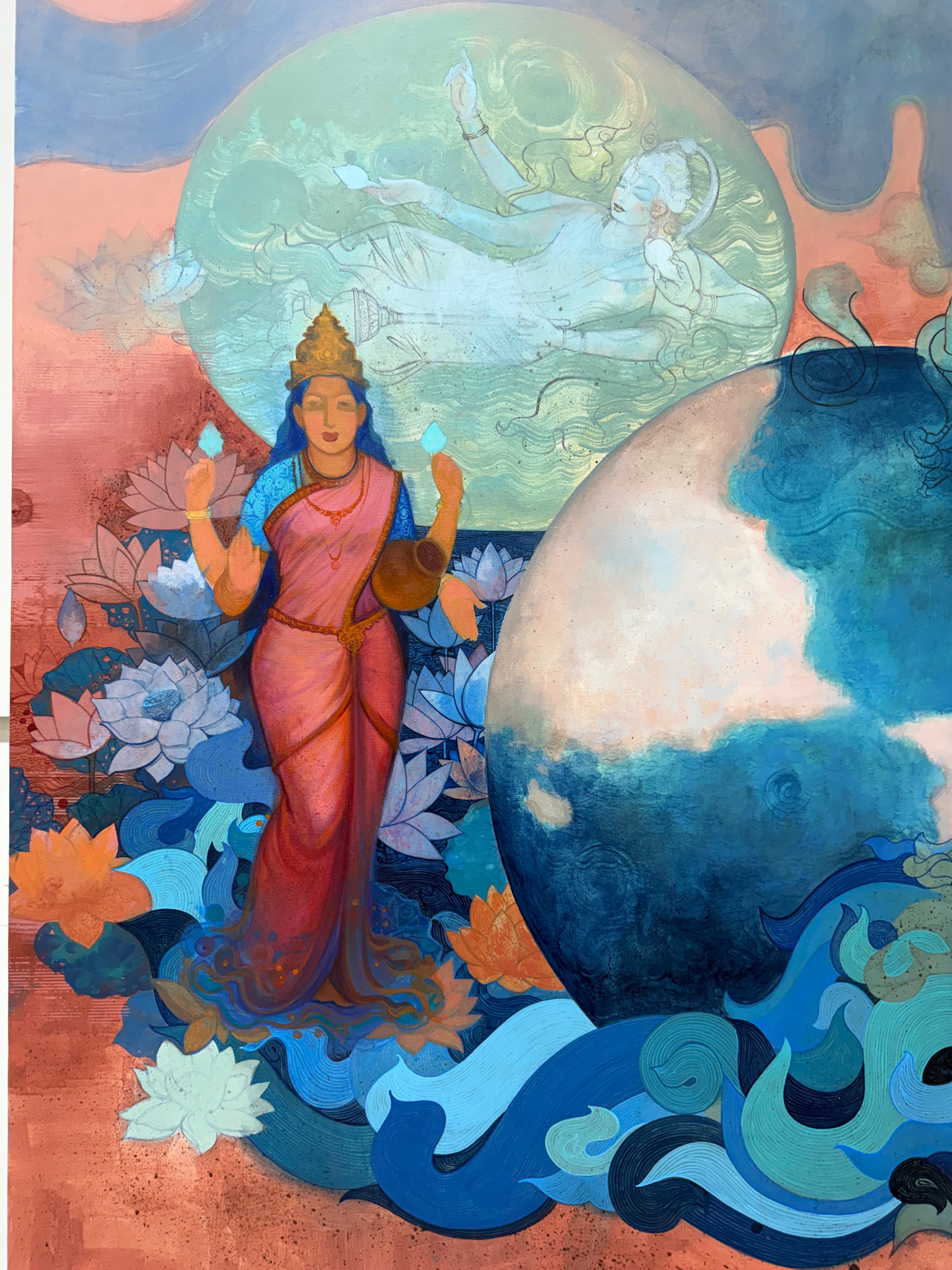
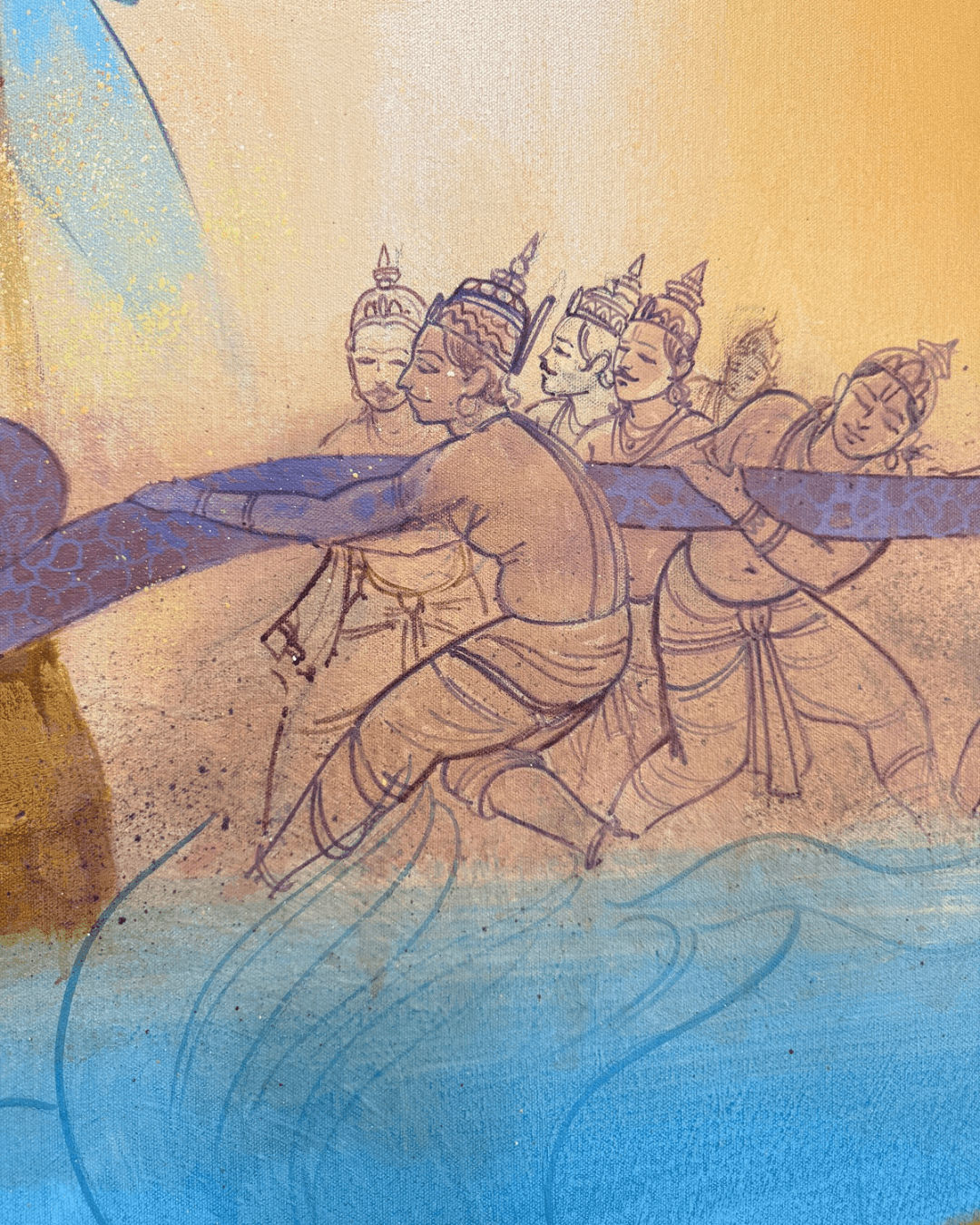
“Kaafi kaam ka riyaaz karne ke baad, mujhe laga ki finally kuch mil gaya.”
“After a great deal of practice, I finally felt I was getting somewhere.”
Chapter Four
How Anand Panchal speaks through blue, line and detail.
Blue is where Anand Panchal’s paintings begin. It finds its way into every work he makes, even appearing in the eyes of the children in his Rann series. In the Samudra Manthan series, blue takes on a life of its own. From his Mumbai studio, Anand watches the sea change through the day. The blue of the morning is different from that of the afternoon or evening, with hints of green emerging in between.
“Jaise hamare mann ke bhaav badalte rehte hain, waise hi samudra ke bhi apne bhaav hote hain. Jaise-jaise roshni badalti hai, uske rang bhi badalte jaate hain.”
“Just as our moods shift, the sea has its own moods. As the light changes, so does its colours.”
The Rann series grew from Anand’s close observation of soil. As he puts it, “soil looks different at different hours of the day.” He sees the sea in much the same way. Before beginning the series, he returned to the water again and again, wanting to feel the sea in his hands, to understand its shifting textures, the movement of its water, and the way its colours change with the light, just as he had once studied the soil.
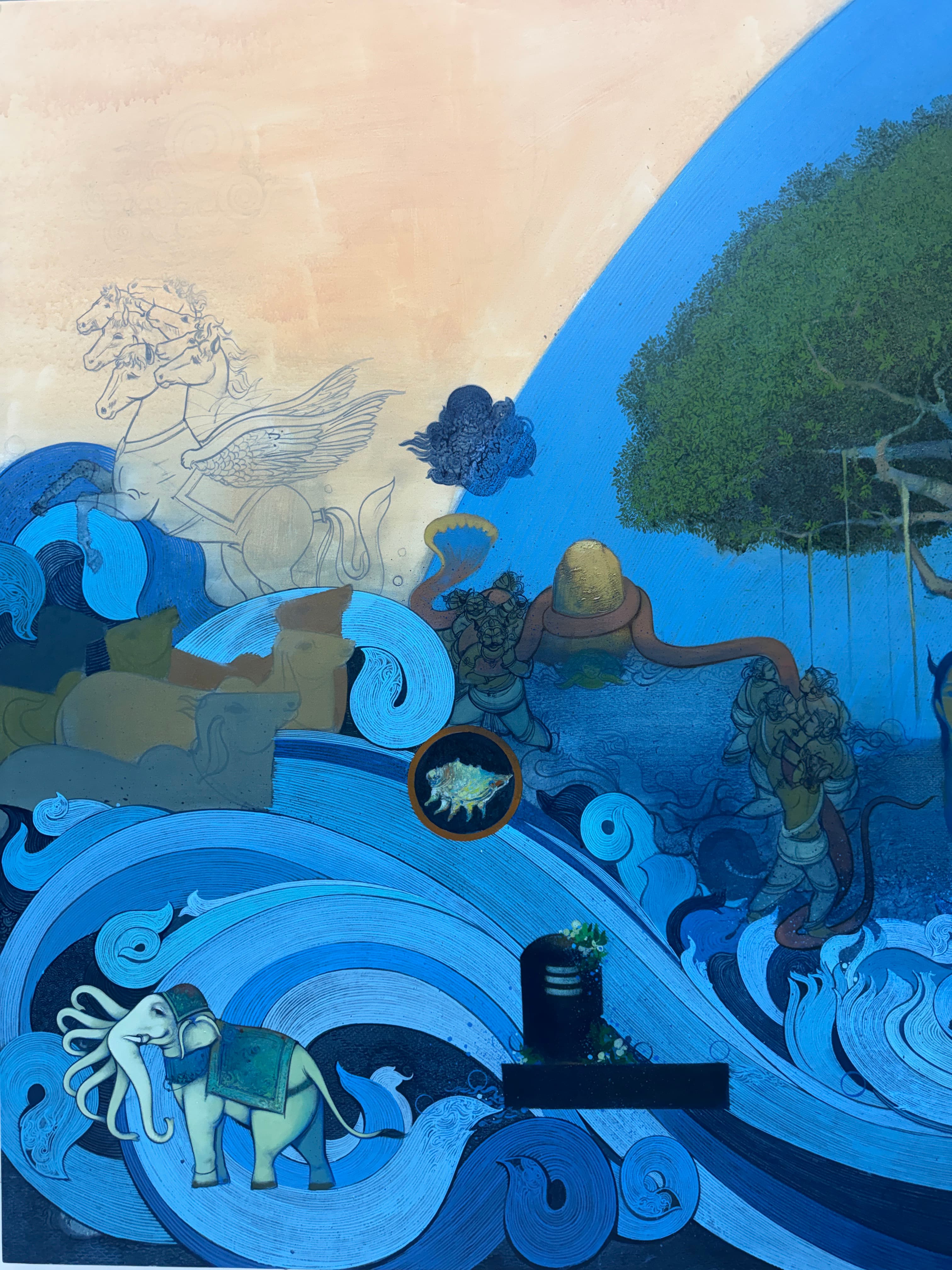
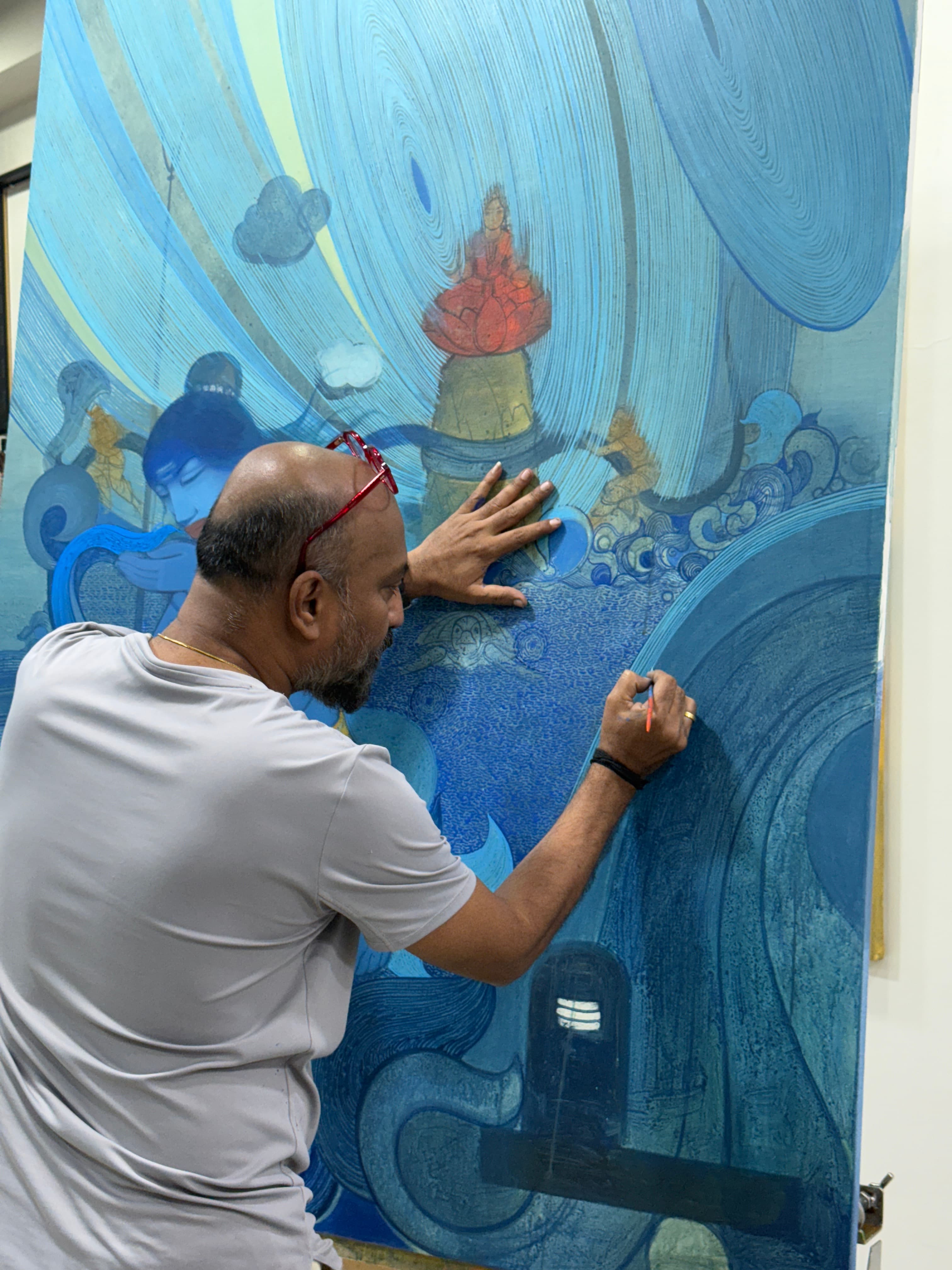
After studying the Samudra Manthan, he drew inspiration from the Kangra and Pahari miniature traditions, bringing fine linework, delicate details from nature, and a more considered approach to rendering into the series. These influences lent the paintings greater depth and richness. The softness of his work and the contrasts he creates, however, were already part of his visual language. A collector familiar with his work would recognise what makes it distinctly his, regardless of the subject. As Anand puts it, his own identity found its way into the series naturally.
Chapter Five
The first canvas, the treasures, and what each one holds.
“Mujhe laga ki har canvas mein manthan ko paint karna zaroori nahi tha. Main un cheezon ke saath rehna chahta tha jo us manthan se nikli, kyun hua, aur har ek ke peeche ki kahani kya hai.”
“I felt it wasn’t necessary to paint the act of churning on every canvas. I wanted to stay with what emerged from it, explore why the churning happened, and understand the story behind each element.”
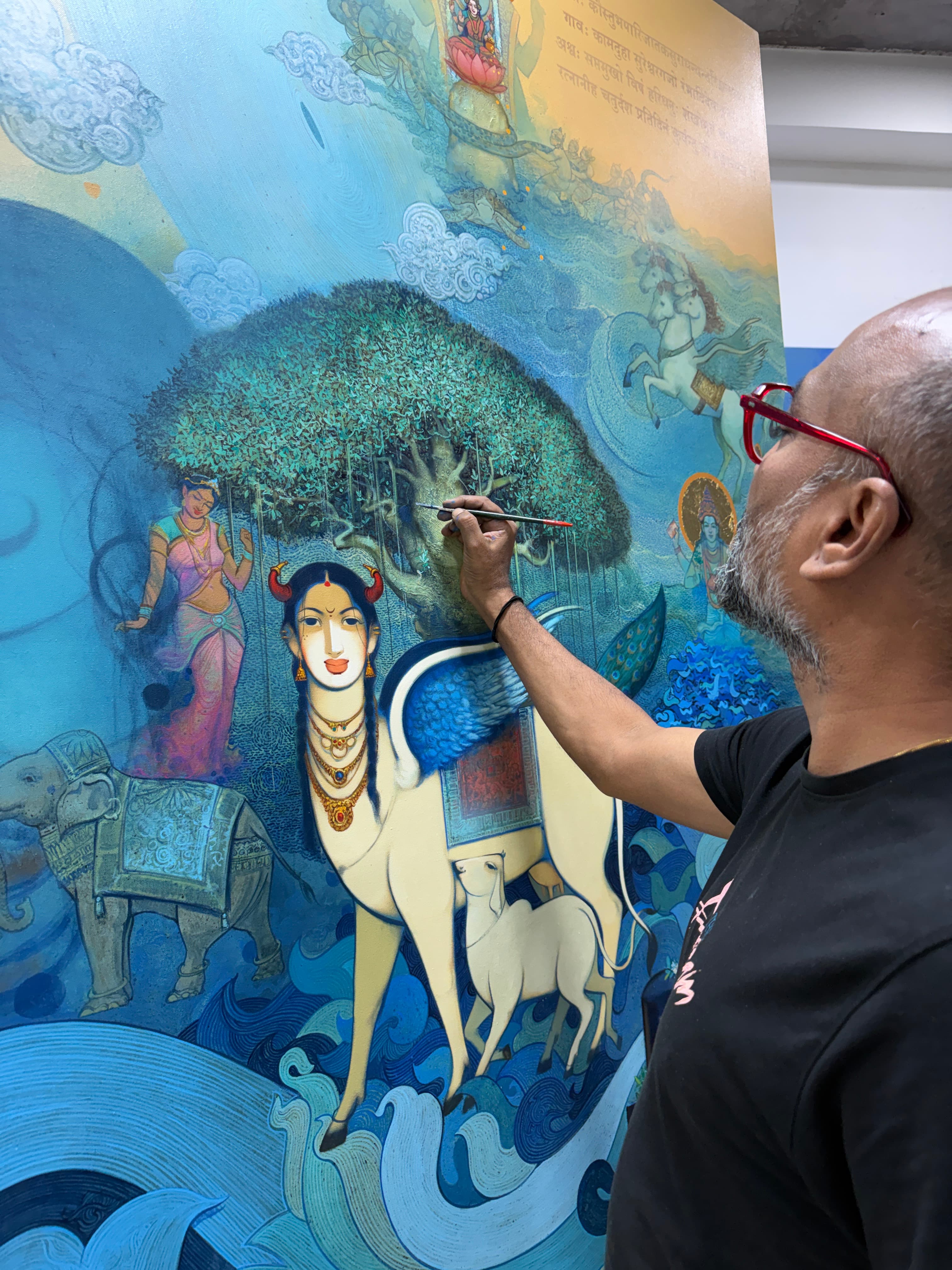
After months of research and exploration, Anand arrived at a single canvas that brought together all the treasures the ocean yielded. The process took two to three months. He felt he had finally found what he was looking for, and that canvas became the starting point for the Samudra Manthan series.
In Anand’s telling, the story begins when the sage Durvasa gives Indra a divine garland. Indra places it on the trunk of his elephant, Airavata, which throws it to the ground. Taking this as an insult, the sage curses the gods, who soon lose their splendour, prosperity and strength. Indra turns to Vishnu, who tells him that the way to regain them lies in churning the ocean for amrit, the nectar of immortality. Anand notes that the story takes different forms across sources, with details varying from one telling to another.
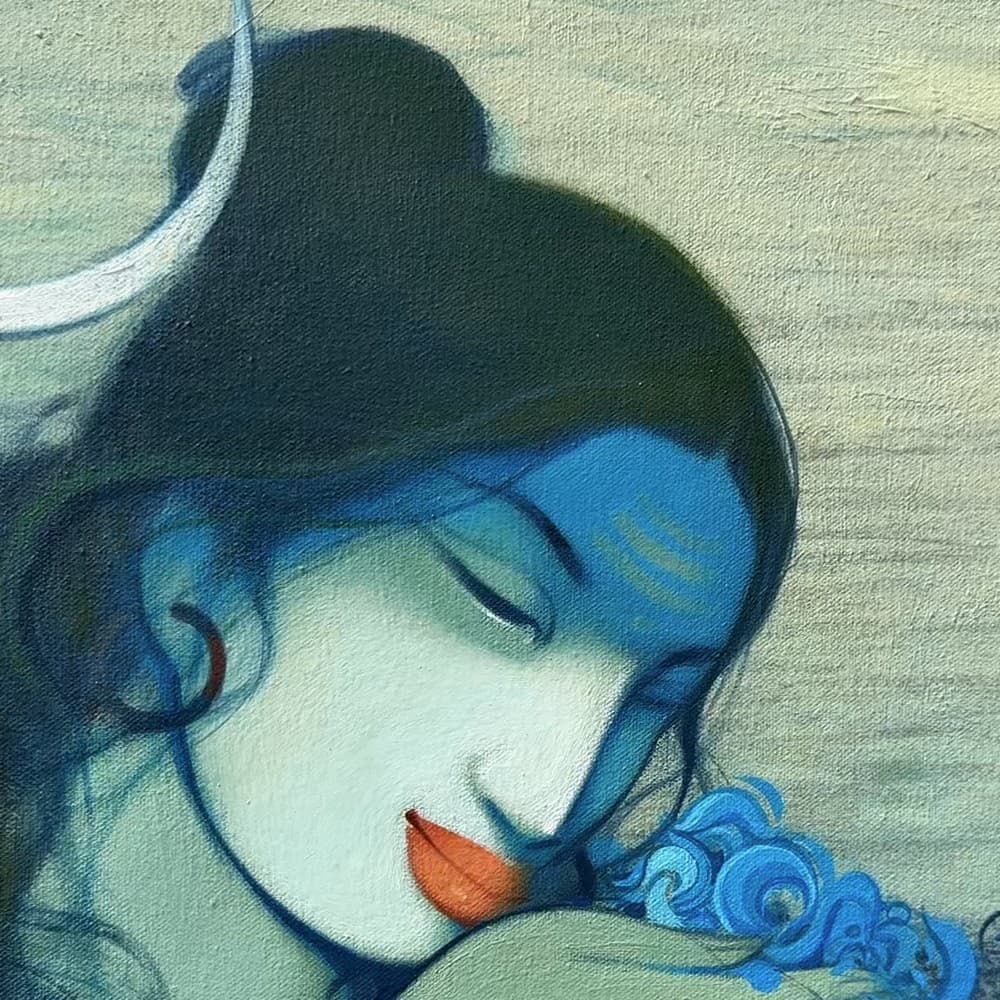
The first thing the ocean gave up was not a treasure but a warning. It was a poison so fierce it threatened every world. In the Bhagavata Purana, Shiva drinks it and holds it in his throat, which turns it blue and gives him the name Neelakantha.
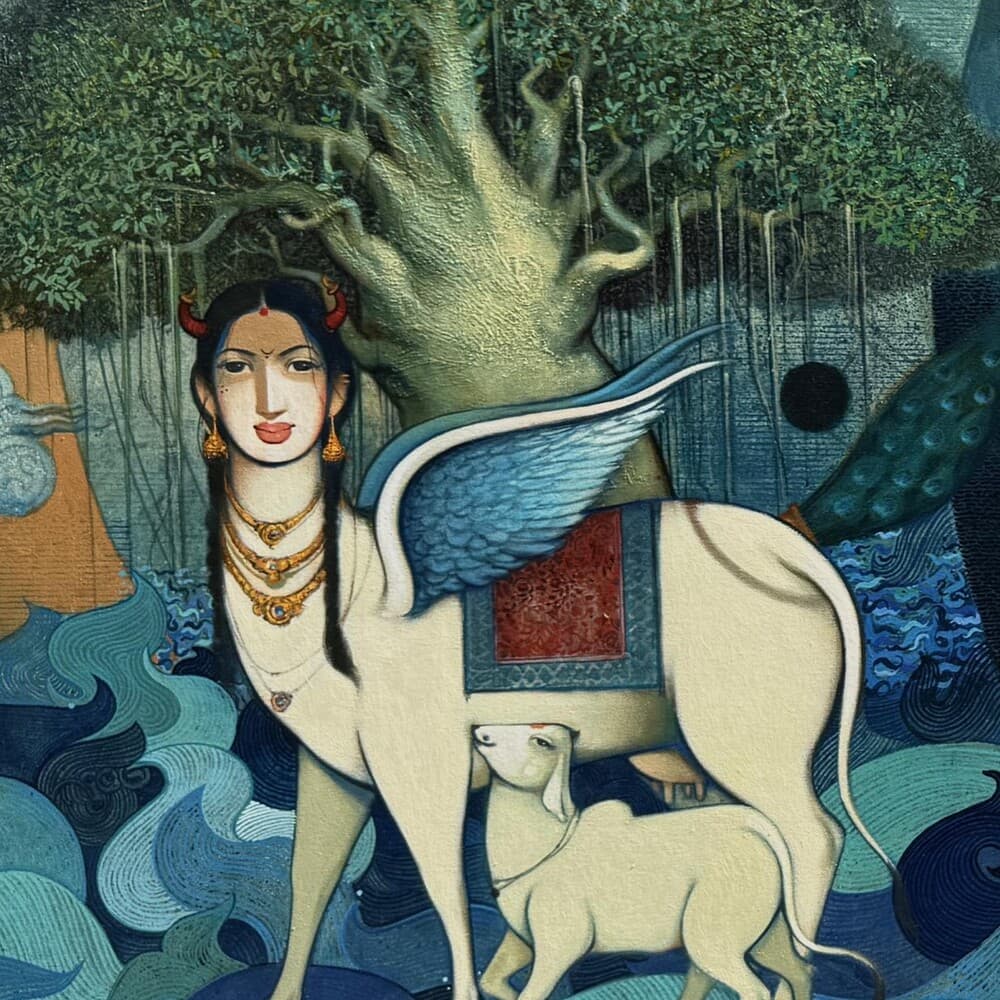
She is abundance in its gentlest form. The Bhagavata Purana says the sages took her, because her milk and ghee fed the sacrificial fire. Some retellings say a god placed her in their care. She was never meant to be owned, only used for the offering.
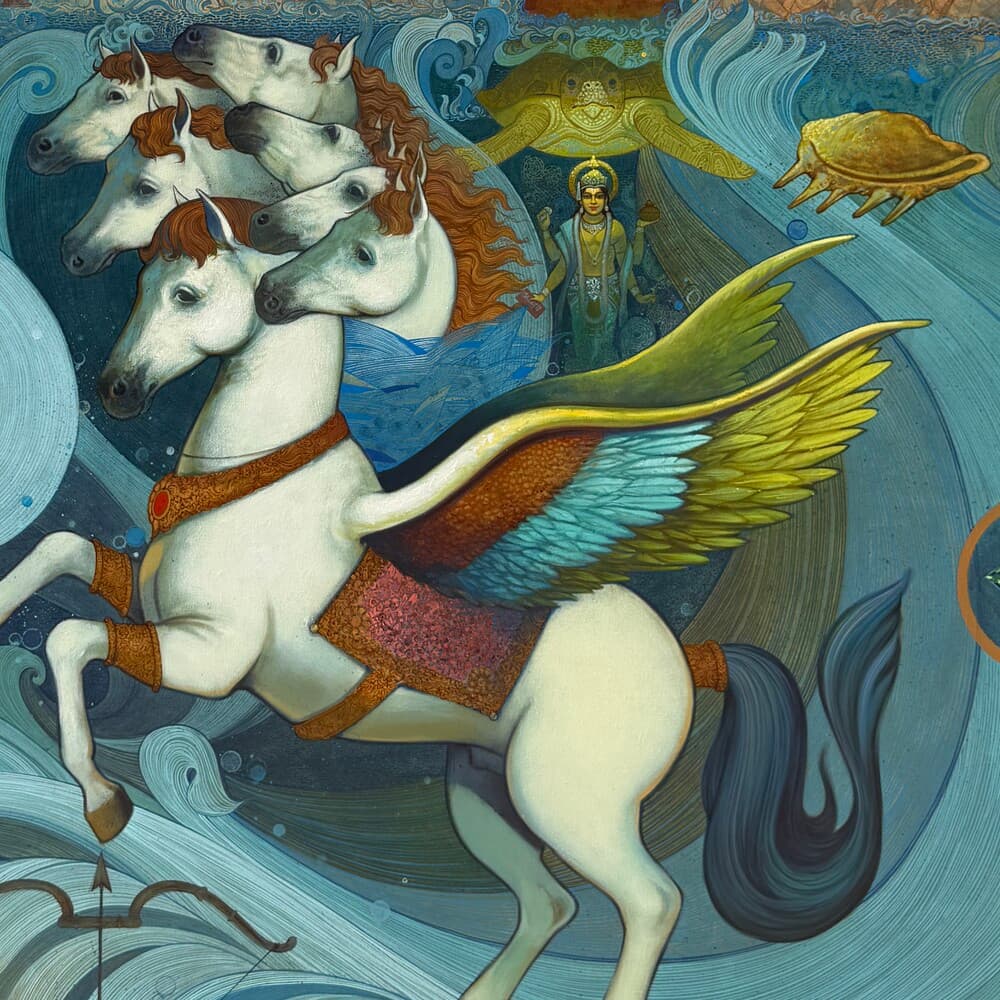
This is the seven-headed white horse, famed for his speed. In the Bhagavata Purana, the asura king Bali takes him, and Indra, the king of the gods, lets him go without protest. It is a quiet moment of restraint in a story full of rivalry.
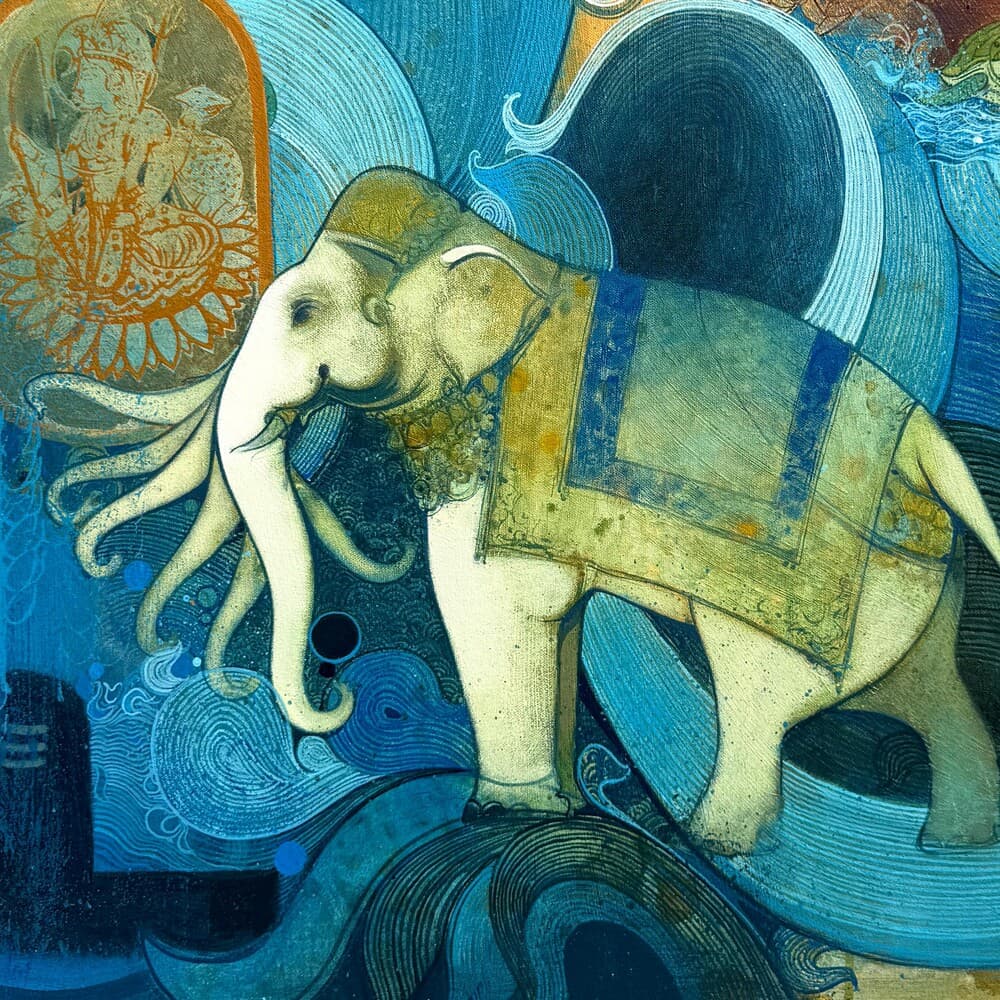
He is the king of elephants and the leader of the eight elephants that guard the directions. He is later known as Indra’s mount, a symbol of royal strength and of clouds heavy with rain.
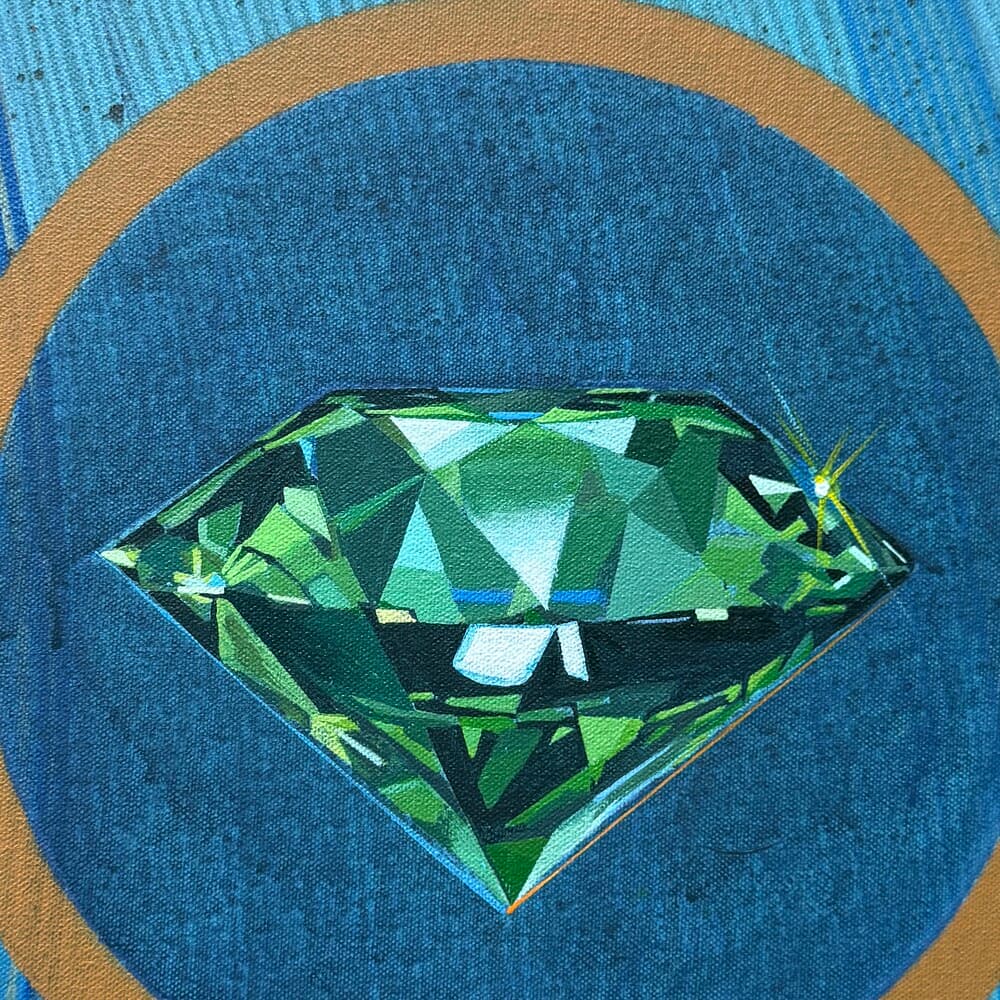
A ruby of extraordinary radiance. The Skanda Purana says its brilliance matched the sun and lit the three worlds, and that the devas gave it to Vishnu. He wears it on his chest, and the Mahabharata shows Krishna wearing it too.
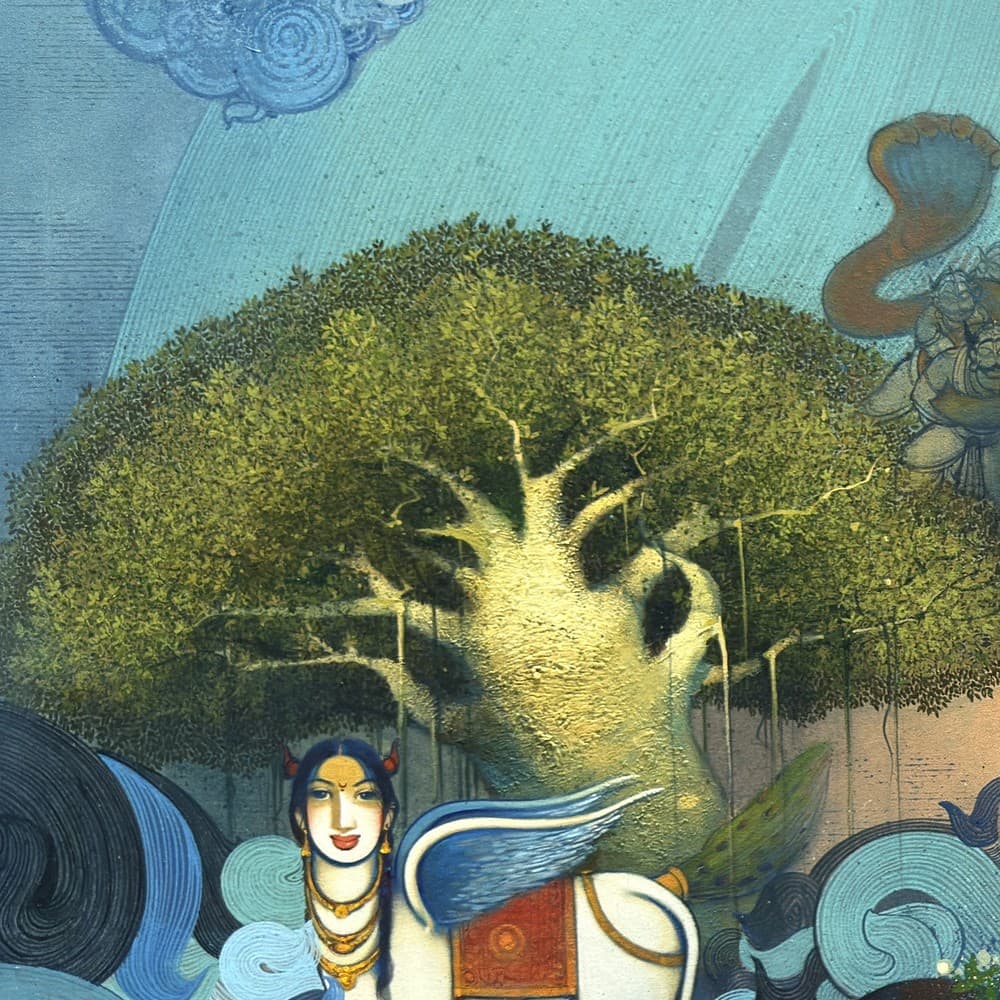
This is a tree whose flowers never fade. The gods carried it to Indra’s heaven, and the Bhagavata Purana calls it the delight of the celestial nymphs. Different texts name it Parijata or Kalpavriksha. It stands for desire fulfilled without exhaustion.
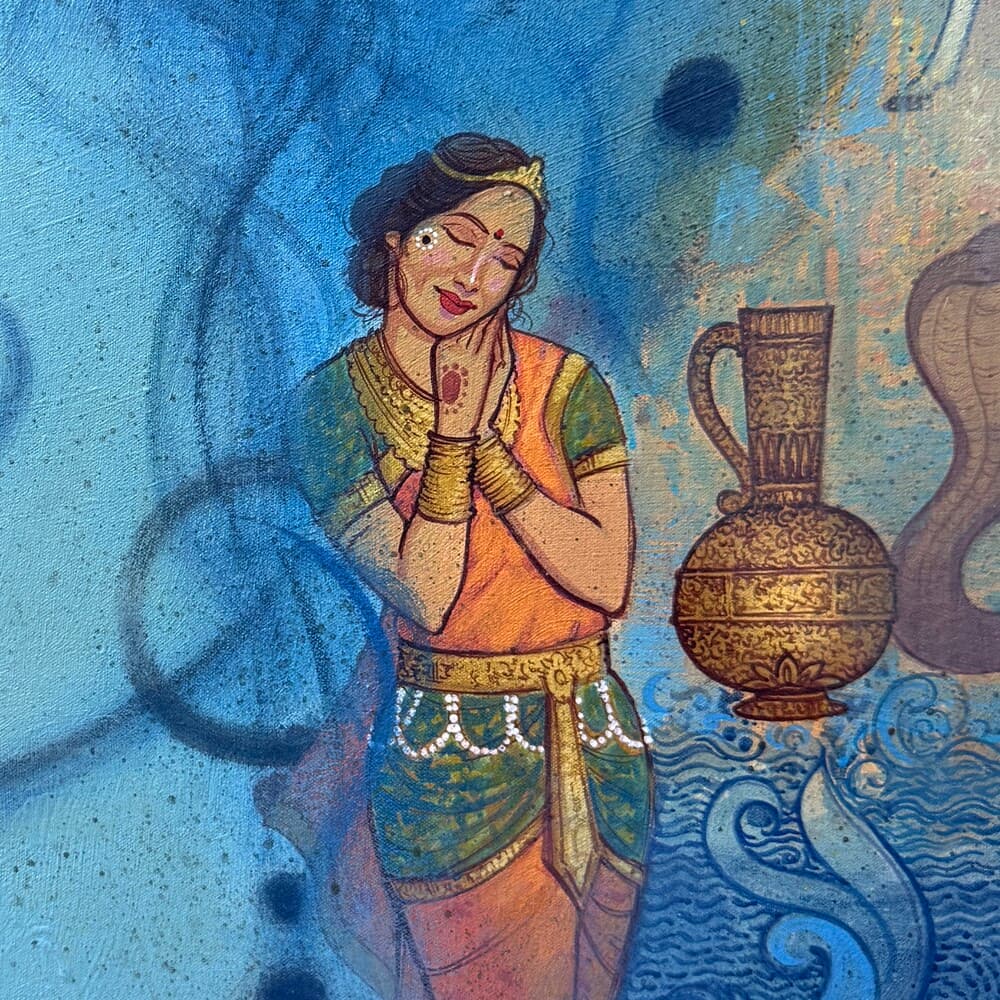
The heavenly dancers who rise from the water. In the Bhagavata they are the most beautiful women of the higher worlds, and in the Ramayana they appear right after Dhanvantari.
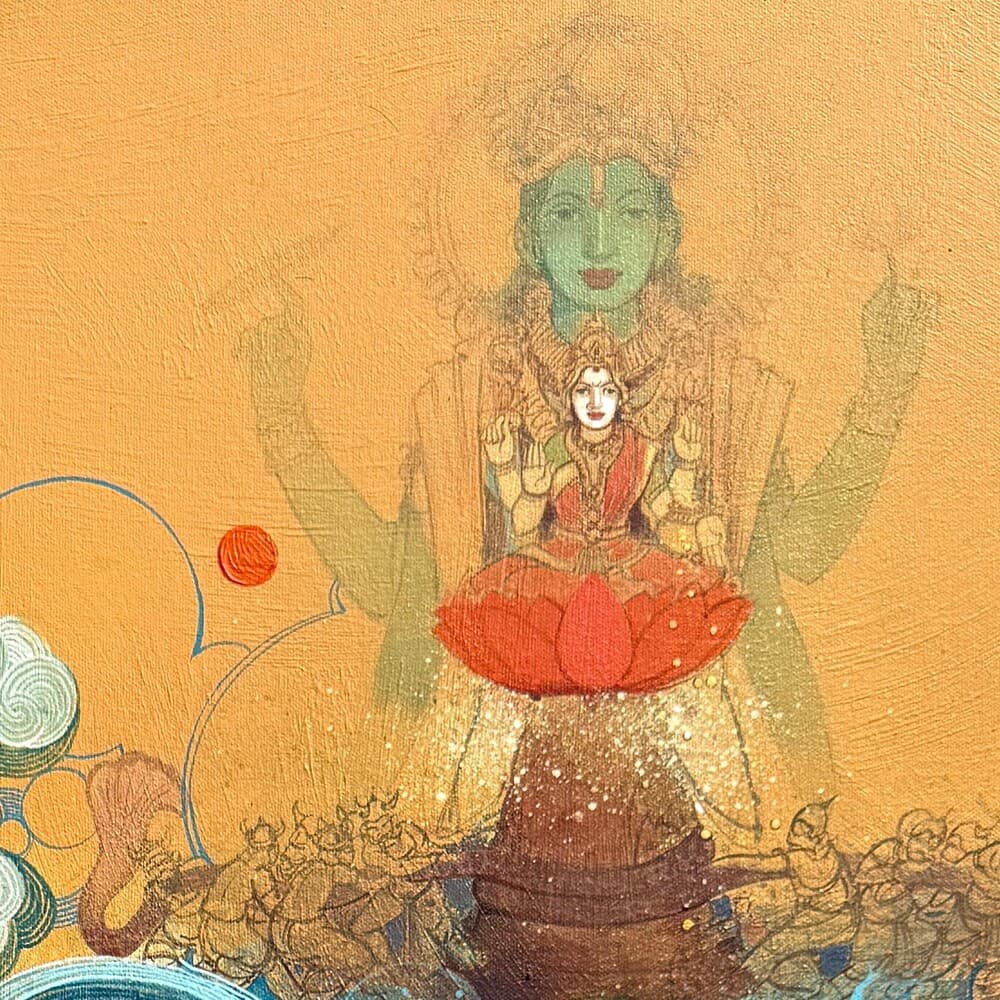
She rises on a lotus and chooses Vishnu as her husband in the Bhagavata, and the Vishnu Purana has her emerge last, radiant. The curse drains the three worlds of prosperity, so the churning ends with her return.
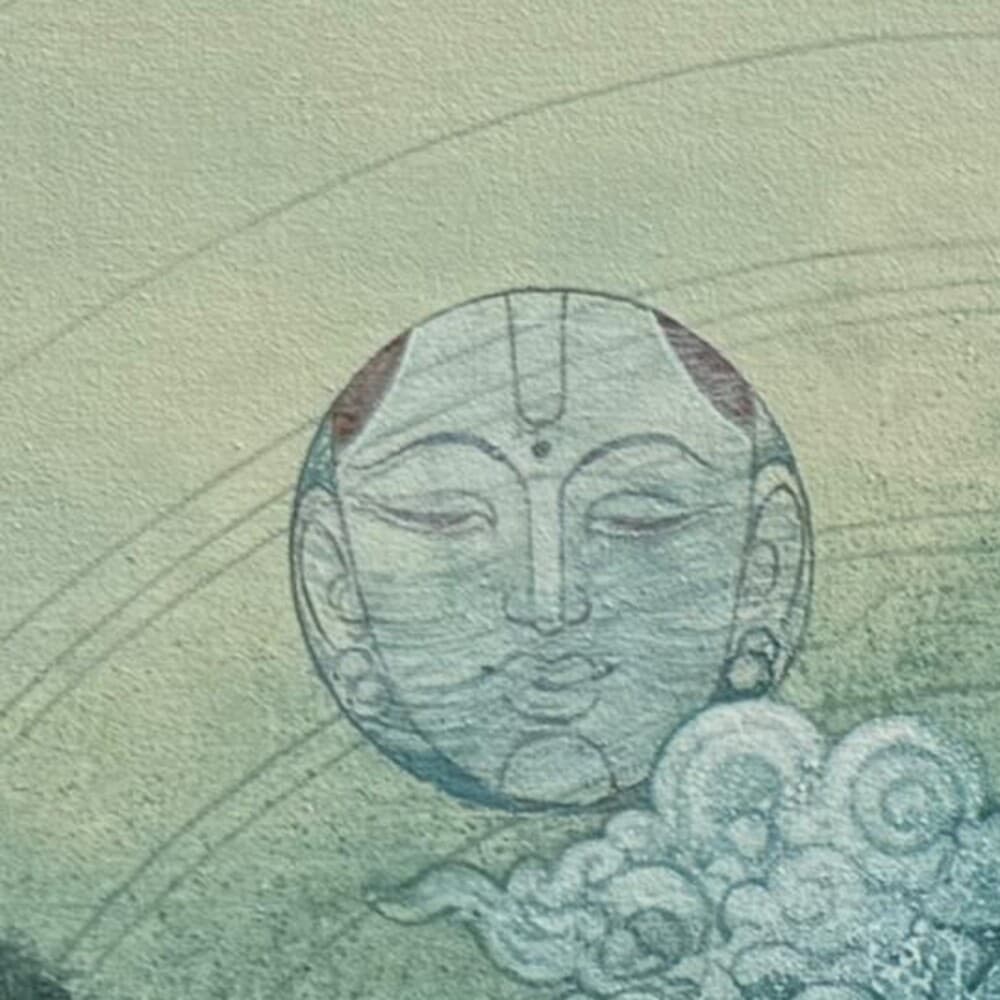
The moon, cool and pale. In the Vishnu Purana, Mahadeva seizes it as it rises, and Shiva carries the crescent.
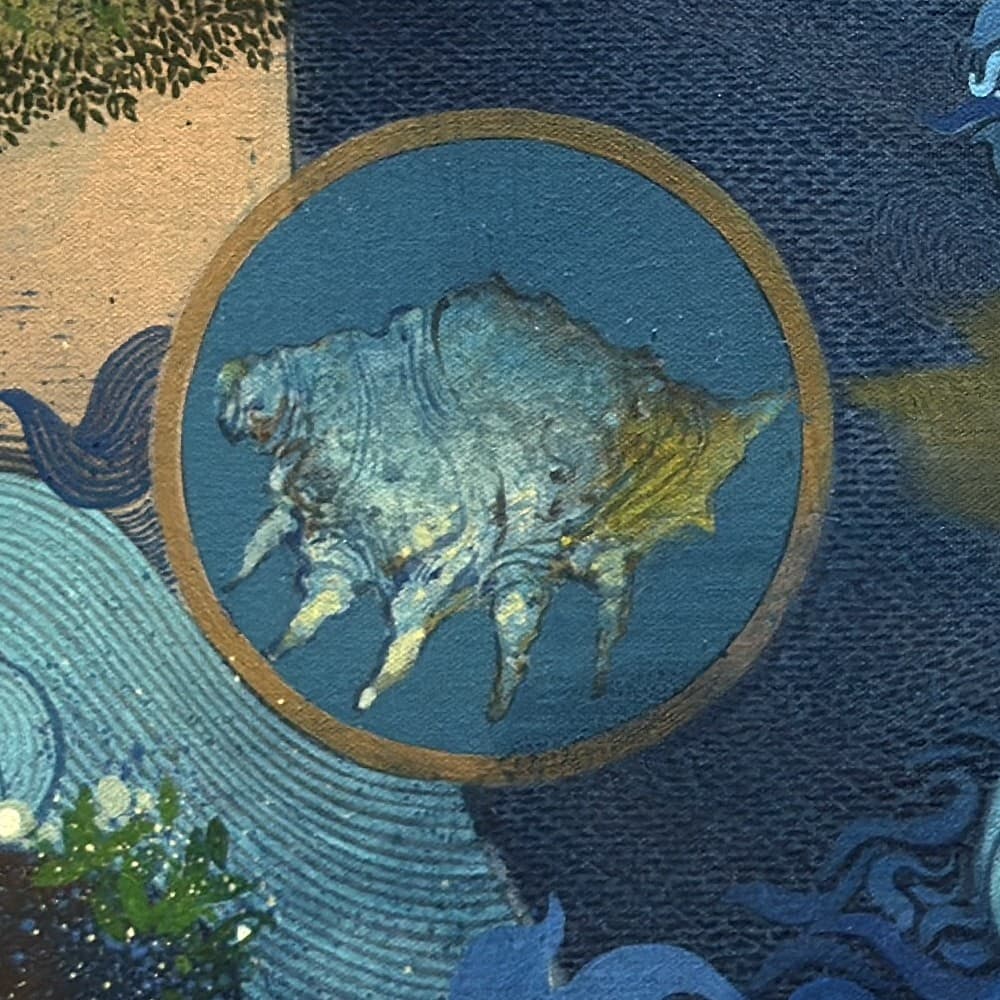
Vishnu's conch. Only some Puranic lists include it, which is one reason the count of treasures runs from nine to fourteen depending on the text.
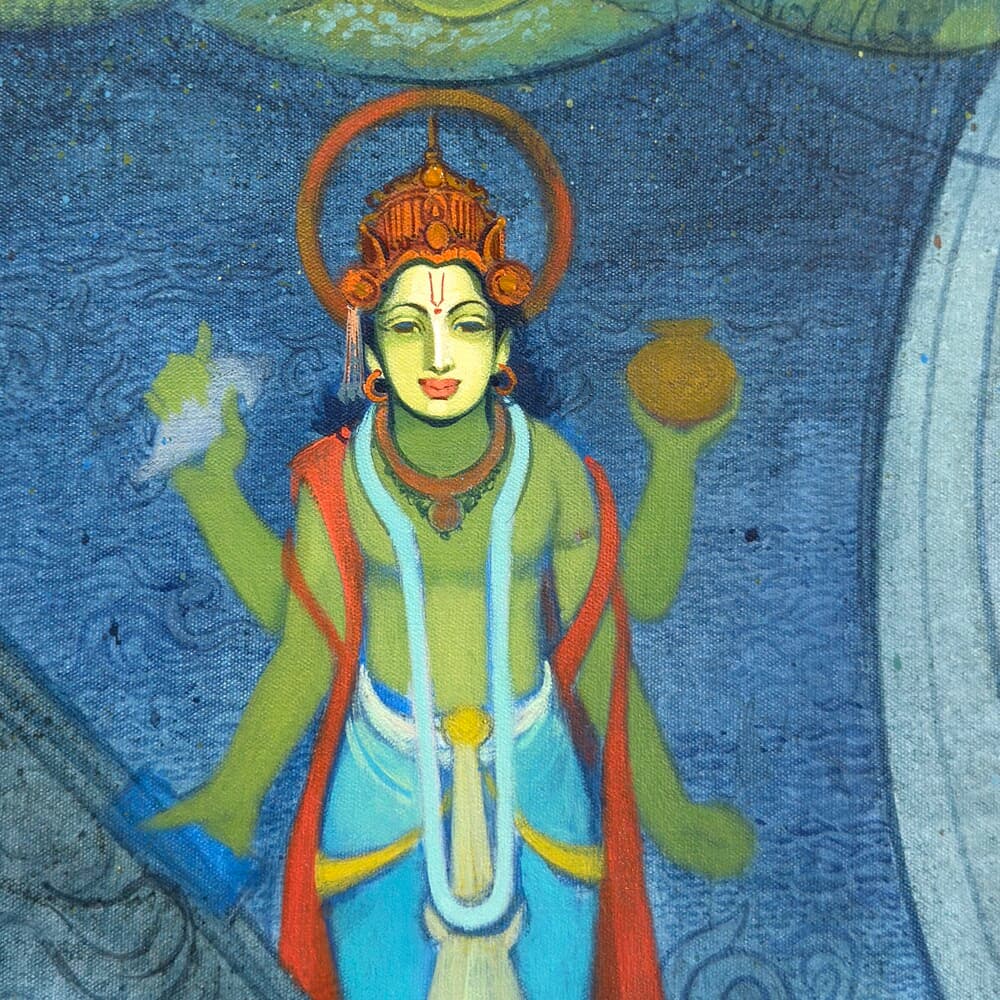
The physician of the gods, who rises holding the cup of amrita. In the Ramayana he is the first to appear, and in the Bhagavata the demons snatch the pot from his hand.
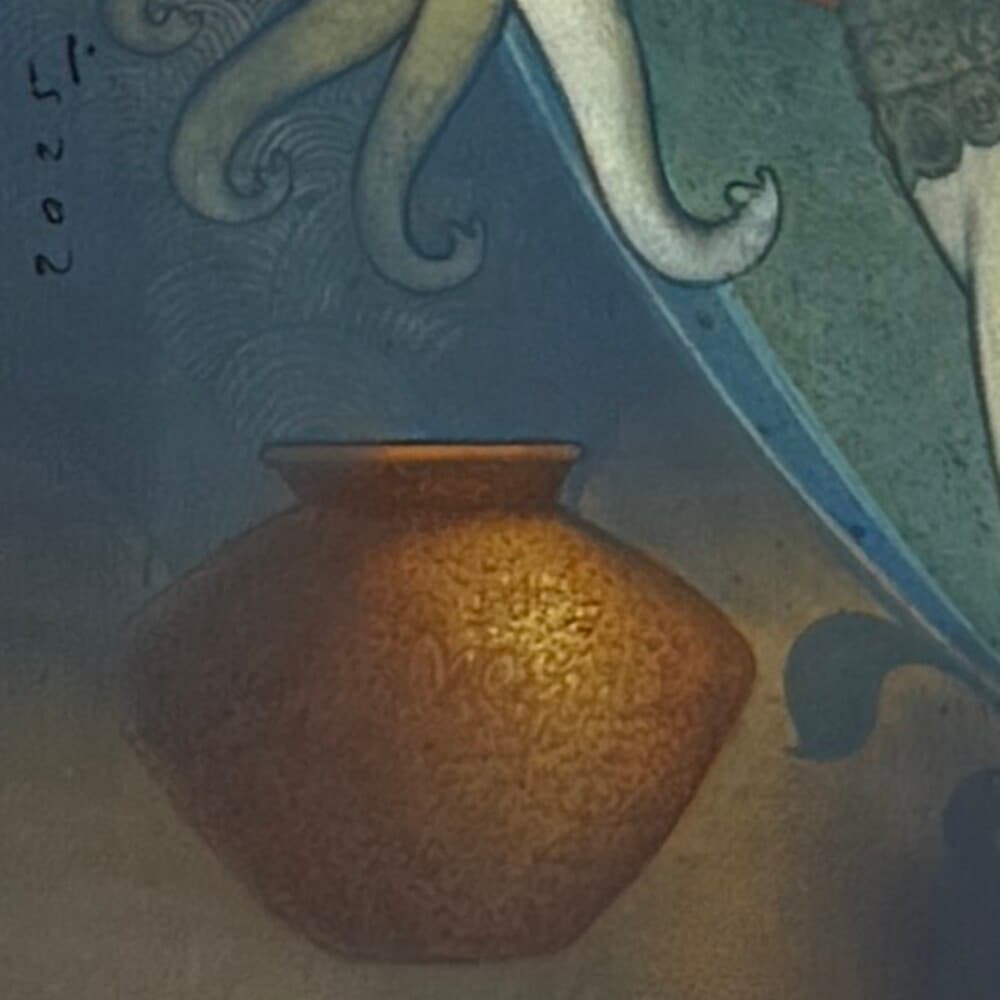
It is the reason the churning began, and it nearly caused its ruin. The asuras seized it, and Vishnu, taking the form of the enchantress Mohini, recovered it and gave it to the gods. The Vishnu Purana tells this with some tenderness.
Anand says that only the subject has changed. The expressions he developed while painting children in the Rann series find their way into Kamadhenu’s face, while the innocence of his own village childhood surfaces in the work without conscious intent. The earlier series he has painted, from the Dashavatara to the Rann, remain with him, carried forward in the way he paints.
Chapter Six
Twenty works, one ocean, and the exercises behind each.
The large canvas brought all the treasures together. Since then, Anand has been exploring the elements that emerged from the Samudra Manthan, one at a time, beginning with Kamadhenu. Each now has a canvas of its own. The series continues to grow, with the works available to view today forming part of an ongoing journey. More will join them as he completes them.
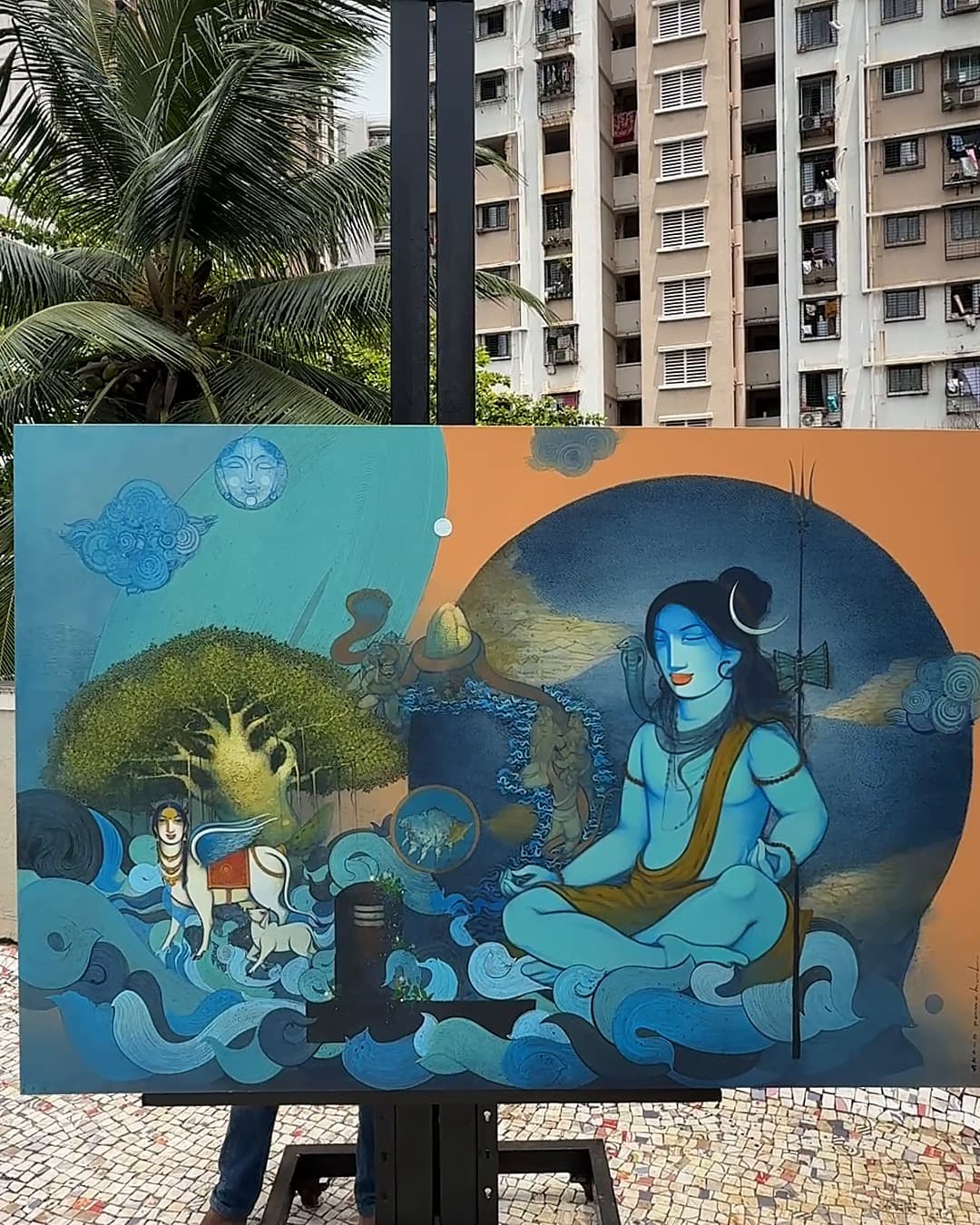
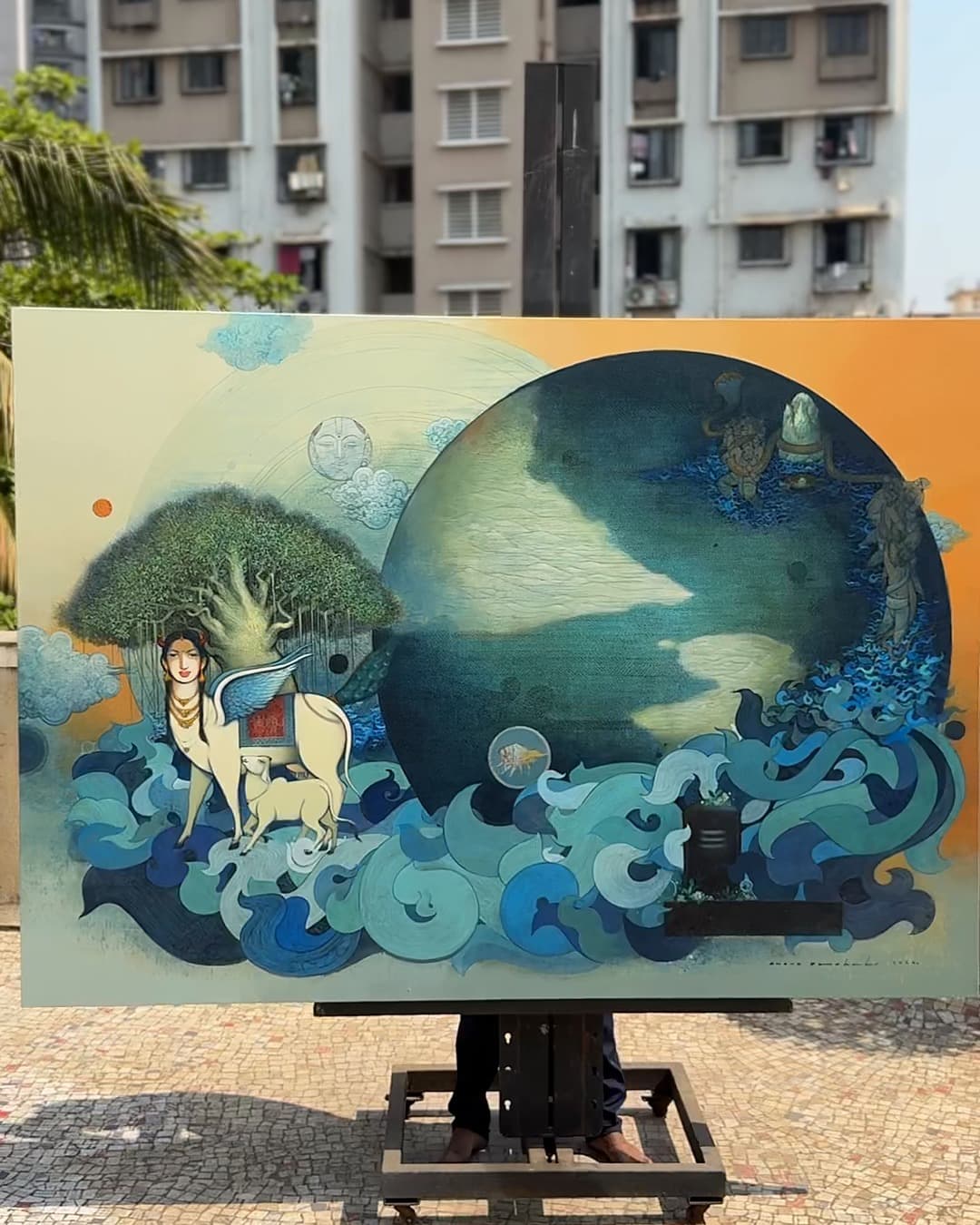
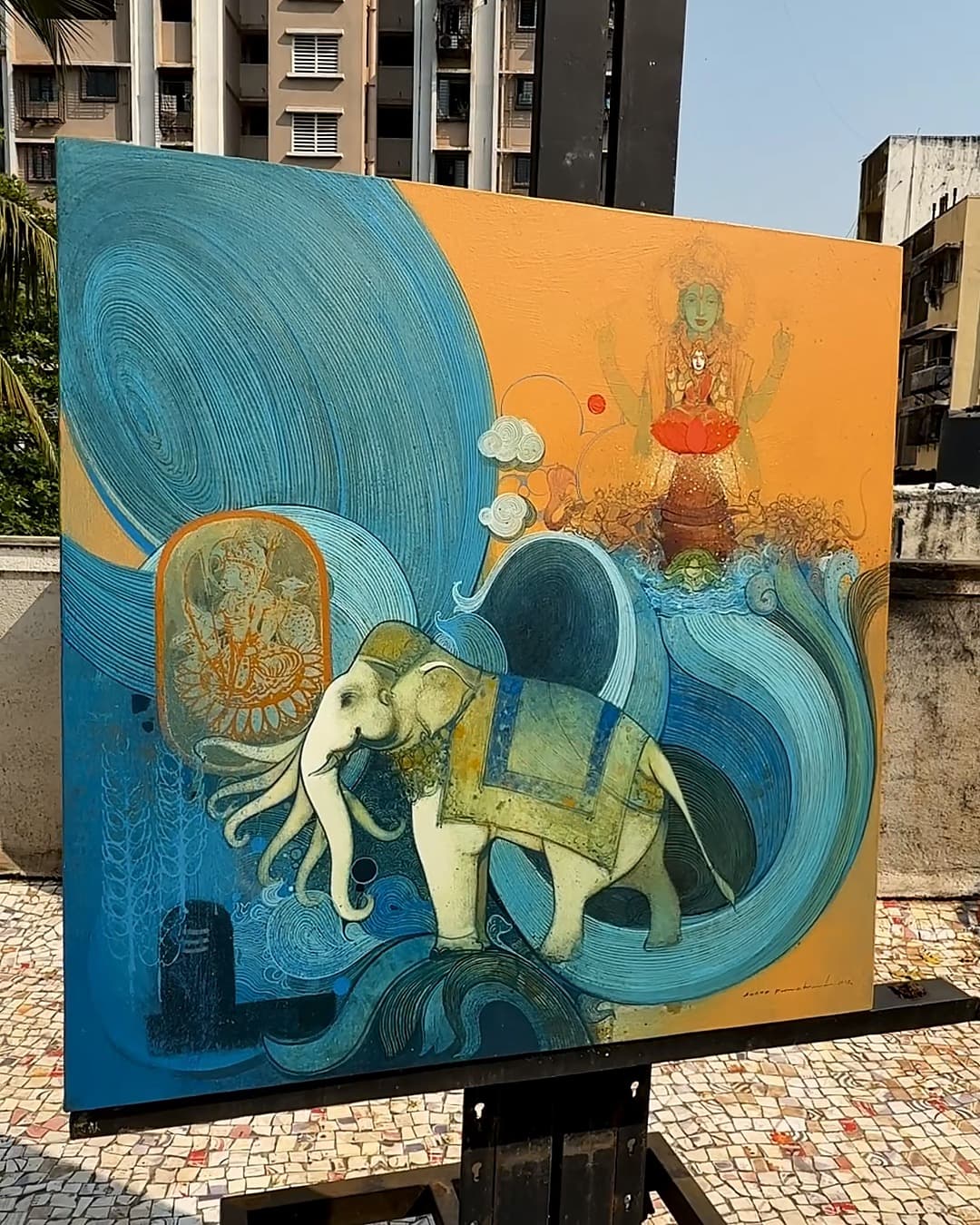
Set side by side, the canvases move through the ocean’s day, from early light to evening, shifting between warm and cool tones.
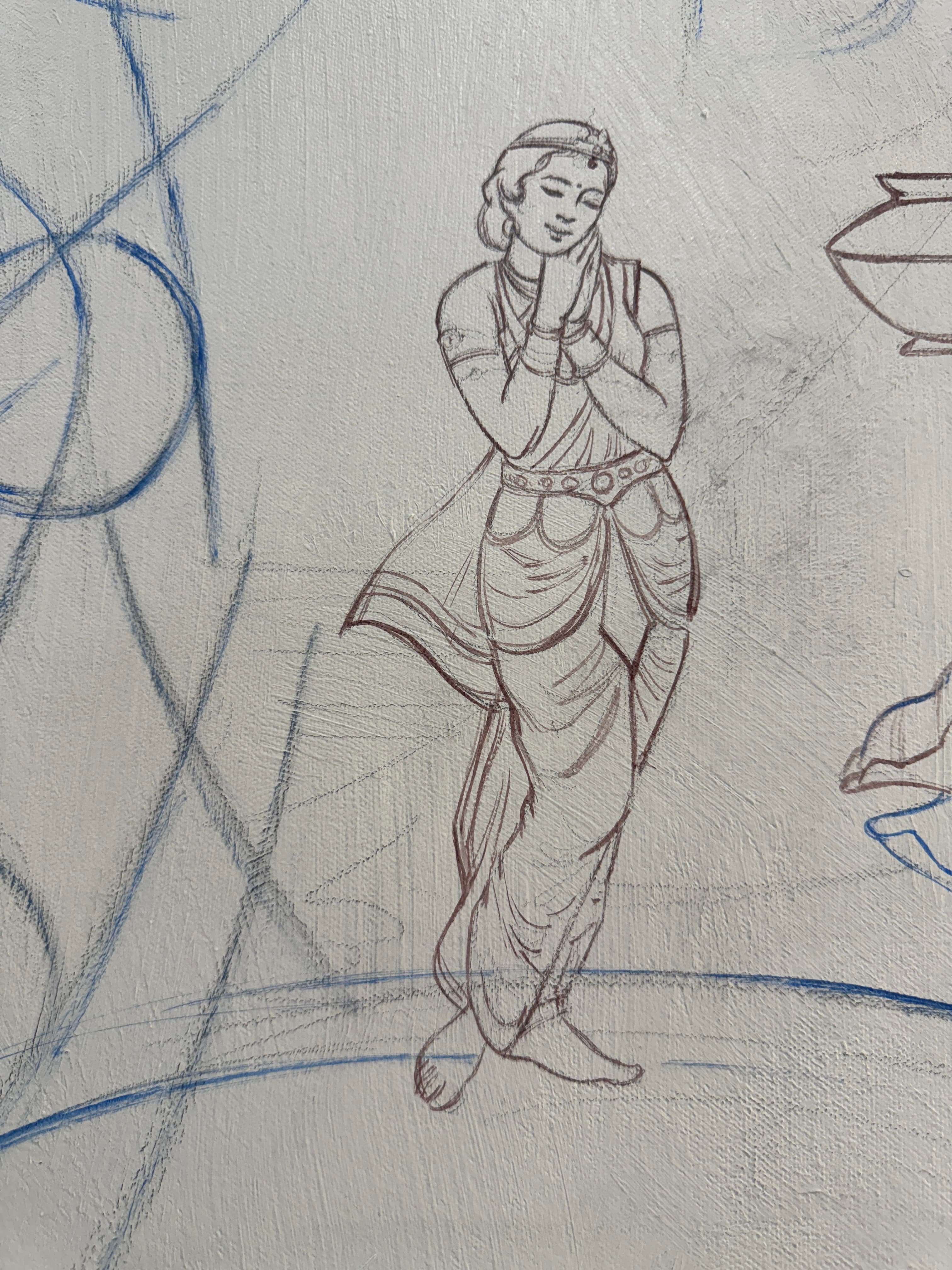
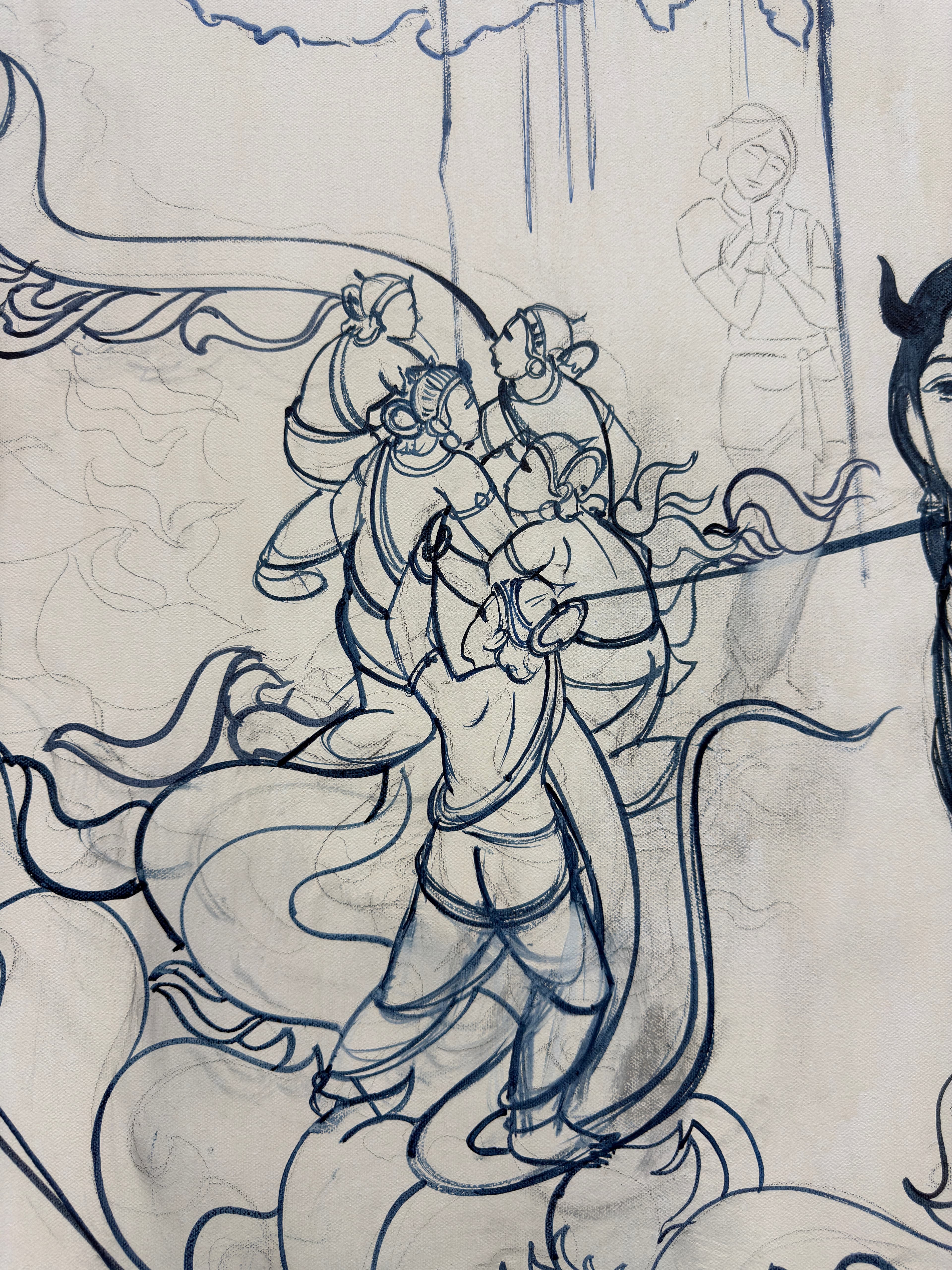
Behind each work lies a stack of sketches and colour studies. Anand says the paintings of the Samudra Manthan series began to open up only after many such trials.
“Abhi maine samudra mein sirf ek dubki lagayi hai. Dekhte hain, main kitni gehraai tak ja sakta hoon.”
“Right now I have taken a dip in the ocean. Let me see how deep I can go.”
Meet the artist at their studio in Mumbai, or visit over a video call from anywhere.
Or talk to our curator
The Practice
More artists. More practices. The series continues.
