

Seema Kohli, a multidisciplinary contemporary artist, weaves captivating stories through her art. With over 35 years of experience, she explores various mediums such as painting, printmaking, sculptures, installations, and performing arts to express her unique sensibilities. Kohli delves into philosophical inquiries and metaphysical truths, infusing her works with cosmic energy and profound reflec...
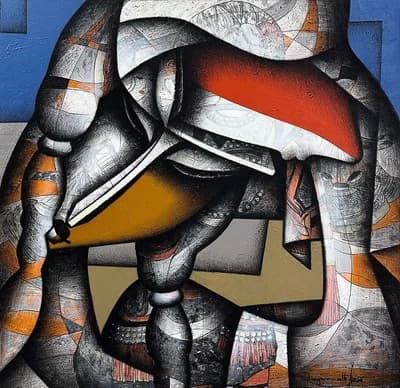
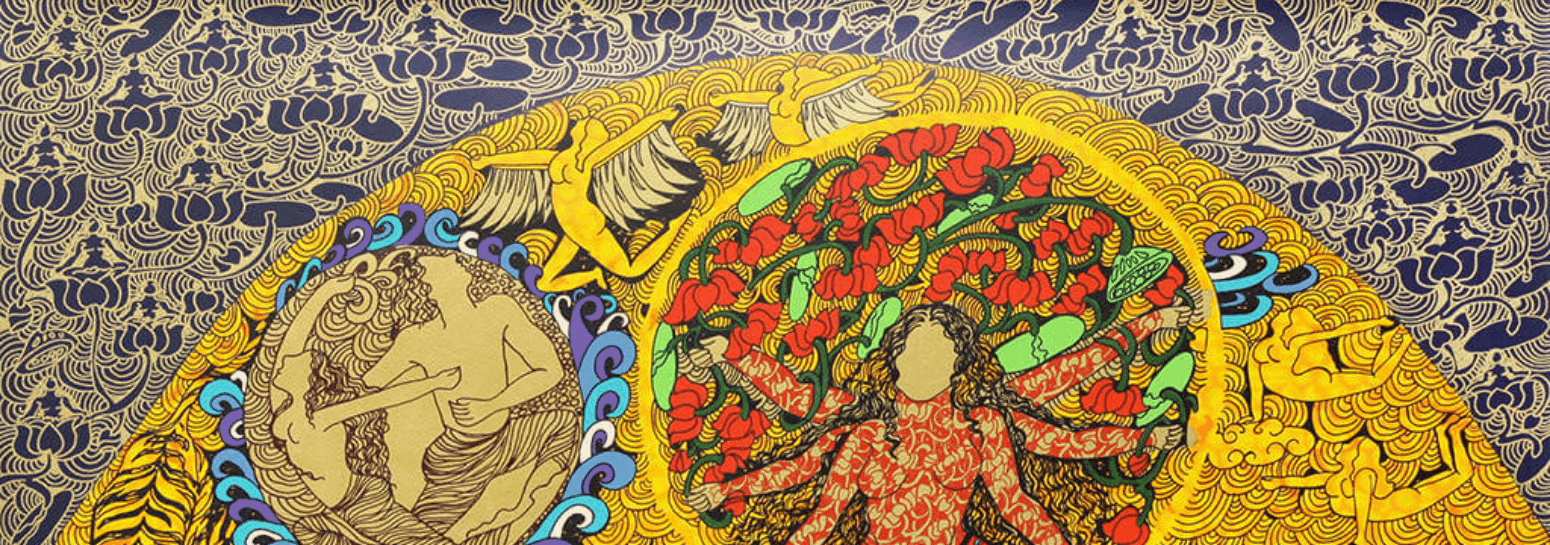
Seema Kohli, a multidisciplinary contemporary artist, weaves captivating stories through her art. With over 35 years of experience, she explores various mediums such as painting, printmaking, sculptures, installations, and performing arts to express her unique sensibilities. Kohli delves into philosophical inquiries and metaphysical truths, infusing her works with cosmic energy and profound reflections on existence. Her canvases brim with layered narratives, drawing inspiration from myths, fables, and cultural history, presenting a universal context rooted in Indian essence.
Kohli's compositions feature sharp linework and intricate elements that evoke a moment of catharsis for viewers. Motifs like the female body, tree of life, and patterns from nature come to life through bold and delicate lines. Through her art, she creates an inner dialogue within the forms, offering a separate yet relevant world. Kohli's artistic legacy spans over 30 solo shows worldwide and her works grace esteemed collections like the National Gallery of Modern Art and the Melinda Bill Gates Foundation.
In 2019, Kohli embarked on the Project Home series, a mesmerizing fusion of live performance and visual projections, inspired by her father's book and family photographs. Recently, she showcased her serigraph book, bronze sculptures, and a digital film titled Enter Stillness, captivating audiences at the India Art Fair. Seema Kohli continues to create and inspire from her base in New Delhi.
Kohli's compositions feature sharp linework and intricate elements that evoke a moment of catharsis for viewers. Motifs like the female body, tree of life, and patterns from nature come to life through bold and delicate lines. Through her art, she creates an inner dialogue within the forms, offering a separate yet relevant world. Kohli's artistic legacy spans over 30 solo shows worldwide and her works grace esteemed collections like the National Gallery of Modern Art and the Melinda Bill Gates Foundation.
In 2019, Kohli embarked on the Project Home series, a mesmerizing fusion of live performance and visual projections, inspired by her father's book and family photographs. Recently, she showcased her serigraph book, bronze sculptures, and a digital film titled Enter Stillness, captivating audiences at the India Art Fair. Seema Kohli continues to create and inspire from her base in New Delhi.